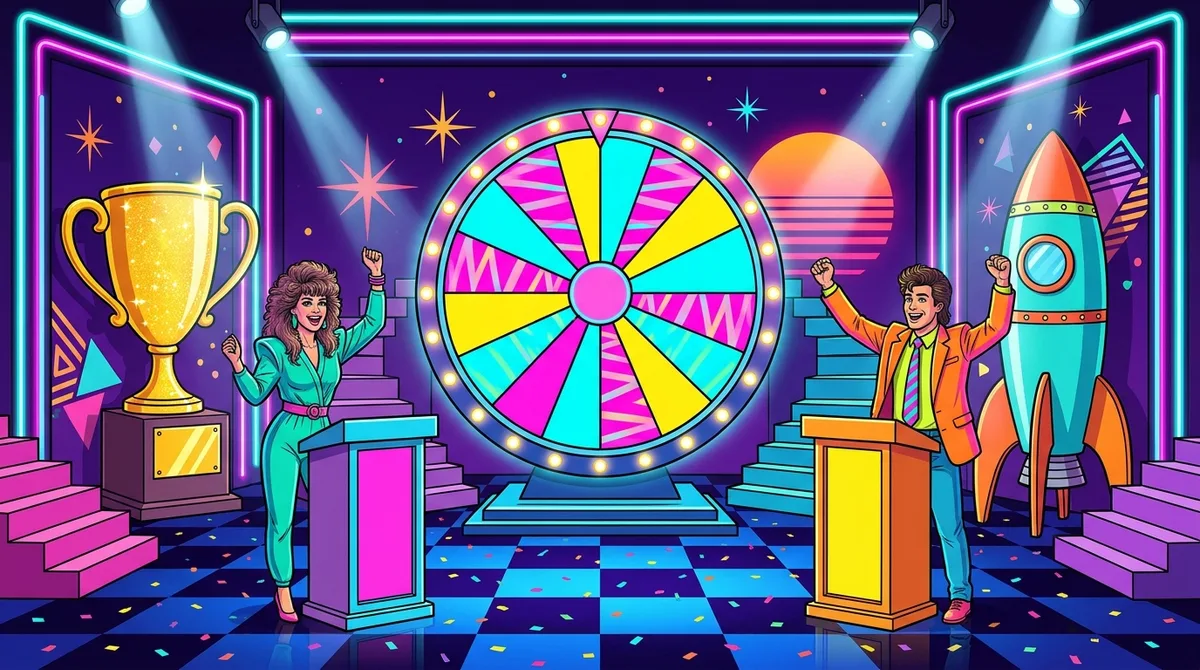
1980s game show sets were built to be seen from the back row, with flashing lights, bold colors, and props so oversized they could have starred in their own cartoon. Press Your Luck is the poster child for the look. When it debuted on September 19, 1983, designer Bill Carruthers turned the static 18-square board of Second Chance into a flashing 54-square spectacle, complete with red cartoon Whammys ready to wipe out your winnings. If a board like that doesn’t make you yell “No Whammy!” at your TV, you’re not really trying.
The lights and noise didn’t stop there. The Price Is Right turned its studio into a carnival, with flashing lights, colorful shapes, groovy flowers, brassy music, and ringing bells. Meanwhile, the syndicated nighttime version of Wheel of Fortune became a major hit after its 1983 debut, averaging 40 million viewers per night by 1986. These sets felt less like backdrops and more like playgrounds, designed so you could almost walk onto the stage and grab a car, a vacation, or at least bragging rights. Giant props, rainbow boards, and even the technical drawings behind them still exist, which makes them a feast for anyone who loves neon nostalgia.
Game shows in the 1980s were fighting for your attention on a crowded TV dial, whether they aired in the afternoon or at night. A plain stage with a host and a podium could vanish in seconds, so producers went big. Bold color, blinking lights, and giant props made a show recognizable from across the room, even before the first question was read.
Press Your Luck took that idea to the extreme. The Strong’s look at the show describes its board as displaying every color of the rainbow amid flashing lights and whimsical cartoon characters, with the Whammys ready to swoop in and steal your cash. Designer Bill Carruthers didn’t just add a few cartoon touches to the board. He rebuilt it to make room for more lights, more prizes, and more ways for the crowd to scream.
The Price Is Right leaned into spectacle in its own way. Its Showcase Showdown featured a giant number wheel, and winners could take home prize packages that included cars, furniture, or vacations. The show had already been a daytime fixture on CBS since September 1972, and it returned to CBS primetime from August to September 1986. A set that could hold a giant wheel and a parade of prizes was built to be seen from every seat in the house.
Nothing about these looks was accidental. The Strong’s Collection of Game Show Set Designs holds color illustrations, photographs, blueprints, and technical drawings, and most of its materials date from the 1990s. Those drawings show that a set’s wild colors and oversized props were planned on paper long before the studio lights came on. Producers were engineering fun, not just hoping for it.
It’s easy to think of these sets as cheerful chaos, but the drawings reveal a lot of careful planning. Every light cue, prop height, and color choice had to work on camera and make the audience feel like the show was happening right in front of them.
Press Your Luck’s board is still the best example of that planning paying off.
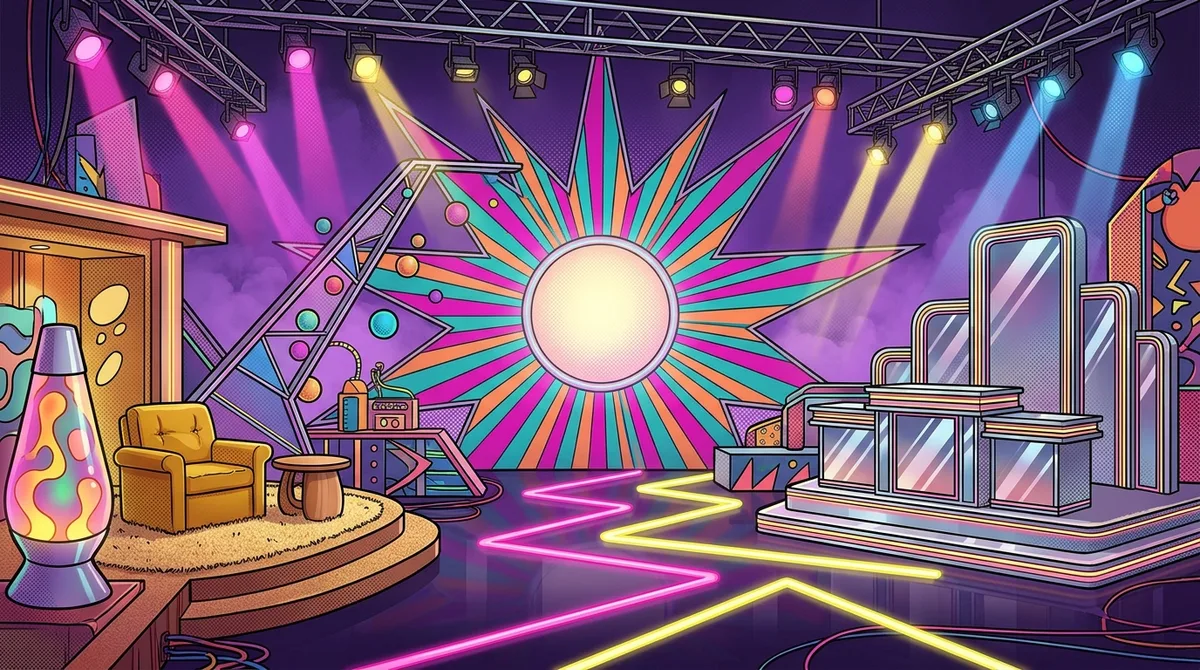
Not every 1980s game show wanted the same look. Some shouted with lights, some stacked giant props into the room, and some kept things cozy enough to feel like a night in with friends.
| Show | On air | Set style | Best fit for you |
|---|---|---|---|
| Press Your Luck | Debuted September 19, 1983 | Flashing and electronic | Fans of blinking lights and cartoon villains |
| The Price Is Right | CBS daytime since September 1972 | Carnival and bright shapes | Party lovers who like brassy music |
| Card Sharks | 1980s run | Giant props | Fans of oversized game pieces |
| Wheel of Fortune | Syndicated nighttime from September 19, 1983 | Flashing and electronic | Puzzle lovers who want a big spinning wheel |
| Family Feud | CBS revival, 1988 to 1993 | Studio survey board | Fans of crowd polls and family rivalry |
| Jeopardy! | 1980s run | Studio survey board | Trivia buffs who love a big clue wall |
| Win, Lose or Draw | 1980s run | Homey living room | Doodlers and charades fans |
| Love Connection | 1980s run | Homey living room | Fans of talk-show romance |
| Double Dare | 1980s run | Giant props and obstacle-course rooms | Kids at heart and slime lovers |
| Fun House | 1980s run | Giant props and obstacle-course rooms | Fans of silly rooms and big stunts |
| Finders Keepers | 1980s run | Giant props and obstacle-course rooms | Shoppers who love a scavenger hunt |
| Think Fast! | 1980s run | Carnival and bright shapes | Quiz fans who enjoy slapstick |
| Legends of the Hidden Temple (outside the decade) | 1990s run | Giant props and obstacle-course rooms | Jungle adventure fans |
| Nick Arcade (outside the decade) | 1990s run | Flashing and electronic | Gamers who love video game worlds |
| Supermarket Sweep (outside the decade) | 1990s run | Giant props and obstacle-course rooms | Speed-shopping fans |
Use the table as a quick map. Press Your Luck and Wheel of Fortune chase sparkle, while the living room and survey-board sets keep the focus on the people in front of the camera.
The three 1990s shows at the bottom are marked on purpose. They are fun cousins of the 1980s era, but they came later, so they get their own sections below.
Family Feud’s CBS revival ran from July 4, 1988, to March 26, 1993. The show was produced at CBS Television City in Hollywood, where its survey board became a studio fixture that many viewers still picture today.
In the classic format, contestants answered questions to earn spins, then used those spins on the Big Board to collect cash and prizes. Every turn carried a risk. A red cartoon Whammy could wipe out a player’s winnings, and one bad spin could undo a whole round. Extra spins could keep someone in the running until the final turns.
The board itself is a sight. Glass panels held rows of illuminated rings, often arranged at angles or in chevrons, and the display showed every color of the rainbow. Electronic music and sound effects filled the studio, so each spin came with a buzz, a blip, and a jolt of dread. Those mischievous animated Whammies were ready to pounce.
Press Your Luck stands out because it mixed trivia with luck, strategy, and cartoon mischief. The show was revived as Whammy! The All-New Press Your Luck for Game Show Network, and it later returned under its original title on ABC, hosted by Elizabeth Banks. ABC’s official show page listed Season 7 episodes dated July and August 2026.
At a glance
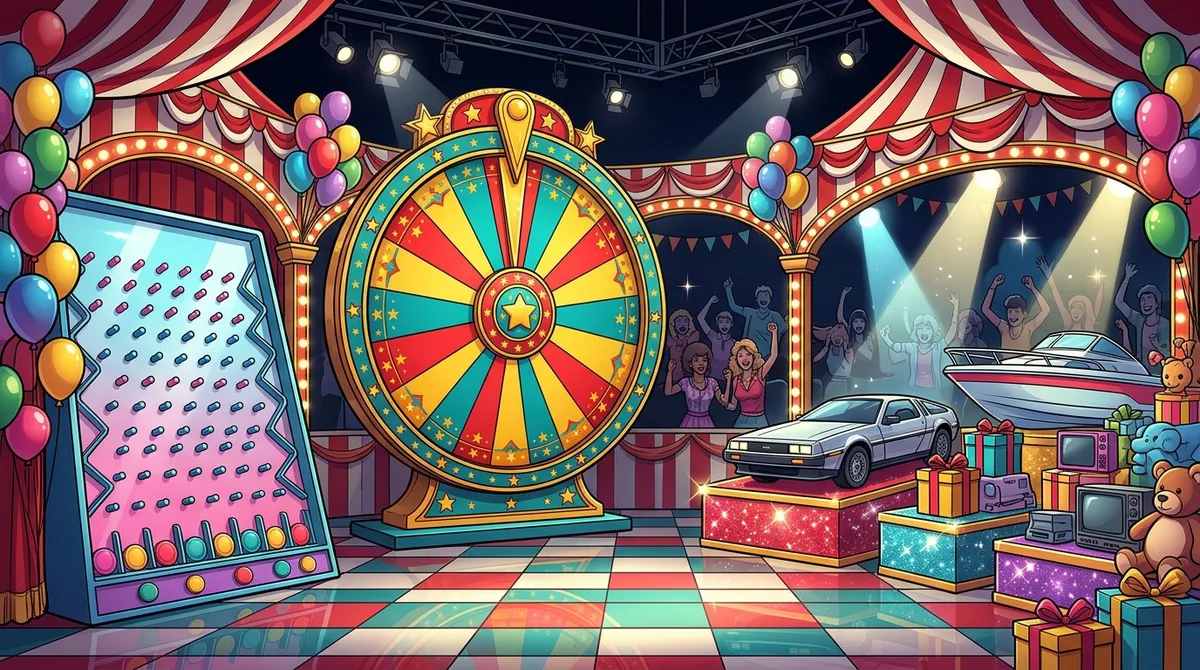
The Price Is Right is a TV game show, so nobody is racing through fake stores or dodging obstacle courses. Contestants guess the prices of real products, and the pricing games lean on everyday know-how, like what a box of cereal or a bottle of ketchup should cost at the supermarket. Players who do well can advance to the Showcase, where the big prize packages wait.
The studio feels like a carnival that wandered onto a TV set. Flashing lights, colorful shapes, and groovy flowers fill the frame, while bells and brassy music keep the energy up. Plinko gave the show a set piece that viewers could picture long after the credits rolled.
Part of the staying power is that everyday price knowledge makes you feel like you could play along from your couch. Add the audience’s cheers and those memorable set pieces, and the show becomes easy to remember. Bob Barker hosted the CBS version in the 1980s, and the program also ran in primetime from August to September 1986.
Nostalgia fans, retro-TV lovers, and synthwave fans who enjoy bright, carnival-style visuals will feel right at home. Drew Carey is the current host, as CBS listed in March 2026, and the show is still running in its 55th season. For current details, visit the official site.
At a glance
Card Sharks was a televised game show, not a stunt course. Contestants used survey guesses about how 100 people answered a question to win control of oversized playing cards. Once they had control, they called whether the next card would be higher or lower.
The 1986 version built its board from rows of five oversized cards. The champion sat on the red side and the challenger on the blue side, so the whole setup reads at a glance, even if you tune in halfway through a game.
The rules are simple and low-tech, and that’s the secret. Each turn comes down to one card and one call, which keeps the tension high. Fans remember it as a show that always felt like it was on.
If you love 1980s TV, retro sets, or guessing odds, this one is for you, and its catchy, James Bond-style theme will stick in your head. The 2019 revival on ABC was a different beast, with a head-to-head elimination game followed by a high-stakes money-card round, hosted by Joel McHale. It aired from June 12, 2019, to July 7, 2021. For current air-date details, see the official Card Sharks site.
At a glance
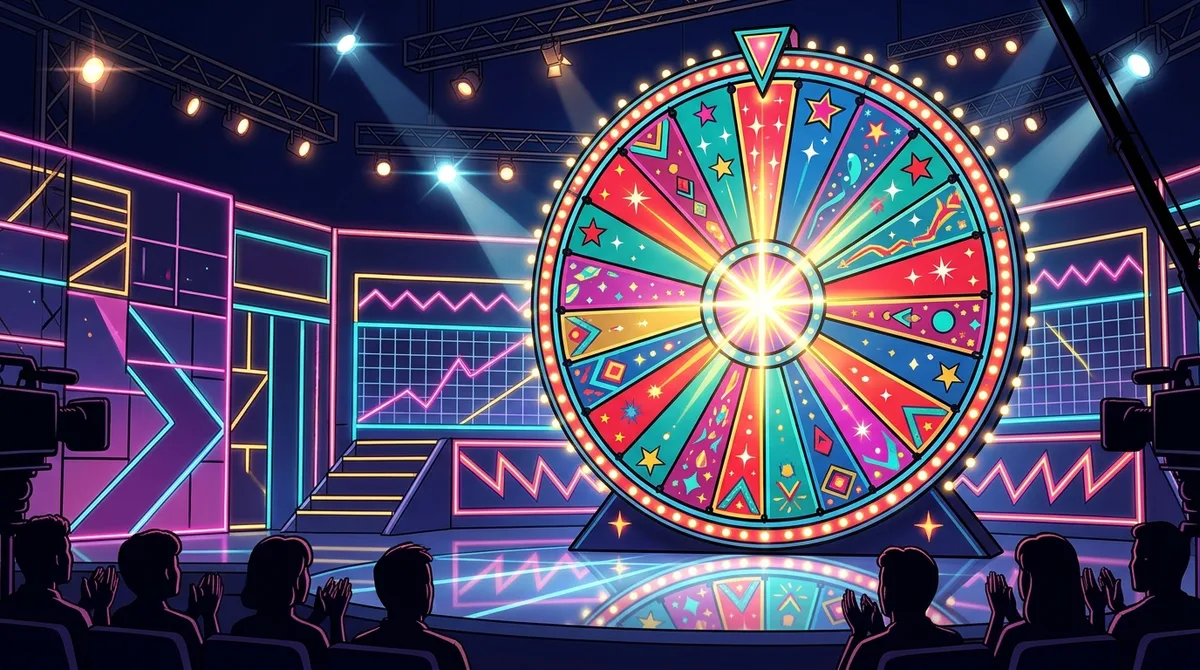
Wheel of Fortune is a word puzzle where three contestants take turns spinning a giant wheel, calling consonants, and racing their rivals to solve a hidden phrase. Contestants with enough cash can buy vowels, which is how “buying a vowel” became a phrase people still use. The Television Academy’s interview archive for the show covers its long run.
The giant carnival-style wheel and the puzzle board are the show’s boldest set pieces. Vanna White became famous for turning the board’s letters by hand during the 1980s. Contestants could also spend their winnings on displayed prizes, from cars to one unusually odd Dalmatian statue, so the stage felt like a showroom of wonderfully weird goodies.
The syndicated nighttime version premiered on September 19, 1983, after Pat Sajak became host in 1981 and Vanna White replaced Susan Stafford in 1982. By 1986, the nighttime show averaged 40 million viewers per night, according to The Strong National Museum of Play.
It suits puzzle lovers, nostalgia fans, and synthwave fans who like their TV with a spinning wheel and a dash of suspense. It’s also easy to play along at home, so grab a notepad and see how fast you can guess the phrase.
At a glance
Family Feud is a studio survey game where two families try to guess the most popular answers to questions asked of 100 people. Family members take turns at their podiums, and nobody is racing through fake grocery stores or dodging obstacle courses. It’s pure brain teasing: think like the crowd, then shout your answer before the other family does.
The big answer board is the star of the set. It reveals the survey results like a giant scoreboard for public opinion. A 1985 promotional collage shows contestants at podiums beside a score display and a large family-name sign. The studio look feels classic rather than cramped, and the original set idea even planned a giant electronic readout that could show survey answers instantly.
Richard Dawson hosted the original ABC run from 1976 to 1985, and the official show history describes his style as party-like, with contestant kisses and playful needling of answers. Ray Combs hosted the CBS revival that ran from July 4, 1988 to March 26, 1993, so the Dawson era is still worth a look.
Viewers remember the show for its surprising answers, which often turned out to be wildly different from what you’d expect. The fastest-money round adds a ticking clock that keeps the energy high. It especially suits classic game-show fans and anyone who grew up watching it on TV.
At a glance
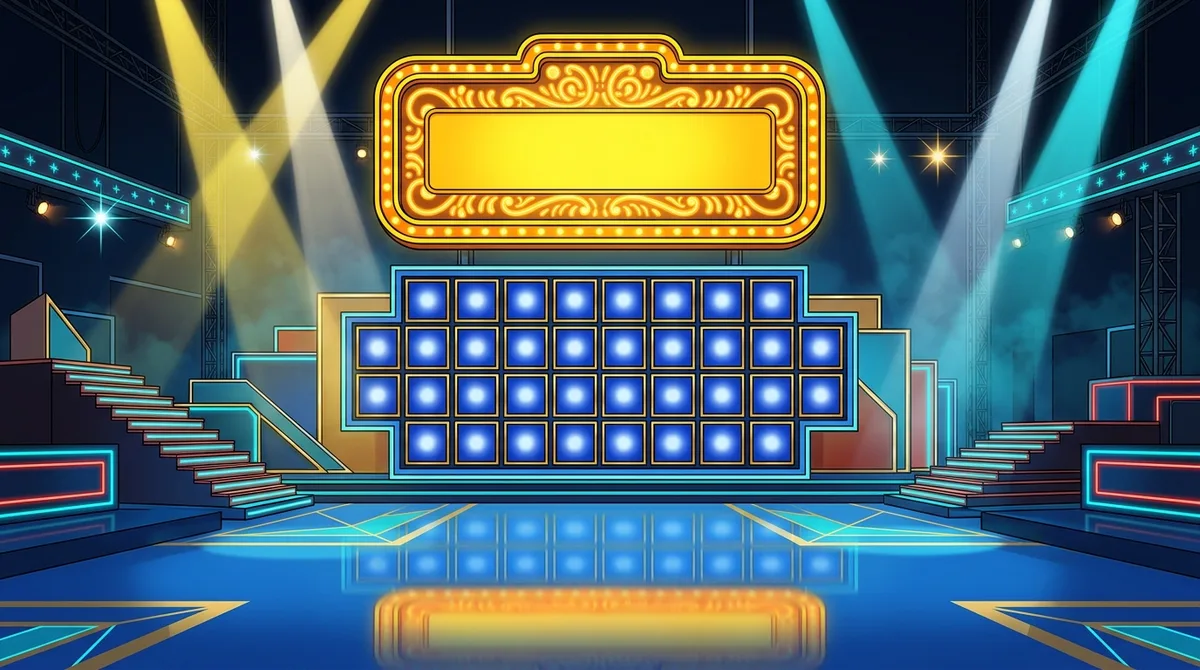
Jeopardy! doesn’t send you through fake grocery aisles or obstacle courses. Three contestants stand at their podiums with handheld buzzers while clues appear as answers. You have to phrase your response as a question, and you can only buzz in after the host finishes reading the clue, so timing is just as important as trivia knowledge.
The 1984 to 1991 set went for a bold, clean look instead of a maze of oversized props. Giant yellow JEOPARDY! letters glow against a red-orange backdrop, with blue edging and a grid of small clue monitors that make the wall look like a row of tiny TV screens. It’s sleek, it’s loud in color, and it says 1980s without needing a cardboard giant to do the talking.
The show stands out because of its reverse answer-and-question format, its familiar theme and intro, and Alex Trebek’s long run. He hosted the syndicated edition from its 1984 debut for nearly 37 seasons, and the show never left the air. Ken Jennings, famous for his record 74-game winning streak, is the current host. The show returned for its 43rd season on September 14, 2026, and you can find current details on the official site.
It suits quiz fans, 1980s TV nostalgia lovers, and synthwave fans who enjoy a sleek, old-school studio. If you like playing along at home and yelling answers at the screen, this set is made for you.
At a glance
Win, Lose or Draw was a TV drawing-and-guessing game, not a live attraction you could walk into. In the original game, two teams, each with two celebrities and a contestant, took turns sketching clues on a large pad while their teammates shouted guesses. Nobody acted anything out, so the fun came from watching a wobbly drawing slowly turn into a phrase.
The set was deliberately homey. Instead of giant props or obstacle courses, it looked like a living room, with couches, beige carpet, and ficus plants. One contemporary review describes it as a cozy living room that suited the laid-back drawing game, which kept all the attention on the sketches.
That relaxed look is a big part of why the show is still remembered. Viewers at home loved yelling their guesses at the TV, and the quick, Pictionary-like rounds made every drawing feel like a party trick. The NBC edition, hosted by Vicki Lawrence, aired from September 7, 1987, to September 1, 1989, and the syndicated version with Bert Convy ran until August 31, 1990. It isn’t a neon-soaked synthwave show, but it’s a cozy contrast to the flashier sets in this article.
At a glance
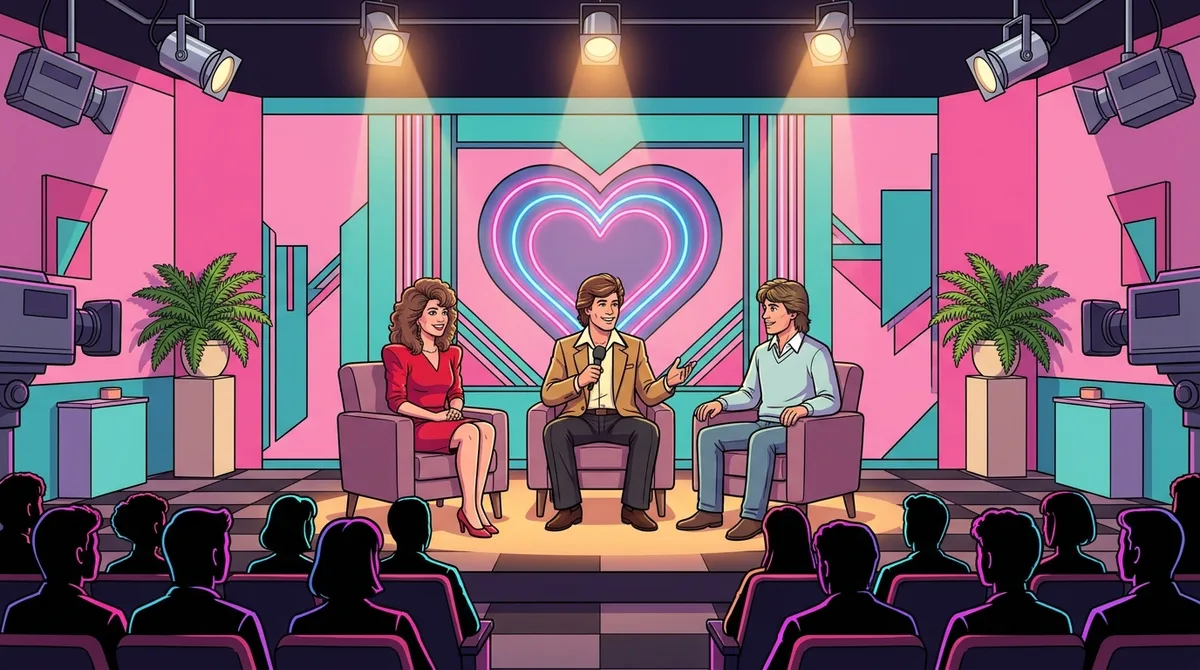
Love Connection did not ask you to race through fake stores or dodge obstacle courses. Instead, a single contestant watched video profiles of three possible dates and picked one to meet. Then came the fun part: sitting down with host Chuck Woolery to talk about how the date went.
The studio was built for conversation. Rather than giant props or flashing gadgets, the stage put the spotlight on the contestant, Woolery, and a live audience. After the date, the crowd voted on whether the contestant had chosen well. If the audience’s pick matched the contestant’s, the show offered to pay for a second date.
That mix of candid date stories and a room full of strangers judging your taste is what people still remember. The show ran in syndication from 1983 to 1994, and Fox later revived it with Andy Cohen as host, though the revival was canceled after two seasons.
It suits 1980s TV nostalgia fans and anyone who enjoys awkward, honest moments more than a game to play. If you love retro talk shows with a bit of romance, this one is a cozy pick for your watch list.
At a glance
Double Dare is where trivia meets a bucket of goo. On Double Dare, two teams answer questions and take on messy physical challenges, then the winning team races through an eight-part obstacle course in 60 seconds to earn prizes. Nobody on this show stays clean for long.
The set is pure maximalism. The original look followed a Memphis-inspired design, with blue laminate floors, yellow polka-dot podiums, orange-checkered trim, and patterns that clash on purpose. The obstacle course is packed with oversized pieces, including a human hamster wheel, a gigantic mouth, the Wringer, and the Double Dare nose. The slime cannon is the show’s signature, and it turned messy fun into a kind of TV trademark.
Part of the show’s staying power is Marc Summers, who hosted the original Nickelodeon series from 1986 to 1993. The Strong’s game-show historian says Summers repeated the show’s signature instructions more than 500 times, and millions of children had them memorized by the end of the run. Many kids dreamed of being picked to play.
Double Dare suits nostalgia fans, gamers who like physical challenges, and synthwave fans who enjoy loud, goofy 1980s TV. It returned in 2000 and again for two seasons spanning 2018 and 2019, so there’s still a sticky second wave to enjoy.
At a glance
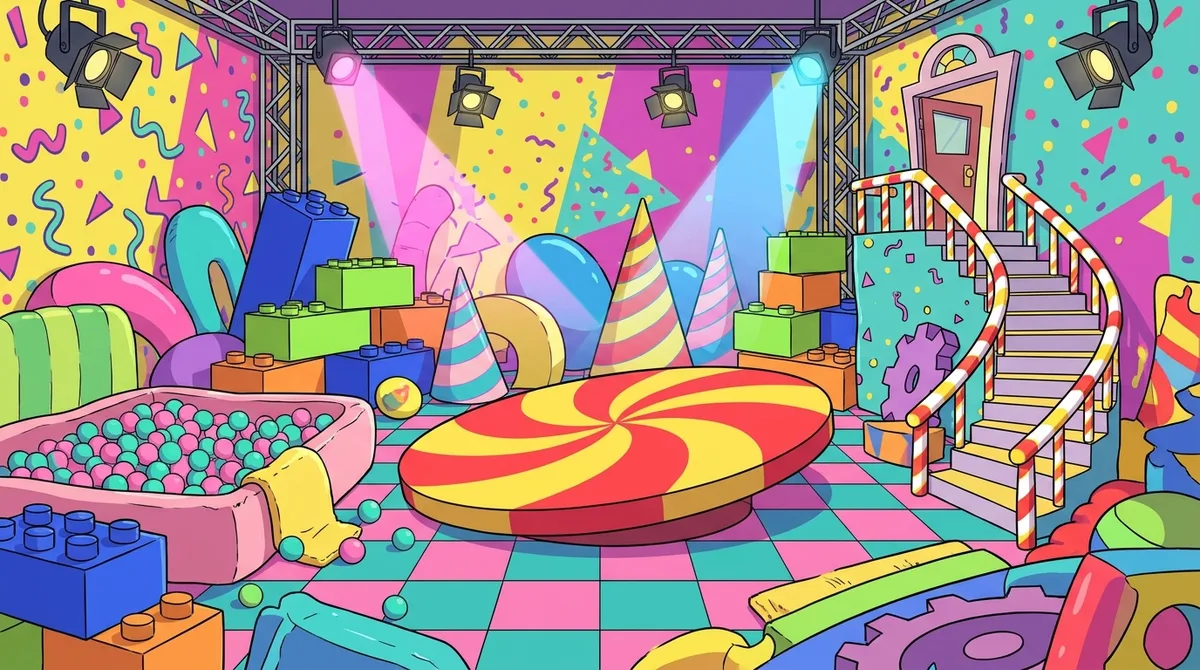
Fun House made two-person teams earn their shot at the big rooms. Teams answered trivia and took on messy challenges like water-balloon target games. Then they raced around a track in unusual push carts for a chance to enter the house. In the final round, teammates took turns dashing through wacky rooms and obstacles to grab prize tags before the two-minute clock ran out. The show is well worth a look at its TV Guide listing if you want the full rundown.
The set looks like a toy box that someone dumped onto a soundstage. Toy-box colors, oversized props, and a little glitter make every corner pop, and the rooms are odd on purpose. The Fox-era version went even further, with an upside-down kitchen, a rotating tunnel, and a bathroom with three giant colored toilets that sprayed water.
Fun House skipped the polite studio quiz formula and went straight for slapstick. Its set design was strong enough to win the 1989 Daytime Emmy for art direction and scenic design. J. D. Roth hosted the American series from 1988 to 1991, and it aired first in syndication before moving to Fox for its final season.
It suits 1980s TV fans and anyone who grew up with after-school TV, especially gamers who love obstacle-course chaos. If you miss rushing home to watch kids get drenched in a bathroom full of toilets, this one is your time capsule.
At a glance
Finders Keepers was a children’s game show where two teams first hunted for hidden objects in picture puzzles. Then came the real chase: a scavenger hunt through an eight-room house. Forget fake grocery aisles or obstacle courses. This show was all about rummaging, and the faster you dug, the better.
The set was pure theater. The Nickelodeon version used a mock house exterior, and the set opened up to reveal the rooms before the search began. Some rooms looked like an ordinary home, but others went full fantasy, including Sherlock’s Study, Ali-Baba’s bathroom, a sewer, Tarzan’s tree house, a pastry shop, and Frankenstein’s laboratory. It’s a kid’s fantasy come to life, with every door leading to a different adventure.
What people remember most is the chaos. Kids tearing through rooms while the crowd cheered them on made for a frantic, joyful mess. That playful, unpredictable energy is why the show still gets talked about by people who watched it after school.
Finders Keepers suits 1980s Nickelodeon nostalgia fans and anyone who loves a playful scavenger hunt. Gamers who enjoy quirky, chaotic game designs will feel right at home, and synthwave fans who love goofy 80s visuals get a dose of retro silliness too.
At a glance
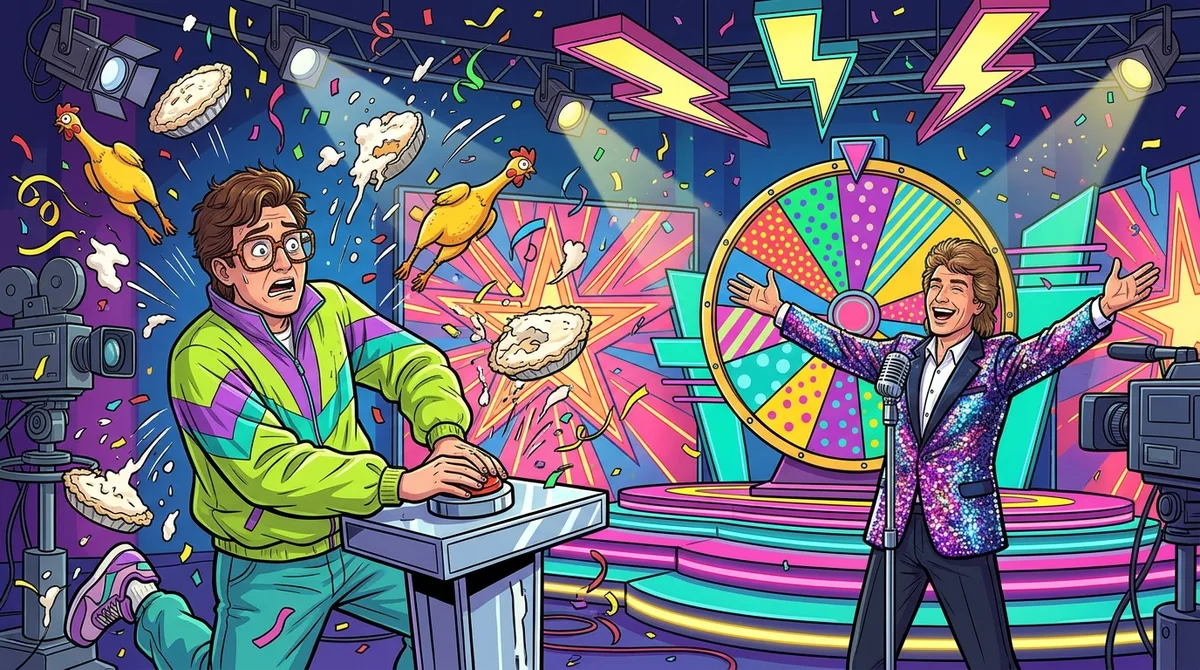
Think Fast! was a Nickelodeon kids’ show that refused to pick between brains and bodies. Two teams, Blue and Gold, played mini-games that could mean digging through a birthday cake for giant Scrabble pieces, dodging paint-filled balloons, or following color sequences. Win enough challenges and you got a shot at the Brain Bender, an image puzzle that might show a celebrity, an object, a rebus, or a shared theme.
The winning team headed to the locker room, where 15 lockers hid seven matching pairs and one unmatched locker. Costumed characters popped out with silly string or confetti, and a time bomb and a Red Herring could throw a wrench into the search. The set was packed with oversized, oddball props, and the whole place felt like a frantic slapstick storm. Later episodes were filmed at Universal Studios in Orlando, where the set leaned into a school motif.
What makes the show stick is how it mixed quick thinking with messy physical comedy. Hosts Michael Carrington and Skip Lackey kept things moving, and the show premiered on May 1, 1989, just at the edge of the 1980s. It ran until June 1991, and it’s still a fun peek at Nickelodeon’s late-80s madness. If you love bold colors and goofy chaos, you can dress for the part with the bright retro tees at retrowave.com.
At a glance
Legends of the Hidden Temple is a 1990s pick, so think of it as a younger cousin to the 1980s sets. Nickelodeon aired it from 1993 to 1995, with Kirk Fogg as host. Contestants crossed a moat, answered questions about a legend, and competed in physical games. The winning team then sent one player into a temple maze to retrieve an artifact.
The set is a jungle. The original set was described as huge and jungle-like, with a moat and a temple packed with treasure and booby traps. The star was Olmec, a six-foot foam-rubber head whose lip was moved by hand, with flashing eyes that made him seem alive. Six color-coded teams, including the Purple Parrots and the Green Monkeys, added even more color to the set.
Producer Scott Stone said the show was built to be more story-driven than game-driven. Temple guards and an obstacle course made the final run tense, and fans still praise that mix of trivia, action, and suspense.
It suits fans who want a 1990s comparison to the 1980s sets, especially anyone who grew up watching Nickelodeon after school. Gamers who love adventure-style spectacle will feel right at home.
At a glance
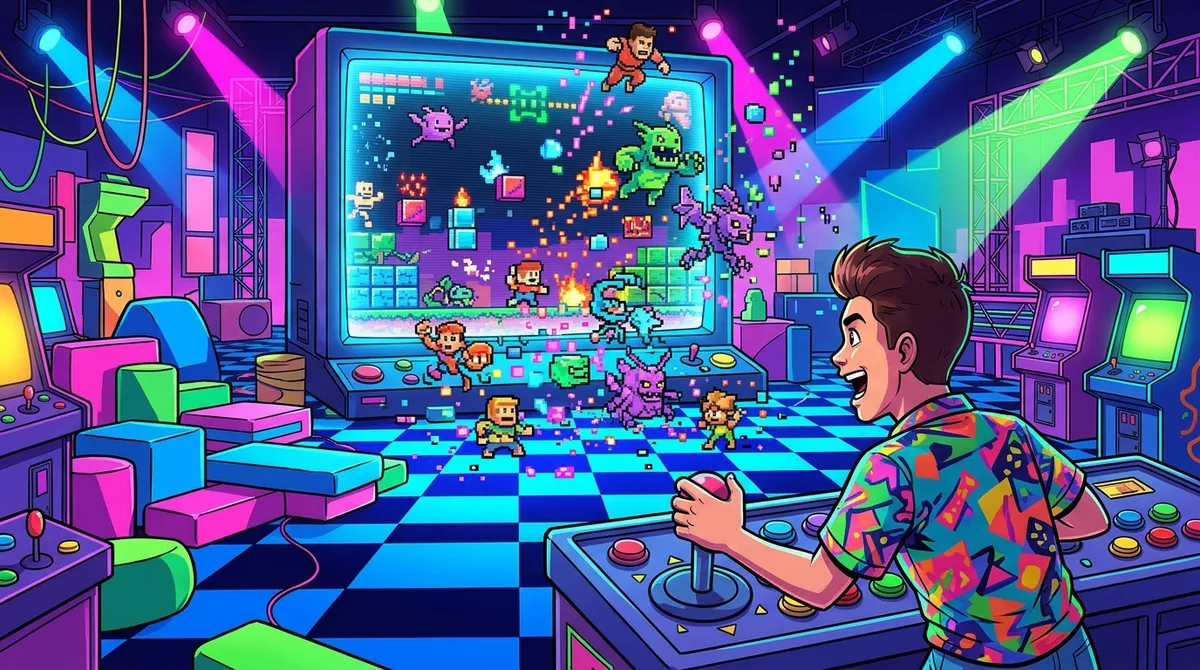
Nick Arcade paired up two kids at a time for trivia, video puzzles, and video-game face-offs, all for points and prizes. A game-board map tracked each team’s progress with Mikey, and the leading team earned a shot at the live-action Video Zone finale. Phil Moore hosted the Nickelodeon show when it premiered in 1992. That makes it an early-1990s pick rather than an 1980s one, but its video-game energy fits right in with the rest of this list.
Inside the Video Zone, a contestant ran, jumped, and dodged across full-sized blue-screen platforms, with steps, ladders, caves, and trees built right onto the set. Some pieces were described as 30 feet wide and two stories tall. Computer graphics then turned the player into an interactive sprite moving through the game world, so the real set and the video game looked like one place.
The illusion looks homemade, and that’s a big part of its charm. It’s awkward, glitchy, and unforgettable, and that mix of ambition and wobble is why it sticks. Nick Arcade blended real games and energetic hosting with a blue-screen and Mandala software trick that was bold for its time. Gamers and fans of early TV effects will find plenty to enjoy here.
At a glance
Supermarket Sweep is a game show where three teams of two use grocery-shopping skills and merchandise knowledge to win cash prizes, according to ABC’s show description. Teams answer quiz-style questions first, then race through a faux supermarket and fill their carts. The shopping round is a timed dash through the aisles, not an obstacle course, and the cart with the highest total value wins.
The store looks like a playground for oversized groceries. The aisles are stacked with giant brand props, including a Jolly Green Giant, a Pillsbury Doughboy, and Pepsi cans that contestants could collect as bonus-value items. The 2020 revival went even bigger, with eight-foot-wide teddy bears, large Yeti coolers, and the occasional huge barbecue grill that contestants wheeled through the store.
Fans often say the show made grocery shopping feel like a sport. Its wild props and frantic carts make an ordinary supermarket run look like a championship event. The 1990s version, which ran on Lifetime from 1990 to 1995 with David Ruprecht as host, is the one many viewers remember best. It arrived after the 1980s, so it sits just outside this article’s decade.
If you grew up watching the 1990s version, or you love timed shopping dashes and bright, slightly surreal TV sets, this one is for you. It’s also a great pick for game-show fans who enjoy quick thinking under pressure.
At a glance
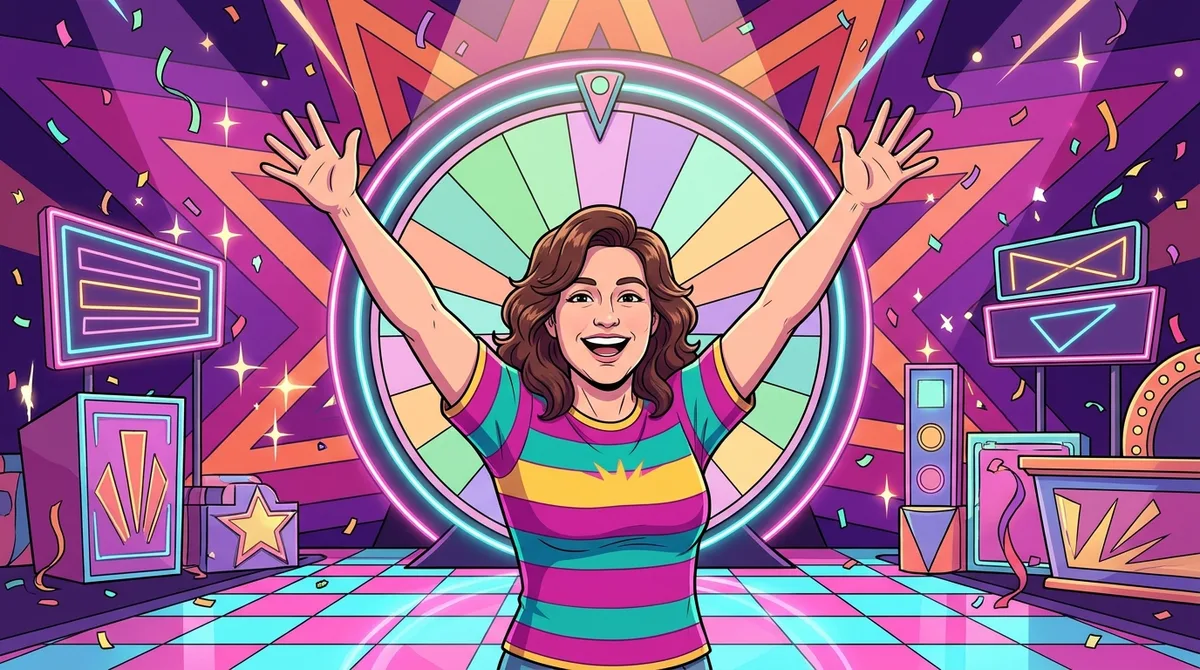
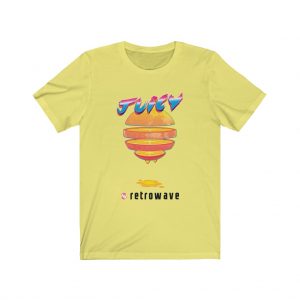
Once you’ve picked your favorite neon stage, it’s time to pick your shirt. Retrowave carries retro, vaporwave, synthwave, and 80s-inspired graphic tees, plus all-over-print tees, so your game night outfit can look like a Press Your Luck board come to life.
Standard unisex graphic tees are made from 100% Airlume combed and ringspun cotton. The fabric is light at 4.2 oz/yd², with a retail fit and a tear-away label, and the tees run true to size. Fiber content may vary a little by color, so check the product page if a specific shade matters to you.
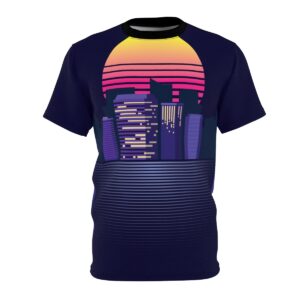
Want to go loud? The Blue Rays all-over-print tee is 100% polyester with a regular fit and no tag at the neck, so nothing itches while you’re shouting “No Whammy!” at the screen. It comes in 4.0 oz and 6.0 oz fabrics. Choose the lighter one for summer marathons and the heavier one for chilly nights. It also runs true to size.
Prices depend on the style. Standard graphic tees are listed at $27.00 and often go on sale for $22.95. Some tees are listed at $11.99, with a sale price of $10.19. All-over-print tees are listed at $32.00, with a sale price of $27.20. The newsletter announces special offers and new arrivals, so it’s worth a look before you buy.
Size charts appear on each product page, so measure a shirt you already own before you order. Decide on fabric and fit first, because changes or cancellations are only possible within a short window after ordering. Once an order is processed, changes may not be possible. Custom orders may also take longer to ship than standard ones.
If the fit isn’t right, most items can be returned within 30 days of receipt, as long as they’re in new condition. Retrowave also states that it sources products from suppliers who follow fair labor standards, which is a nice bonus for a shirt you’ll wear through every rerun.
Pick your favorite neon stage, then pick the shirt that matches it. Retrowave ships internationally to most countries, but shipping costs and delivery times vary by destination, so check the details for your location before you hit buy.
Pay with Visa, MasterCard, American Express, PayPal, or another digital payment platform. Once your order goes through, you’ll get a confirmation email, so keep it handy in case you need to make a change. Changes and cancellations are only possible within a short window after ordering, so don’t sit on it if you realize you picked the wrong size.
Have a question before you buy? Email customer support or use the Contact Us page. Sign up for the newsletter too, since that’s where special offers and new arrivals get announced. After your purchase, you’ll get an email inviting you to review your product, and you can leave reviews on product pages to help the next fan who is stuck on sizing.
Grab a tee in your favorite color, check the size chart, and let the flashing lights do the rest.
Have questions about sizing or your order? Reach out to Retrowave through the Contact Us page.