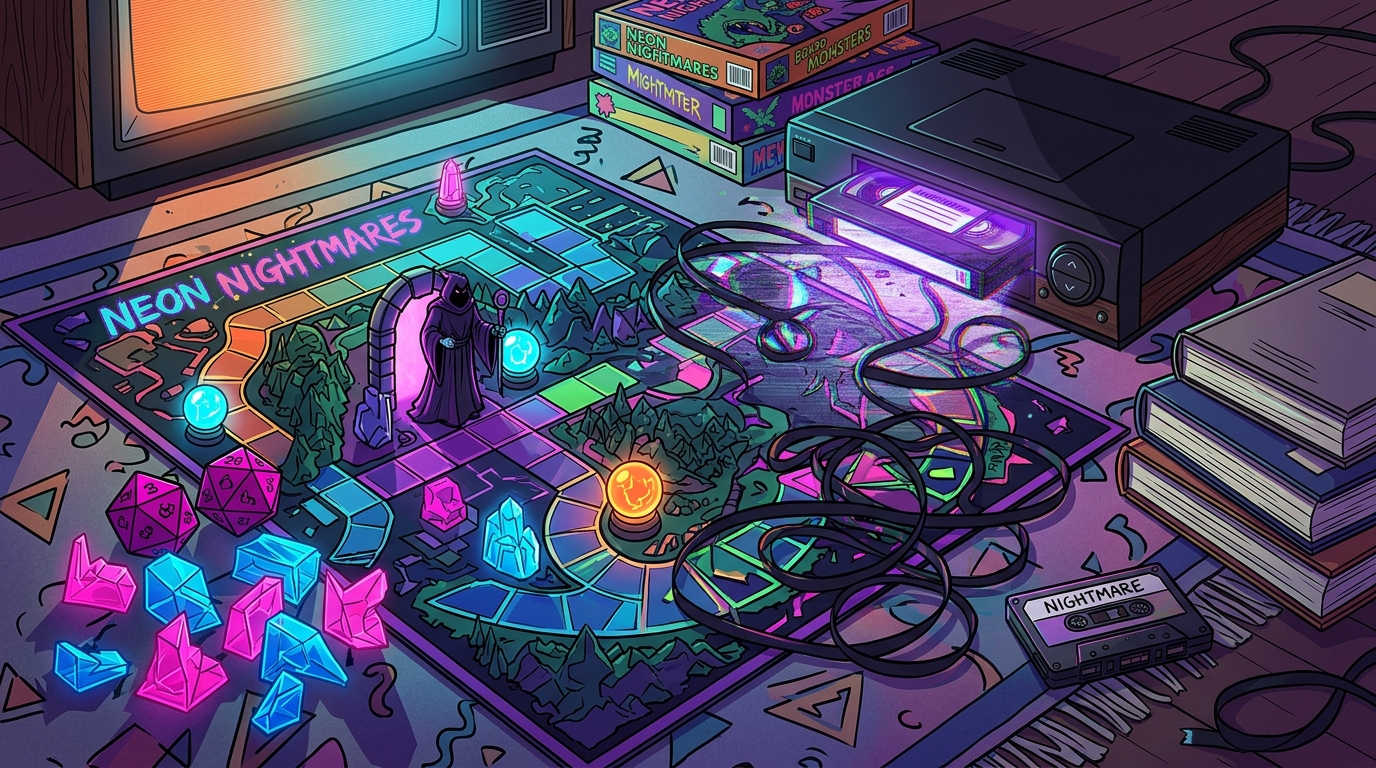
Put on your neon leg warmers and grab a Crystal Pepsi, because we are traveling back to a decade where toy designers were clearly losing their minds. While you might remember the classics, the era of hair metal and mullets also birthed the weirdest 80s board games to ever grace a shag carpet. It was a wild frontier where publishers tried to shove VCR tapes, cassette players, and clunky batteries into every box, hoping to create the future of family game night.
You probably spent your Saturday mornings dodging haunted plastic houses that literally screamed at you or bowing down to motorized towers that looked like props from a low-budget sci-fi flick. These games weren’t just hobbies; they were loud, glitchy fever dreams that required a degree in mechanical engineering just to set up. If you miss the smell of burning electronics and the sight of grid-patterned boxes, it is time to revisit the high-tech oddities that made the eighties gloriously strange.
Imagine you are hanging out in a wood-paneled basement under the glow of a neon lamp when someone pulls out a game that looks more like a haunted appliance than a tabletop classic. Shrieks and Creaks was the pinnacle of 1980s over-engineering, featuring a giant plastic mansion that actually housed a functional cassette player. The gimmick was simple yet totally bizarre because you had to shove plastic keys into the house to see if the tape would scream at you. It was a stressful game of musical chairs where the prize was just getting jump-scared by a low-fidelity recording of a ghost. This analog nightmare perfectly captured the era’s obsession with forcing technology into places it did not necessarily belong.
The actual mechanics of the game were a masterpiece of clunky, plastic ingenuity that would make any modern gamer scratch their head in confusion. Instead of just rolling dice and moving a pawn, you were at the mercy of a mechanical trigger system that decided when the cassette tape would spin. If you inserted the wrong key, the speaker would erupt with a distorted shriek or a ghostly moan that sounded like it came from a haunted radio station. It was essentially a high-stakes version of hot potato played with a tape deck and a lot of neon-colored cardboard. You spent half the time playing and the other half wondering if the batteries were about to die and turn the ghost into a slow, demonic growl.
There is something undeniably charming about how hard toy companies tried to make board games feel like high-tech interactive movies before the internet existed. These games were the ultimate flex at a sleepover, even if the advanced electronics were really just a bunch of plastic levers hitting a play button. Looking back at these relics feels like peering into an alternate dimension where the retro cassette players were the peak of human achievement. You have to respect the hustle of a decade that decided a standard deck of cards was too boring and needed a screaming plastic house to spice things up. It was weird, it was loud, and it probably gave an entire generation a very specific fear of magnetic tape.
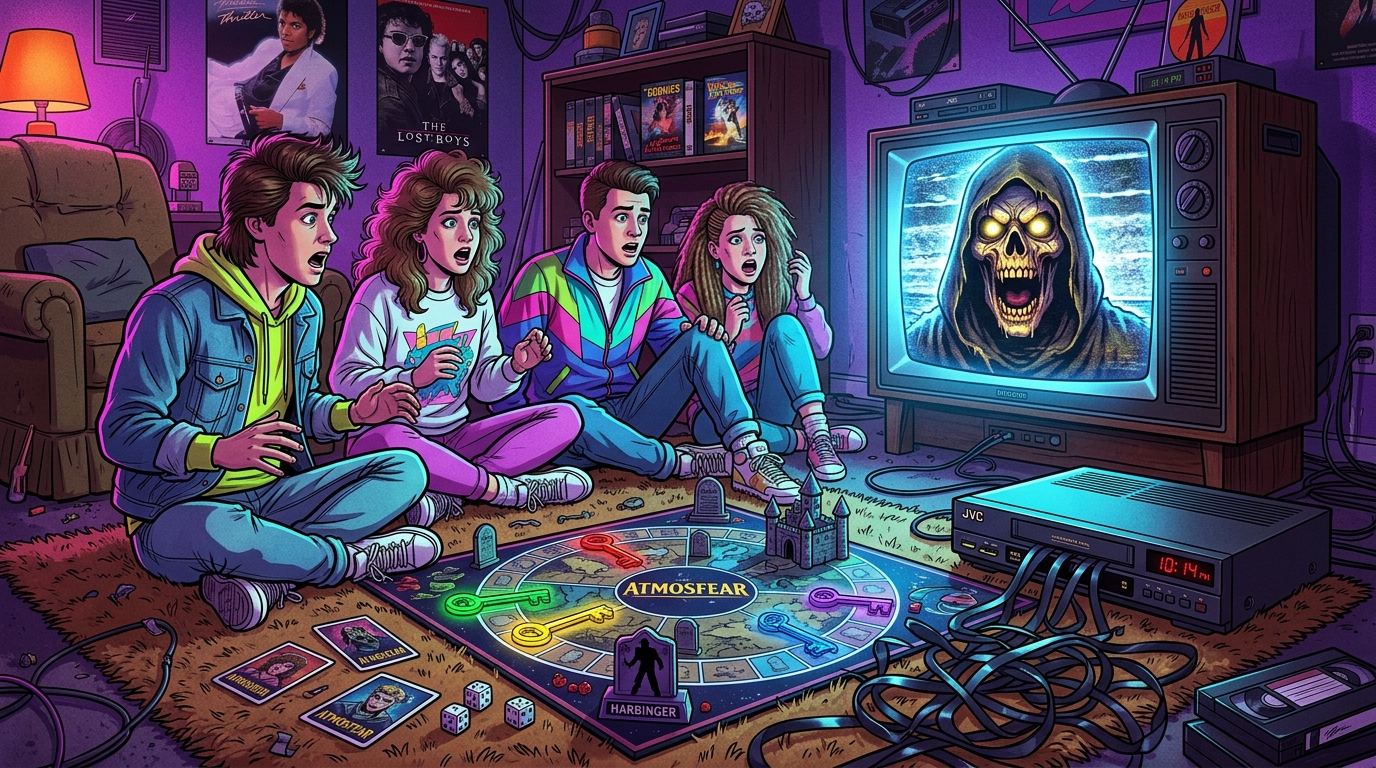
Imagine your living room transformed into a neon-lit command center where the most advanced piece of technology is a clunky plastic box and a black ribbon of magnetic tape. In the 80s, the height of gaming sophistication was the VCR-based games, a genre that promised cinematic thrills but mostly delivered a workout for your pointer finger. You would gather your friends around the heavy floor model television, ready to face the supernatural, only to spend the next twenty minutes fighting with the tracking dial. Instead of battling ghosts, you were desperately trying to stop the screen from flickering like a haunted strobe light. It was a time when high-tech meant waiting for a tape to rewind while everyone awkwardly snacked on neon-orange cheese puffs in total silence.
The legendary Doorways to Horror is the perfect example of this bizarre struggle, featuring a chaotic mix of public domain movie clips and frantic gameplay. You spent more time hunting for the correct timestamp on your VCR than you did actually moving your piece across the board. The game turned you into a frustrated film editor, pausing and skipping through grainy footage of old monsters just to see if you were still alive in the round. It was a glorious, disorganized mess that felt like a fever dream fueled by synthwave music and low-budget special effects. Even though the mechanics were clunky and the video quality was questionable, there was something undeniably magical about the flickering glow of those cheesy horror scenes.
The sheer absurdity of these games is what makes them such a nostalgic trip for anyone who survived the era of physical media. You had to respect a game that required a massive piece of hardware and a prayer to the cassette gods just to function correctly. While today we have seamless graphics and instant loading times, we lost the hilarity of a narrator shouting at us through a fuzzy television screen. These VCR titles were the ultimate test of patience, proving that 80s kids would put up with almost anything for a bit of spooky atmosphere. They remain a hilarious reminder of a decade that was obsessed with the future but still tethered to a tangled mess of magnetic tape.
Imagine sitting down for a cozy game night only to be confronted by a massive, humming plastic monolith that looks like it fell off the set of a low-budget sci-fi flick. Dark Tower was the ultimate status symbol for 80s kids, featuring a central rotating hub that acted as a primitive digital dungeon master. You spent half the night squinting at tiny red LED lights while the machine made grinding noises that sounded like a blender full of gravel. It was peak high-tech luxury for a decade obsessed with putting batteries in everything, even if the advanced technology mostly just tracked how many peg-legged warriors you lost to a digital plague.
The real challenge of the game was not defeating the brigands or finding the ancient keys, but praying the tower did not have a total hardware meltdown before you reached the final battle. There was nothing quite like the heartbreak of being one turn away from victory only to have the gears jam or the internal light bulb burn out. You were left staring at a silent hunk of beige plastic while your neon-colored dreams of glory evaporated into the shag carpet. It was a glorious, over-engineered mess that perfectly captured the era’s frantic desire to turn every living room into a miniature, glitchy arcade. If you prefer your high-tech challenges to be a bit more intentional, you might enjoy exploring the best cyberpunk tabletop games that trade clunky plastic for deep, neon-soaked strategy.
The 1980s were a glorious, neon-soaked fever dream where game designers clearly decided that simple cardboard just was not enough. You have to respect the sheer audacity of a decade that tried to force VCRs, cassette tapes, and motorized plastic towers into your family game night. These games were often over-engineered messes that required a degree in electrical engineering just to set up, but that was all part of the charm. Whether you were squinting at a tiny screen or jumping out of your skin because a tape recorder screamed at you, the experience was always memorable. We look back on these relics not because they were perfect, but because they were bold enough to fail in the most entertaining ways possible.
There is something truly special about the chaotic energy of a game that relies on bulky batteries and a dream. These tabletop oddities captured a specific moment in time when the future felt like it was made of glowing grids and synthesized sound effects. Even when the mechanics were clunky or the plastic pieces felt like they might snap at any second, the ambition behind them was infectious. You probably still have fond memories of gathering friends around a coffee table, waiting for a mechanical tower to spin or a ghostly voice to tell you your turn was over. These games remind us that tabletop gaming does not always have to be balanced or logical to be an absolute blast.
Ultimately, we celebrate these bizarre relics because they represent a time when the rules of play were being rewritten with every new release. The 80s gave us a library of strange artifacts that still haunt our attics and our hearts with their vibrant box art and weirdly specific themes. They are a reminder that gaming is at its best when it is a little bit weird, a little bit loud, and totally unafraid to try something ridiculous. So, dust off those old cartridges and find some spare C batteries, because the glorious mess of the 80s is always ready for a comeback. These games might be technological dinosaurs, but they will always be the ultimate retro sci-fi vibe of our nostalgic collections.
Toy designers back then were convinced that every game needed a battery pack or a cassette tape to be cool. They were trying to compete with the rise of video games by turning your living room floor into a glitchy, plastic tech lab. It was a wild time where we traded simple dice for low-fidelity screams and motorized towers.
Unlike modern apps, this game used a literal cassette player built into a plastic mansion to deliver jump scares. You had to shove physical keys into the house and hope the analog tape did not yell at you. It was a masterpiece of over-engineering that turned family game night into a stressful, noisy encounter with a haunted appliance.
Setting these up usually requires a degree in mechanical engineering and a massive stash of C batteries. Between the clunky plastic parts and the finicky electronic components, you will spend more time troubleshooting the future of gaming than actually playing it. Just make sure you have a screwdriver handy for those stubborn battery compartments.
The 80s aesthetic was all about grid patterns, neon colors, and sci-fi props that looked like they fell off a movie set. Publishers wanted everything to look high-tech and cutting-edge, even if the actual gameplay was just moving a pawn around a board. It was all about that synthwave vibe and making you feel like you were living in a digital frontier.
You can still play them if you can find a working unit that has not succumbed to battery acid or tangled tapes. They are glorious, glitchy fever dreams that offer a level of tactile weirdness you just cannot get from a smartphone app. Just be prepared for the smell of old plastic and the sound of grinding motor gears.
The goal was to shove as much future into a cardboard box as possible to blow your mind. Whether it was a motorized tower or a screaming house, these games were designed to be loud, proud, and totally bizarre. They captured a specific moment in time when we were not sure if we were playing a game or operating a heavy piece of machinery. Many of these products were marketed through 1980s toy commercials that promised a high-octane cinematic experience right in your living room.