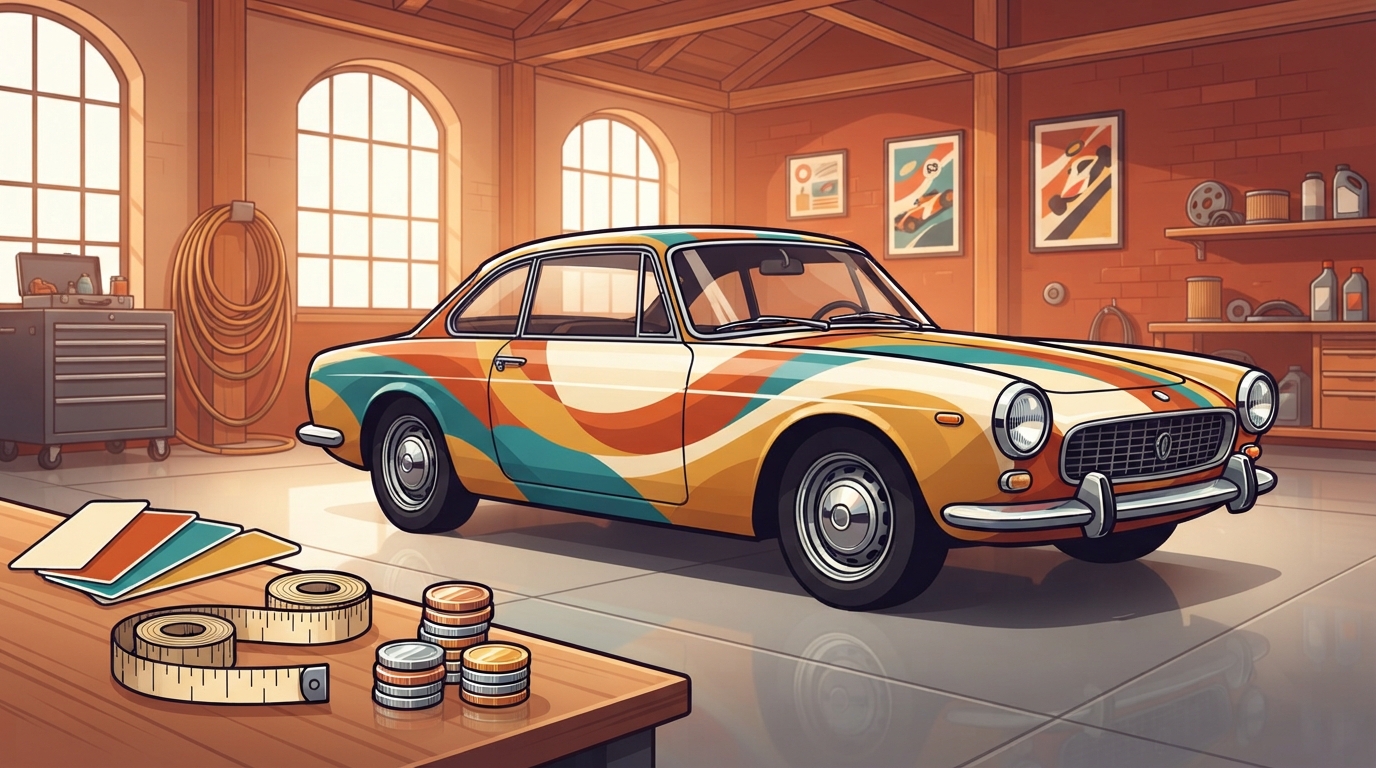
Retro car wraps don’t have a standard rate. Gloss or matte wraps average $2,000–$3,000 for a compact coupe or sedan and $3,000–$5,000 for an SUV, while chrome can run $6,000–$8,000, according to Edmunds. These figures are useful starting points, not a universal price tag for every neon-drenched dream machine.
A retro look could mean a vintage-inspired color, partial accents, or custom period graphics. Each choice can change the coverage, materials, and labor. Custom artwork and printing may add separate costs: a general-market figure for custom design is $550, while one 250-square-foot printed-film example totals $1,312.50 before design or installation. Compare what each quote includes, or your budget could get sent to the upside-down.
There’s no single standard price for a retro car wrap. Edmunds’ estimates put gloss or matte wraps at $2,000–$3,000 for a compact coupe or sedan and $3,000–$5,000 for an SUV. Vehicle size, coverage, finish, and custom graphics all shape the final bill.
Edmunds describes a car wrap as vinyl decals applied over body panels to change a vehicle’s appearance. Its car wrap cost estimates include the gloss and matte averages above. Treat them as useful reference points, not guaranteed prices for every retro design. Your neon dreamscape isn’t a standard off-the-shelf package.
A single vintage-inspired color is a simpler brief than custom period graphics. Artwork needs to be prepared for printing and fitted across the vehicle’s panels, which can add design, printed material, and labor costs. More coverage can also mean a different total than a partial accent treatment. Like a final boss, the price tag depends on the details.
A general market figure for full color-change wraps starts at $2,400. That starting price isn’t a promise for every vehicle. The final amount depends on your car, chosen finish, and how much disassembly the job requires. A complex finish or a vehicle that takes more work to prepare can push the quote beyond the starting figure.
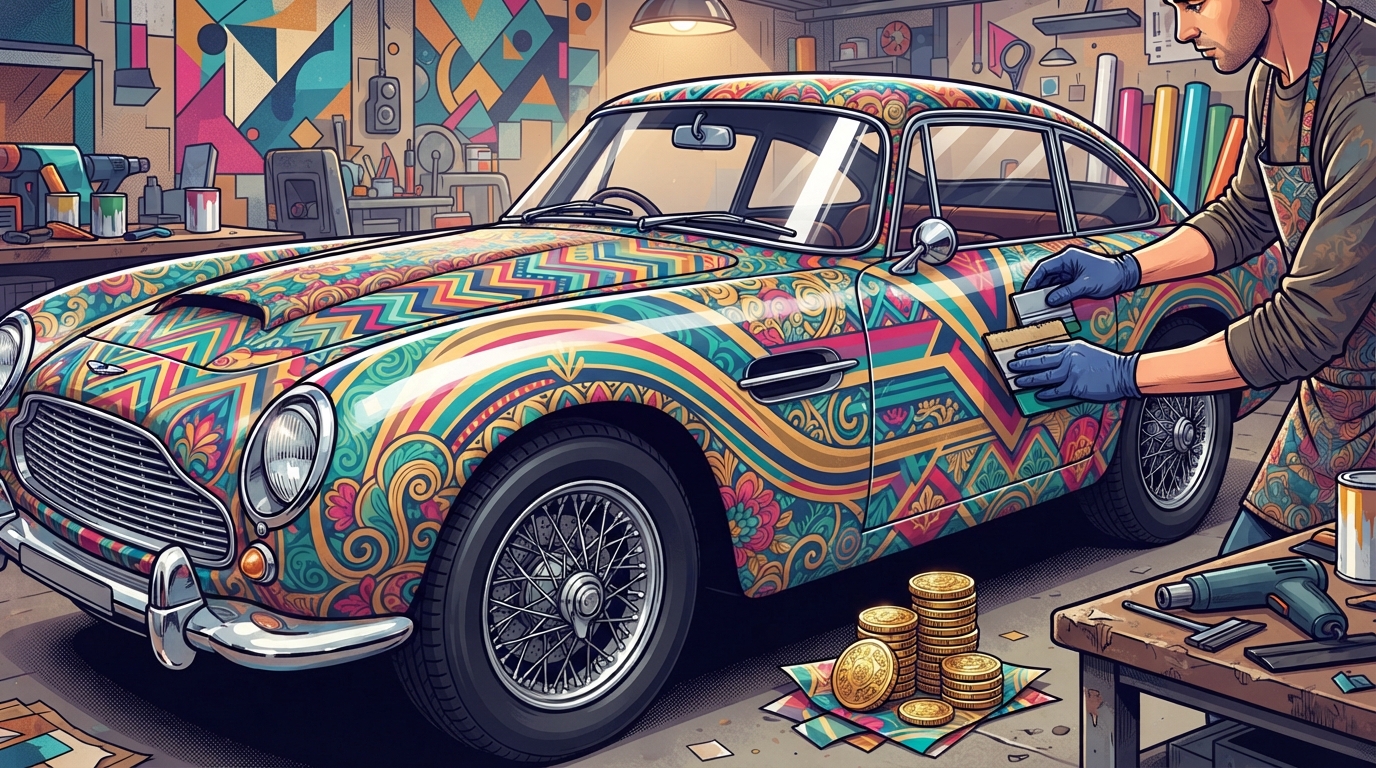
Retro wrap styles can involve different costs depending on coverage, finish, artwork, printing, and installation needs. A solid color mainly involves film and application, while custom graphics also require artwork and printed material.
A partial accent treatment covers less of your vehicle than a full graphic wrap, but placement still affects the work involved. Custom period graphics add a creative step: the design has to be prepared for printing and arranged across the vehicle’s panels. Think of it as the difference between picking a neon palette and commissioning your own arcade attract screen.
The finish can add a boss-level cost bump, too. Edmunds estimates chrome wraps at roughly $6,000–$8,000, showing how specialty film and more complex installation can raise the price. Edmunds’ chrome wrap estimate
General market figures put custom wrap design at $550, with show-wrap design starting at $850. Those figures cover design, not the vinyl or installation, so check whether a quote lists artwork separately from the physical wrap.
For printing, 250 square feet of Avery Dennison MPI 1105 film at $5.25 per square foot totals $1,312.50 before shipping and taxes. That example excludes design and installation, so it’s a material cost, not a turnkey retro-wrap price.
Design and film examples aren’t installed retro-wrap package prices. A full quote may combine artwork, printed film, and application, but these figures show why those items can appear as separate line items instead of one all-in neon number.
Not necessarily. A wrap isn’t always cheaper than paint, and no single comparison fits every car or finish. A wrap is vinyl applied over body panels to change a vehicle’s appearance. Published wrap estimates vary by vehicle size and finish, but they don’t provide a paint-price comparison, so they can’t show which option costs less for your particular car. Edmunds’ wrap cost estimates are a reference for wraps, not a head-to-head comparison with paint.
For a fair comparison, ask for quotes covering the same vehicle, amount of coverage, finish, and preparation work. Otherwise, one quote might cover a full color change while another covers only selected panels, leaving you comparing two different quests.
Custom retro graphics bring separate design and printing considerations. Check whether each quote includes artwork, printed vinyl, installation, and preparation, or lists some items separately. A quote that skips the graphics may look cheaper until the pixel-perfect artwork joins the party.
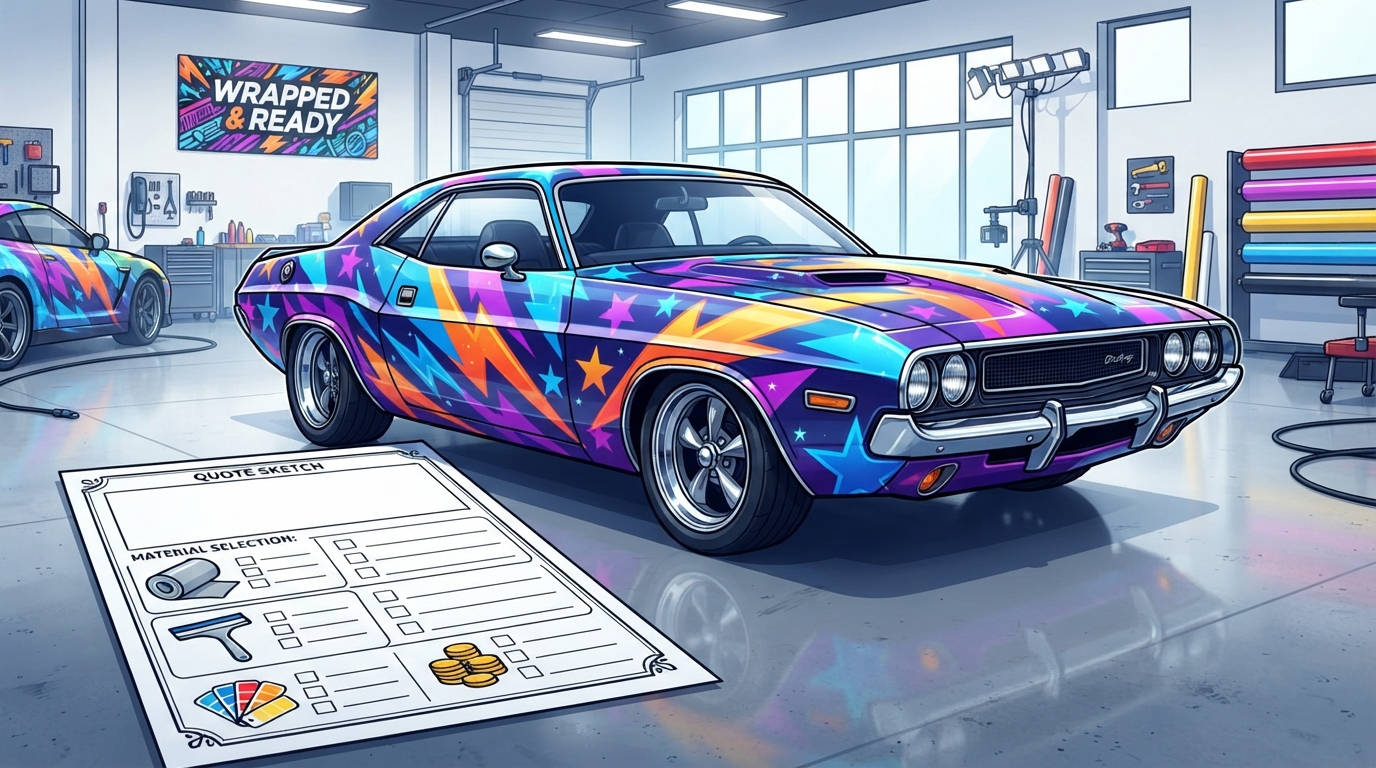
A useful retro-wrap quote spells out coverage, film and finish, design and printing, installation, and any extra work that could change the total. The general-market $2,400 full color-change starting figure is context, not a promised final price for your vehicle.
Use the same checklist for every local quote, so you’re comparing matching neon quests instead of apples and arcade cabinets:
A properly maintained car wrap can last up to five years, but outdoor parking and irregular cleaning may shorten its life. Edmunds notes that a wrap on a car parked outdoors in Southern California and not cleaned regularly may last only one year. These examples come from Edmunds’ wrap lifespan guidance. That gap matters when you compare quotes: a lower upfront price may look different if the finish doesn’t last as long as you hoped. Neither example is a guarantee for every climate, vehicle, or wrap. Your car’s parking conditions and care routine matter, and one wrap’s lifespan won’t predict exactly how long another will hold up. Before choosing a finish, ask the installer for care guidance specific to the film and finish in your quote. Find out how to clean the wrap and whether the installer recommends special care for its parking conditions. A custom retro graphic and a solid color may use different films or finishes, so don’t assume one care routine fits every neon ride. Get the right instructions, or your dream machine could hit the “game over” screen early.
Vehicle color-change requirements vary by jurisdiction, so check the rules where your vehicle is registered before switching its look from sunset orange to arcade purple. In Indiana, Senate Enrolled Act 331 took effect January 1, 2026. It requires passenger-vehicle owners to report certain color changes caused by installing or removing a partial or full vinyl wrap within 30 days. Read the Indiana Bureau of Motor Vehicles’ color-change notice for details. This requirement applies in Indiana, not automatically everywhere.
The Indiana BMV says failing to report a covered change within 30 days could result in a law-enforcement warning. If the vehicle is used in a crime after an unreported color change, the owner may face a Class C misdemeanor charge. Less fun than picking a synthwave palette, sure, but worth knowing before the wrap goes on.
Your next move is to write a one-sentence brief for your retro wrap: name the vehicle, the look you want, and whether you’re considering a full color change, partial accents, or custom period graphics. For custom artwork, gather reference images and note which panels should carry each design.
Send the same brief and clear photos of your vehicle to local wrap shops. Ask each shop to price the same coverage and finish, so you can compare quotes without one provider pricing the hood and doors while another prices the whole car.
Request separate costs for film, custom design, printing, installation, and any disassembly or other added work. If you already have artwork, ask whether the shop can use it and what file format it needs. If you need artwork created, ask what design revisions and print-ready files are included.
When the quotes arrive, check that each one names the panels, film and finish, design scope, installation, and possible extra work. Ask for a revised written quote if an item is unclear or missing. A clear brief gives you a practical way to compare the real cost of your specific retro vision, not just a tempting headline price. Then choose the option that fits your budget and sends your ride toward the neon horizon.