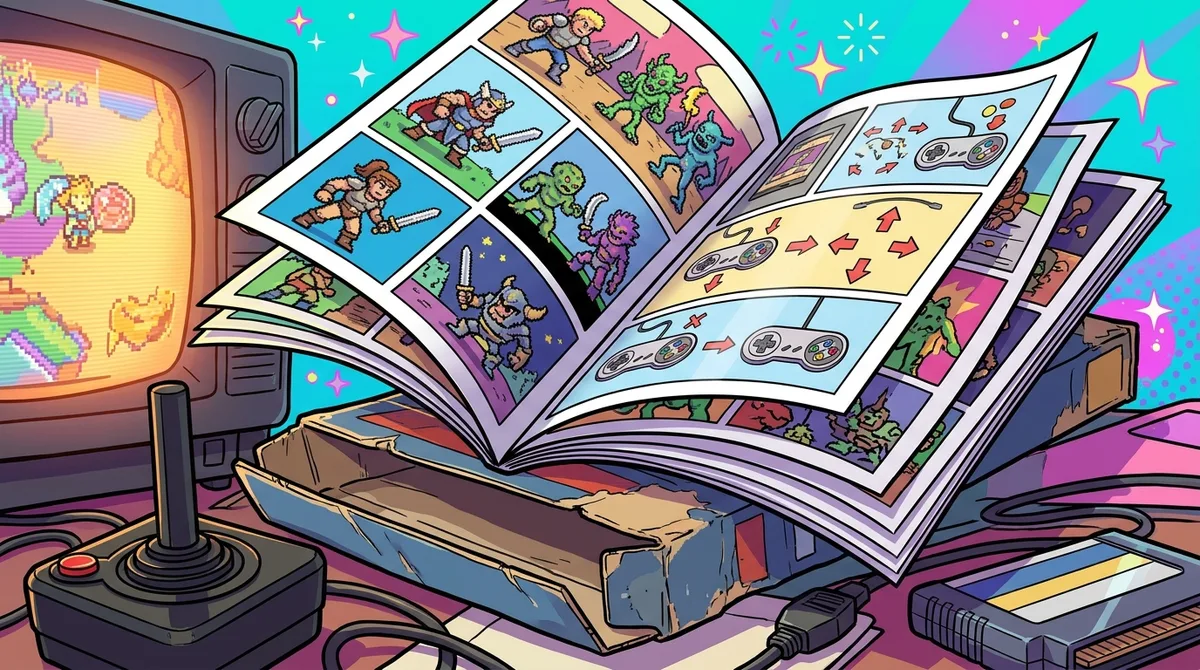
Retro video game manuals were the paper bonus pages tucked into old game boxes, and they often carried far more than button layouts. Take the 1980 Atari Adventure manual. It told you to switch off the console before swapping cartridges and introduced three dragons, Yorgle, Grundle, and Rhindle, as grumpy roadblocks.
Those paper treasures are rarer than you’d expect. A 2023 Video Game History Foundation study found that 87% of classic US-released games were out of print. Finding one with the map still inside is a legit quest.
Old game manuals were packed with extras because the games themselves had very little room. When cartridges and discs could only hold so much, the paper inside the box picked up the slack. It carried control guides, backstory, and character art that the screen couldn’t show. You could read about your mission before the first level even loaded.
Some manuals went further and read like short fiction. The 1984 BBC Micro space trading game Elite came with a novella called The Dark Wheel, so you were reading about your ship before you ever flew it.
Manuals also encouraged you to figure things out for yourself. The 1987 The Legend of Zelda map-and-strategy insert called its map and tips a last resort. That left plenty of room to wander the overworld and stumble onto secrets on your own. Finding a hidden path felt like a personal victory, and the paper gave you just enough of a nudge to keep you going.
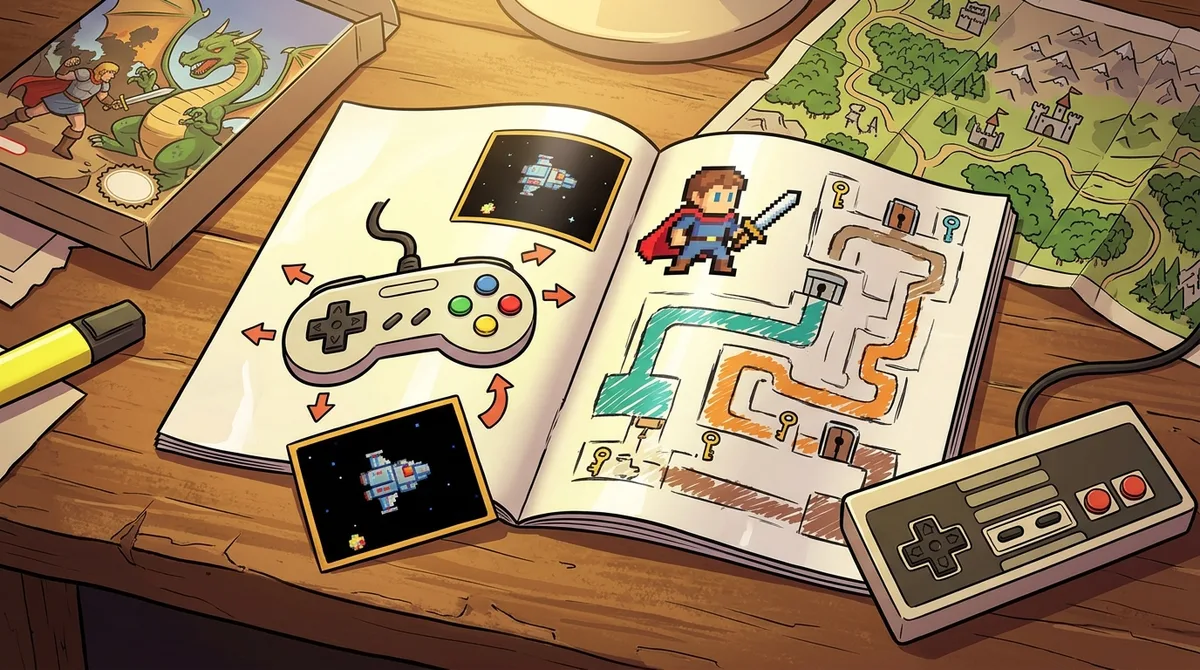
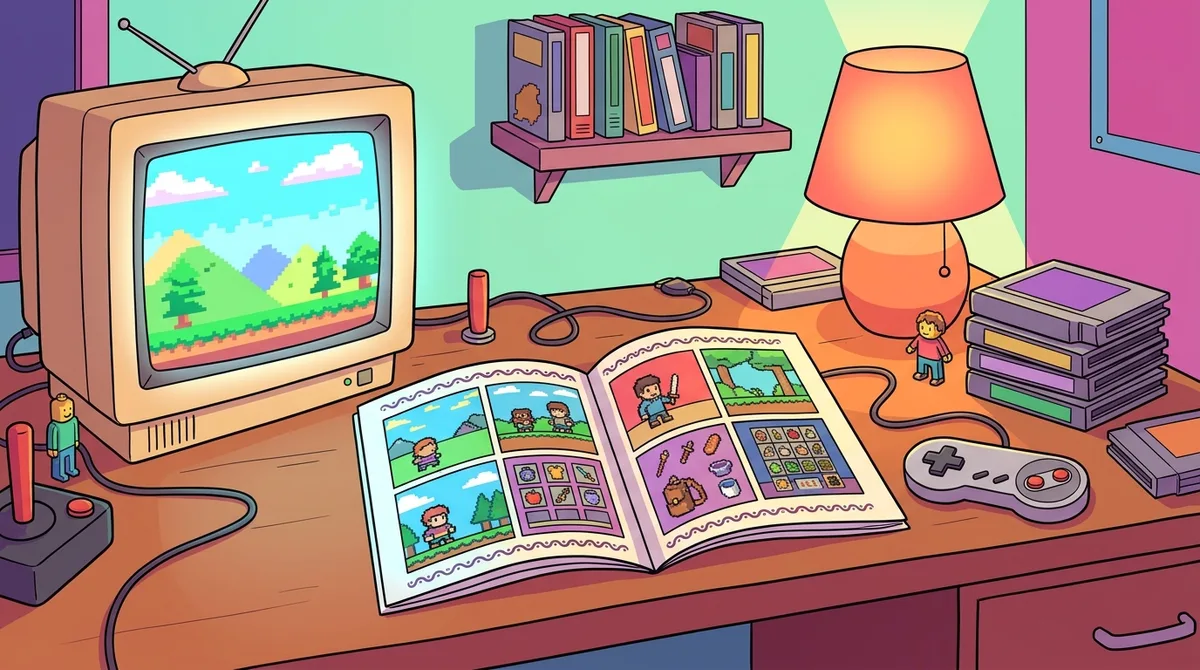
Classic game manuals ranged from plain control notes to full comics and short stories, and the best ones felt like treasure hunts. The paper inside a box could be practical, fanciful, or both at once.
The 1987 Zelda insert was part manual, part map. Its colorful overworld map labeled regions such as Lost Woods and Lost Hills, so you could study the layout before you ever wandered into the wilderness.
Other publishers got even more ambitious. The 1994 adventure Beneath a Steel Sky shipped with a comic by Dave Gibbons, a 2000 AD artist, and extras like these turned the box into a mini art book.
Across these examples, you can spot a few recurring extras:
Each of these had a job beyond instruction. They built a world you could hold in your hands, and they rewarded players who actually read the paper.
Nintendo makes the first option easy, with downloadable PDF manuals for Nintendo Switch, Wii, Nintendo DS, GameCube, and Game Boy Advance systems, so an official copy is just a few clicks away.
Fan-run scan archives are where you’ll find many older manuals that companies no longer support. Volunteers scan boxes, booklets, and fold-out maps, but quality and completeness vary. Some scans are crisp, while others are blurry or missing the one page with the secret map. Before you settle in, check that every page listed in the table of contents is there.
Digital and physical copies each have their perks:
Not automatically. Old manuals can still be protected by copyright. The U.S. Copyright Office says original literary and artistic works are copyrightable, which covers manual prose and illustrations. So the dragon sketches, comic pages, and story text in a 1980s box may still belong to someone.
There is a narrow exception. 17 U.S.C. §108 lets qualifying libraries and archives make limited copies under set conditions, including no direct or indirect commercial advantage. That rule was written for institutions, not for a fan grabbing a file from a random website.
Many older manuals are still under copyright, so downloading one is a gray area worth understanding before you click. A file being easy to find doesn’t make it free to copy. Nobody wants to be the player who gets a letter over a dragon map, so it pays to check where a scan came from and whether the publisher offers an official copy.
Original manuals are worth buying if you want the full box experience, but condition and completeness decide how much they’re worth. Prices vary widely by console, rarity, and condition, so compare recent sales for your exact title before you buy.
Before you pay, check the paper closely. Each of these can pull the value down:
A complete box with the manual and map is usually worth more than a loose cartridge with a manual alone. The fold-out map is often the hardest piece to find, so a box that still holds it is the stronger buy.
Reprints and replacement manuals exist for many titles and cost less than originals. They can help you check a control layout or read a hint, but they aren’t originals. They lack the original printing, paper, and wear that make an old box feel like a real piece of gaming history.
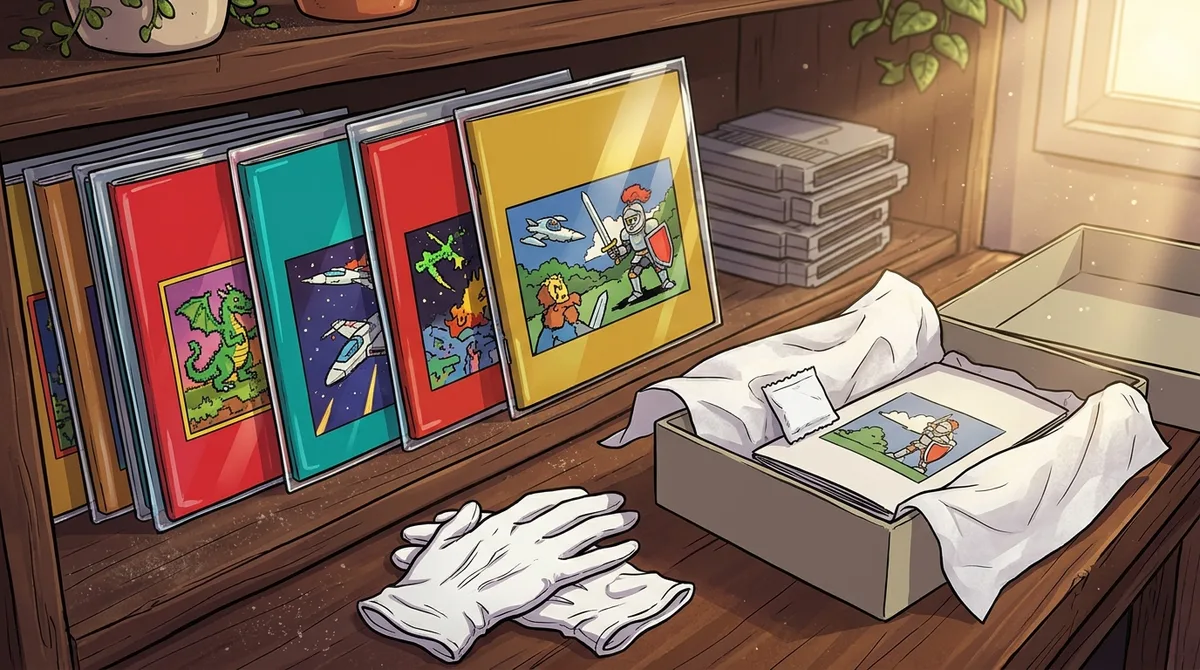
Keep old manuals flat, dry, and out of direct sunlight, because light fades the character art and damp air can warp the pages. Store boxes upright on a shelf rather than stacking heavy games on top of thin paper. Slide fragile inserts and fold-out maps into acid-free sleeves or folders so they don’t pick up stains or cracks from being shuffled around.
If you want a digital copy, the Game Preservation Society’s Paper Material Archival Scanning Manual, dated April 2026, sets the standard. It calls for archival scans at 1200 dpi saved as raw TIFF files, which capture far more detail than a quick phone snapshot.
Scans make excellent backups. If a sleeve tears or a drink spills near the box, the file lets you reread a hint or reprint a map. Keep the original paper stored safely anyway, since a scan can’t capture the texture of the paper or the feel of the ink.
Game manuals are making a comeback because the lessons that once lived on paper moved into the games themselves. As digital distribution grew, tutorials slid out of the box and into pop-up hints and on-screen prompts. A 2025 Digital Game Research Association JAPAN conference paper describes this shift and treats manuals as the extras that surround a game.
Paper never fully disappeared. The 2021 strategy game HighFleet came with a 92-page PDF manual that you could download from Steam, so a long reading session was still on the menu. The Banished Vault went further by selling a print-on-demand paper manual for £4.99. Its developers said around 10% of digital-game buyers also bought one.
Fans seem to be buying paper for a few clear reasons:
That scarcity is real: 87% of classic U.S. games released before 2010 were out of print, so every surviving manual feels like a treasure map.
Yes, you can bring that manual-page nostalgia home with Retrowave’s retro, vaporwave, synthwave, and 80s-inspired apparel. Standard unisex graphic tees are listed at $27.00 and often on sale at $22.95, so your wallet can stay firmly in 1987.
Before you add one to your cart, check the size chart on each product page. Our standard unisex t-shirts run true to size, so your usual size is a good place to start. If a shirt misses the mark, returns are accepted within 30 days of receipt for most items in new condition.
Yes, you can bring that manual-page magic home with Retrowave’s retro, vaporwave, synthwave, and 80s-inspired tees and apparel.
Start with the fabric. Our standard unisex tees are 100% Airlume combed and ringspun cotton, a light 4.2 oz/yd² weight with a retail fit.
Want the whole shirt covered in neon? AOP t-shirts are listed at $32.00 and on sale at $27.20, and the Blue Rays AOP tee is 100% polyester with a regular fit.
Order changes must be requested through customer service soon after you order, so check your confirmation email right away.
Need help choosing? Reach out through our Contact Us page, or check the newsletter for special offers and new arrivals.