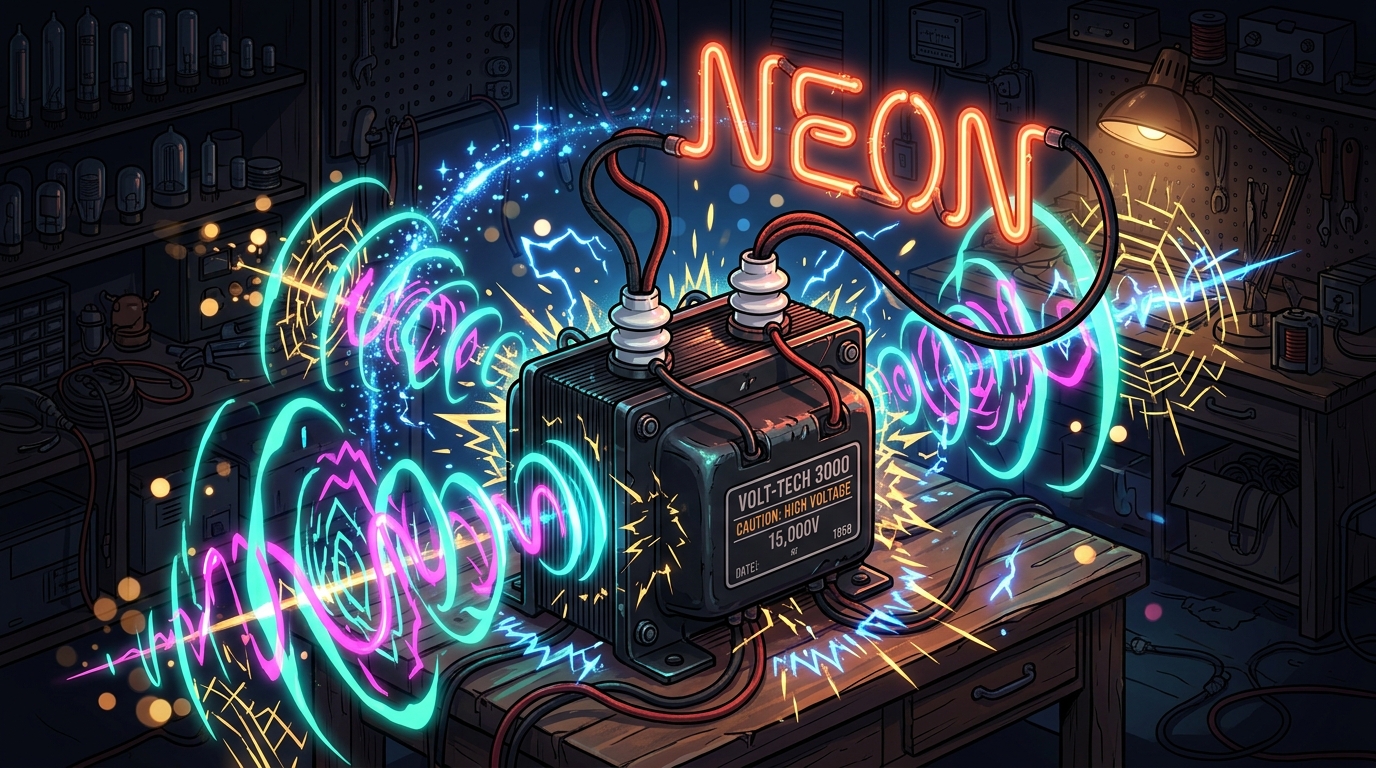
You’re finally living your best synthwave life, surrounded by glowing magenta tubes and peak retro vibes, until you notice that annoying buzzing sound ruining your lo-fi beats. That persistent neon sign transformer hum isn’t just a background soundtrack for a cyberpunk alleyway; it’s actually the sound of physics throwing a tiny tantrum. While a gentle purr is totally normal for your high-voltage setup, a loud, angry buzz usually means your gear is stressed out or literally shaking itself apart.
Think of your transformer like a tiny, electric heart that beats 120 times a second, causing the metal inside to expand and contract like it’s at a pixelated rave. When things get loose or overloaded, that microscopic vibration turns into a mechanical rattle that feels less like a cool 80s aesthetic and more like a broken refrigerator. Identifying whether your sign is just humming a happy tune or crying out for help is the first step to keeping your neon glow-up from becoming a noisy nightmare.
That legendary buzz you hear when you flip the switch is not just noise, it is the actual heartbeat of the 80s aesthetic. Inside that heavy metal box, your transformer is experiencing a physical phenomenon called magnetostriction. As the 60Hz electricity flows through the iron core, the metal microscopically stretches and shrinks like it is trying to do a tiny, high speed workout. This happens a whopping 120 times every single second, turning your lighting fixture into a literal percussion instrument. It is the ultimate lo-fi soundtrack that sets the mood for every late night diner scene and cyberpunk alleyway you have ever imagined.
Think of your neon sign as a vintage synthesizer that only knows how to play one deep, vibrating chord. While modern tech tries to be silent and boring, your transformer is busy dancing to the rhythm of the power grid. When those metal laminations get a little loose, they start rattling against the housing like a drummer who had too much espresso. This creates that warm, fuzzy ASMR energy that makes a room feel like a cozy save point in a retro video game. It is a physical manifestation of high voltage soul that proves your glow is the real deal.
If the hum starts sounding more like a frustrated beehive than a soothing drone, your gear might just be feeling a bit overworked. Overloading a transformer with too much glass tubing is like asking a marathon runner to sprint while carrying a refrigerator. This extra stress makes the vibrations more intense, turning your chill atmospheric background noise into a loud cry for help. Keeping your setup balanced ensures that the vibration stays in that sweet spot of nostalgic perfection. You want that iconic drone to stay smooth and steady so it can keep fueling your synthwave dreams without waking up the neighbors.
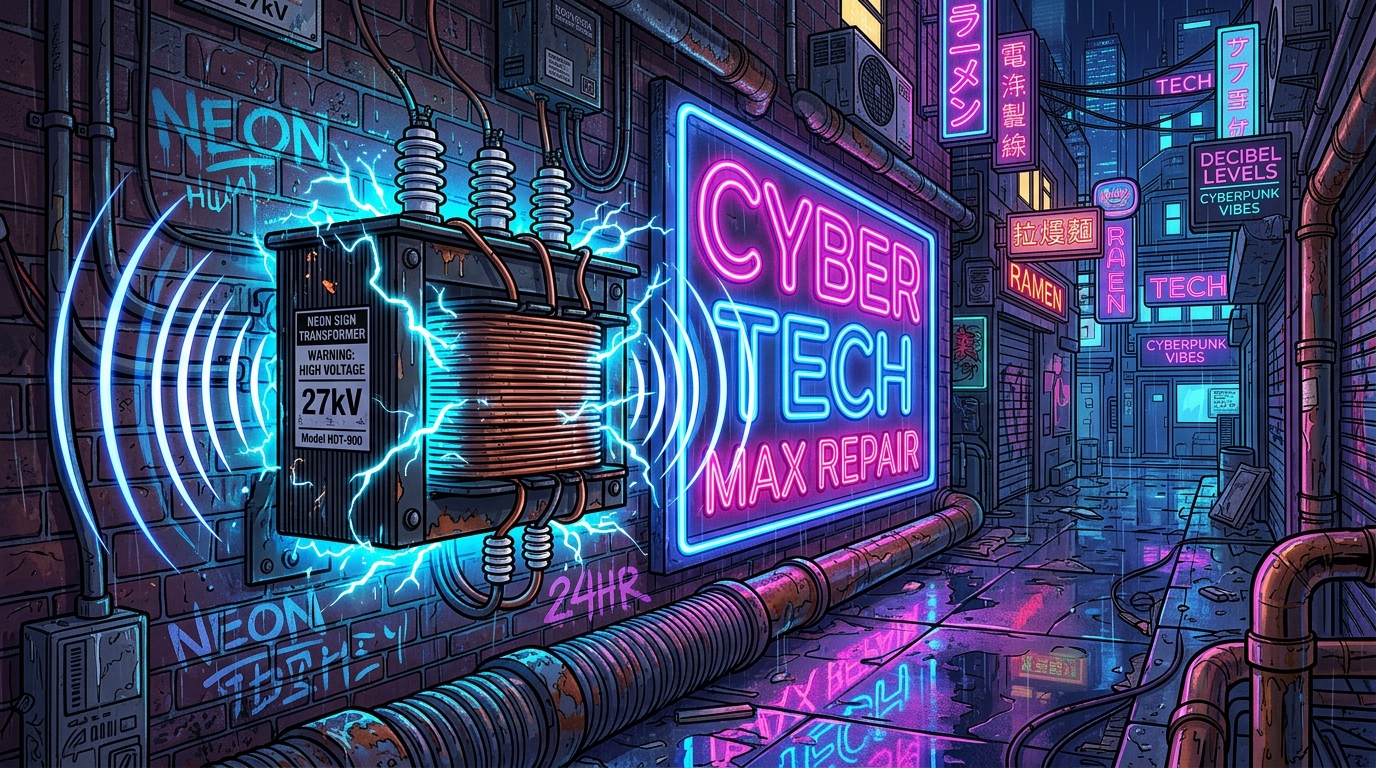
That low frequency buzz is the secret sauce for any authentic synthwave sanctuary, but there is a fine line between a mood and a migraine. When your transformer is purring at a soft 20dB, you have hit the sensory sweet spot that makes your room feel like a rainy alleyway in a retro futuristic city. This gentle whisper is just the sound of magnetostriction, which is a fancy way of saying your transformer is vibrating with pure 80s energy. It provides a perfect background layer for your lo-fi beats or late night gaming sessions. If you can barely hear it over your cooling fans, you are living the neon dream.
Once that hum starts climbing toward 75dB, your transformer is no longer setting the vibe and is instead screaming for help. This aggressive mechanical rattle usually means your hardware is having a mid-life crisis due to loose bolts or electrical strain. Instead of a soothing ASMR experience, you get a harsh buzzing that sounds like a glitchy robot having a breakdown. This level of noise is less about aesthetic and more about your sign telling you it is overworked or improperly mounted. A loud transformer is the ultimate vibe killer that ruins the immersion of your digital oasis.
Finding the perfect balance is all about embracing the soul of the machine without letting it take over the room. You want that steady 120 Hz vibration to feel like a living part of your decor rather than a broken appliance. If the sound becomes a jagged mechanical screech, it might be time to check for loose parts or make sure you are not overloading the circuit. Keeping your neon gear in the whisper zone ensures your space stays chill and looks like a movie set. Treat your transformer with some love, and it will keep providing those iconic cyberpunk sounds for years to turn your bedroom into a masterpiece.
If your neon sign sounds less like a chill synthwave track and more like a robot having a mid-life crisis, you probably have a case of the loose bolt blues. That iconic buzz is usually just the transformer doing its thing, but when the mounting bolts wiggle free, the metal housing starts acting like a giant speaker for those vibrations. It transforms your cozy retro sanctuary into a construction zone, ruining the aesthetic faster than a lag spike in a boss fight. Instead of a smooth atmospheric drone, you get a rattling chorus that definitely was not on the original soundtrack.
Grabbing a wrench is the easiest way to restore those lo-fi study girl vibes without calling in a professional squad. You just need to give those mounting screws a quick turn to ensure the transformer is sitting snug against the frame. This simple mechanical tweak stops the metal-on-metal percussion and brings the volume back down to a respectable level. Much like the mall fountain sounds that provided a steady acoustic backdrop for 90s shoppers, a properly tuned transformer creates a consistent layer of white noise for your environment. It is basically the real-world equivalent of tightening your settings to get a better frame rate, ensuring your gear runs smooth and silent.
Keep in mind that while a little hum is part of the vintage charm, a loud clatter is a total mood killer for your neon aesthetic. If you have tightened everything up and it still sounds like a glitchy arcade cabinet, you might want to check for any stray wires touching the casing. A perfectly tuned sign should offer nothing but a soft, comforting purr that blends into the background of your late-night gaming sessions. Once those bolts are secure, you can get back to soaking in that glorious pink and blue glow in peace.

You might think that smooth, silent technology is the ultimate goal, but true synthwave fans know that the buzz is where the soul lives. That classic neon hum is basically the heartbeat of the 80s aesthetic, created by a process called magnetostriction where the transformer core literally vibrates with excitement. Modern electrical interference is now adding weird, glitchy layers to that sound, turning a simple drone into a complex lo-fi soundtrack. It is the ultimate ASMR for anyone who wants to feel like they are standing outside a rain-slicked arcade in 1984. This electrical chatter is not a bug, it is a feature that grounds your neon obsession in a physical, vibrating reality.
If you are looking for that peak vintage immersion, you have to embrace the harmonic distortion that makes every sign sound like a tiny, buzzing robot. These strange new frequencies happen when modern power grids clash with old-school tech, creating a unique acoustic fingerprint for your space. It is the secret sauce that separates a cheap plastic LED strip from a living, breathing glass masterpiece. You are not just buying a light, you are adopting a moody mechanical pet that purrs with the power of high voltage. When the room is dark and the glow is hitting just right, that steady vibration is the final piece of the sensory puzzle.
Think of this buzzing atmosphere as the real-world version of a vaporware track playing on a loop in the background of your life. While some people might call it electrical noise, you know it is actually the sound of pure nostalgia working overtime. The way the metal housing rattles ever so slightly adds a layer of grit that you just cannot replicate with a digital filter or a silent bulb. It is an invitation to slow down, lean back, and let the rhythmic drone transport you into a cyberpunk dreamscape. Your neon sign is not just glowing, it is singing a glitchy love song to the golden era of vintage drum machines and retro design.
The low frequency buzz of a neon transformer is more than just a byproduct of physics, it is the actual heartbeat of the synthwave aesthetic. While magnetostriction might sound like a fancy sci-fi term, it is really just the sound of your sign living its best life and vibrating at a cool 120 Hz. You can think of it as the ultimate lo-fi background track that turns any basement or bedroom into a moody scene straight out of a retro cyberpunk movie. As long as that hum stays steady and rhythmic, you are basically living inside a high-voltage ASMR video.
Embracing the static means accepting that the best lighting comes with its own unique personality and soundtrack. Much like the digital vibe of a pixelated maze, the mechanical hum of a transformer adds a layer of texture to your environment. You should only start to worry if your sign begins screaming like a final boss or rattling like a bucket of bolts, which usually means something is loose or overloaded. Otherwise, lean back into your gaming chair and let that warm, electric glow wash over you while the transformer keeps the vibes immaculate. If you want to capture this feeling visually, you can learn how to create your own digital masterpieces that match the mood of your room. It is the signature sound of the night, reminding you that real neon is always worth the noise.
That sound is a physical phenomenon called magnetostriction, which is basically your transformer doing a high speed workout. The metal core stretches and shrinks 120 times every second because of the electricity flowing through it. It is the literal heartbeat of your neon setup, turning your light into a tiny percussion instrument.
A gentle, steady purr is totally normal and part of that authentic retro charm. It only becomes a problem when the hum turns into a loud, angry rattle that drowns out your favorite synthwave tracks. If it sounds like a broken refrigerator, your transformer might be stressed out or vibrating itself apart.
When the metal layers inside your transformer get loose over time, they start slapping against each other like they are at a pixelated rave. This mechanical rattle turns a subtle background vibe into a noisy nightmare. It usually means your gear is either getting old or feeling a bit overloaded.
You can never truly silence the soul of a vintage neon sign, but you can definitely turn the volume down. Making sure everything is tightened up and properly mounted can stop those extra rattles from ruining your lo-fi aesthetic. Think of it as tuning your vintage synthesizer so it only plays the good notes.
A loud buzz is basically your transformer crying out for help because it is working too hard. While it might not explode like a movie prop, excessive noise often points to hardware that is reaching its final boss level. Keeping an ear on the volume helps you catch issues before your neon glow-up goes dark.
Modern tech tries to be silent and boring, but true neon enthusiasts know the hum is where the magic happens. Those heavy metal boxes are designed to dance to the rhythm of the power grid, unlike silent LED imitations. You are hearing the actual physics of the 80s aesthetic working in real time to recreate the neon cityscapes of the 1980s in your own home.