
Imagine walking into a room and seeing a dusty, beige box from 1998 that looks like it barely runs Minesweeper. You flip the switch, and suddenly this retro relic is crushing 4K frames and outperforming every neon-soaked rig on the block. That is the magic of sleeper pc builds, where you hide a beastly RTX 5090 inside a chassis that looks like it belongs in a thrift store basement. It is the ultimate digital prank for anyone who loves that sweet 80s aesthetic but wants modern, god-tier performance.
You do not need a spaceship-shaped case with blinding lights to be the fastest player in the lobby. By blending old-school nostalgia with cutting-edge cooling hacks, you can build a machine that looks totally “meh” but runs like a dream. Whether you are a fan of synthwave vibes or just want to confuse your friends, stuffing a Ryzen 9 into a vintage office tower is the coolest way to game. It is all about having that secret power under the hood while keeping things totally low-key on the outside.
Finding the right chassis is all about hunting for that glorious, soul-crushing beige that screams 1995 tax season. You want a case that looks so boring it practically disappears, making it the perfect disguise for your high-end gaming hardware. Scour local thrift stores, online marketplaces, or even your uncle’s dusty attic for brands like Gateway or Packard Bell. Look for those satisfyingly clicky power buttons and a floppy disk drive that serves no purpose other than aesthetic charm. The goal is to find a shell that says spreadsheet enthusiast on the outside while hiding a neon-soaked beast within.
Size matters when you are trying to cram a massive RTX 5090 into a space originally meant for a Pentium processor. You should prioritize mid-tower or full-tower cases from the late nineties to ensure you have enough physical room for modern GPUs. Check the internal layout to see if the drive cages are removable, as you will likely need to clear some space for airflow. A case with a solid metal frame is ideal because it provides a sturdy foundation for all your heavy modern components. Just make sure the exterior has enough scuffs and yellowing to look authentically obsolete to any unsuspecting observer.
Do not let the lack of ventilation in these vintage boxes scare you away from your dream build. Since retro cases were built like tanks with zero airflow, you will need to get a little creative with a dremel or a drill. Cutting hidden intake holes in the bottom or rear of the chassis allows your Ryzen 9 9950X3D to breathe without ruining the retro vibe. You can even hide high-performance fans behind the original plastic grilles to keep that stealthy look intact. It is all about maintaining that incognito aesthetic while ensuring your modern monster does not melt into a puddle of nostalgic plastic.
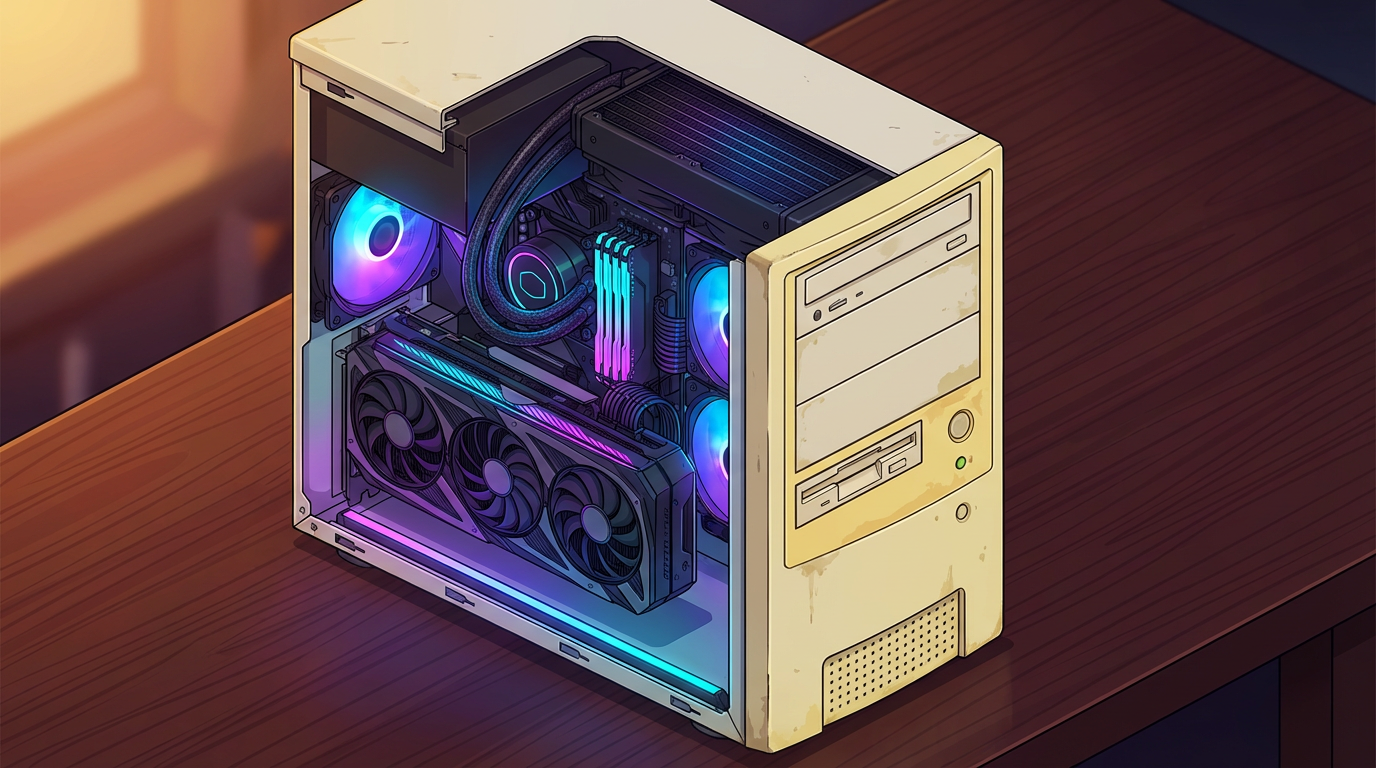
Building a sleeper PC is all about that secret agent lifestyle, but your high-end parts will start sweating the moment you fire up a modern game. Those classic beige towers were designed for floppy disks and low-power chips, not the roaring heat of a modern graphics card. If you do not get creative with your airflow, your vintage treasure will turn into a plastic oven faster than you can say “game over.” You need to find the perfect balance between keeping that retro aesthetic and making sure your hardware stays frosty. It is a bit like fitting a jet engine inside a lawnmower without anyone noticing the extra vents.
The secret to a cool sleeper is hiding your cooling mods where the sun does not shine. You can use a dremel tool to cut large fan mounts into the bottom of the case, allowing fresh air to swirl in from underneath. Since most people never look at the floor of a PC, your stealthy 140mm fans stay completely invisible to the naked eye. High-static pressure fans are your best friends here because they can shove air through those tiny, cramped spaces. Just make sure to add some dust filters so your 1998 office warrior does not become a vacuum cleaner for your carpet.
If you are rocking a massive flagship card, you might need to get even more experimental with your thermal solutions. Some builders are now tucking slim liquid cooling radiators behind the front plastic panel or even inside the drive bays. You can keep those old-school buttons and non-functional floppy drives for the look, while modern tubes work their magic right behind them. It is incredibly satisfying to watch your temperatures stay low while your PC looks like it belongs in a dusty school library. This way, you get all the neon-soaked performance of the future with none of the thermal meltdowns.
You can easily transform a dusty office tower into a powerhouse that hides in plain sight. Most people see a boring grey Dell or HP box and assume it is only good for spreadsheets and slow internet browsing. You know better because that unassuming shell is the perfect camouflage for a high-end gaming beast. By picking up a cheap prebuilt machine from a thrift store or an office auction, you save your hard earned tokens for the parts that actually matter. It is the ultimate digital prank to crush modern titles on a machine that looks like it belongs in a 1998 cubicle.
Bringing your vintage chassis into the modern era requires a bit of clever engineering to keep things from melting. Retro cases were never meant to handle the heat of a heavy duty graphics card, so you will need to get creative with your airflow. You can discreetly cut hidden fan mounts into the bottom or back of the case to prevent modern components from ruining the old school aesthetic. Imagine the look on your friends faces when your “ancient” PC runs the latest games at max settings without breaking a sweat. It is all about that sweet contrast between a low tech exterior and a high tech soul.
The real magic happens when you slide a modern motherboard and a powerful GPU into a case that still has a floppy disk drive. You can even go full overkill by stuffing flagship hardware inside, making your sleeper pc builds the most powerful relic on the block. Adding some subtle neon lighting that only peeks through the vents can give it that perfect synthwave glow when the sun goes down. Building a sleeper is not just about performance, it is about celebrating the 1980s tech boom while enjoying the speed of the future. You get to own a unique piece of hardware that tells a story and plays games like a total dream.
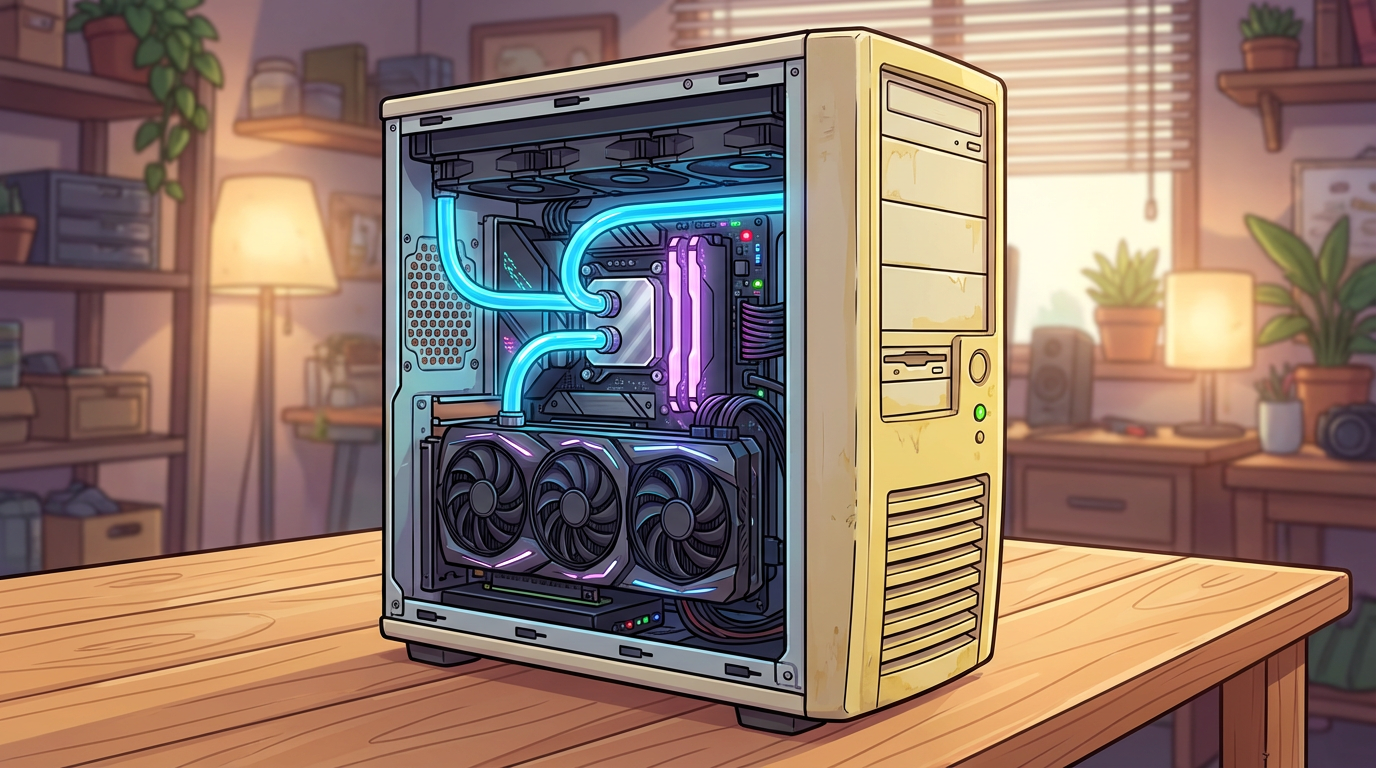
Building a sleeper PC is the ultimate way to embrace the incognito lifestyle while keeping your elite gaming habits on the down-low. There is nothing quite like the look on your friends’ faces when they see a dusty, beige tower from 1998 sitting on your desk. They might expect a slow dial-up connection and a game of Minesweeper, but you know better. Beneath that yellowed plastic shell lies a digital beast ready to tear through the latest AAA titles without breaking a sweat. You get to enjoy all the high-end power of a modern rig while maintaining the peak aesthetic of a retro office cubicle.
Stepping into this world means you are joining a community that values substance over flashy RGB strips. While everyone else is showing off their glass side panels and neon lights, you are hiding a flagship GPU inside a case that looks like it belongs in a thrift store. It takes some clever modding to keep those powerful components cool, but the effort pays off every time you hit the power button. You can finally play your favorite games at max settings while your computer pretends to be a relic of the past. It is the perfect blend of nostalgic 80s vibes and cutting-edge performance.
Now that you have the blueprint for your own secret weapon, it is time to start hunting for that perfect vintage chassis. Whether you find an old workstation at a garage sale or dig one out of your parents’ attic, the potential for greatness is huge. Just imagine the satisfaction of launching a ray-traced masterpiece on a machine that looks like it still runs Windows 95. Your setup will be the talk of the next LAN party as you dominate the leaderboard with your undercover powerhouse. Get ready to shock the world and prove that you should never judge a computer by its beige cover.
Building a sleeper PC is the ultimate way to pull a fast one on anyone who thinks your setup is stuck in the nineties. You get to enjoy that sweet, beige aesthetic while secretly packing the horsepower of a futuristic supercar under the hood. It is all about that hilarious moment when a dusty old office box starts pushing out frames like a total beast. You are basically creating a high tech wolf in sheep’s clothing that looks perfect next to your lava lamp and neon posters. Even if the outside looks like it belongs in a thrift store, the inside is pure modern magic.
Modern hardware like the RTX 5090 brings the heat, so you will need to get a little creative with your vintage chassis. You can hide some cutting-edge cooling hacks inside those retro walls to keep your Ryzen 9 9950X3D from melting like a popsicle in the sun. Cutting custom fan mounts or hiding mesh panels allows you to maintain that incognito vibe without sacrificing your previous components. It is a fun challenge that rewards your hard work with a rig that is both a conversation starter and a gaming powerhouse. Just imagine the look on your friends’ faces when that ancient heavy beige boxes tower starts running the latest titles at max settings.
Embracing the sleeper lifestyle means you value substance over flashy RGB strips and tempered glass side panels. You are joining a community of builders who love the irony of hiding cutting edge tech inside a machine that looks like it only runs Minesweeper. These builds celebrate the golden age of computing while letting you play your favorite modern games with total ease. It is the perfect blend of nostalgia and performance for anyone who appreciates a pixel art aesthetic or a good prank. So grab a screwdriver and an old school case to start your journey into the world of stealthy retro gaming.
A sleeper PC is the ultimate digital prank where you hide a monster gaming rig inside a crusty, beige office case from the 90s. It looks like a relic that can only run spreadsheets, but it actually crushes 4K games and outperforms those flashy neon towers. It is all about having god-tier power under the hood while keeping things totally low-key on the outside.
You need to go on a treasure hunt through local thrift stores, online marketplaces, or even your uncle’s dusty attic. Look for legendary brands like Gateway or Packard Bell that scream 1995 tax season. The more boring and beige it looks, the better your disguise will be when you flip the switch.
Size definitely matters when you are stuffing modern beasts into tiny vintage spaces. You should prioritize mid-tower or full-tower cases from the late nineties to make sure that giant GPU has enough room. Always check the internal layout and be prepared to remove some old drive cages to clear a path for your hardware.
Old cases were basically metal ovens, so you have to get creative with some cutting-edge cooling hacks. You will likely need to break out the power tools to add hidden intake fans or mesh panels where nobody can see them. Keeping your high-end Ryzen 9 frosty is the only way to ensure your retro dream does not turn into a literal nightmare.
You should definitely keep the floppy drive for that peak aesthetic charm, even if it does not actually work. It is the perfect finishing touch for that synthwave vibe and helps sell the illusion that your PC is a total potato. You can even mod the buttons to act as hidden power switches for an extra layer of cool.
Building a sleeper is about embracing that sweet 80s nostalgia and confusing your friends in the best way possible. You do not need a spaceship-shaped case with blinding lights to be the fastest player in the lobby. It is the coolest way to game because it focuses on secret power and pure style rather than just following the crowd.