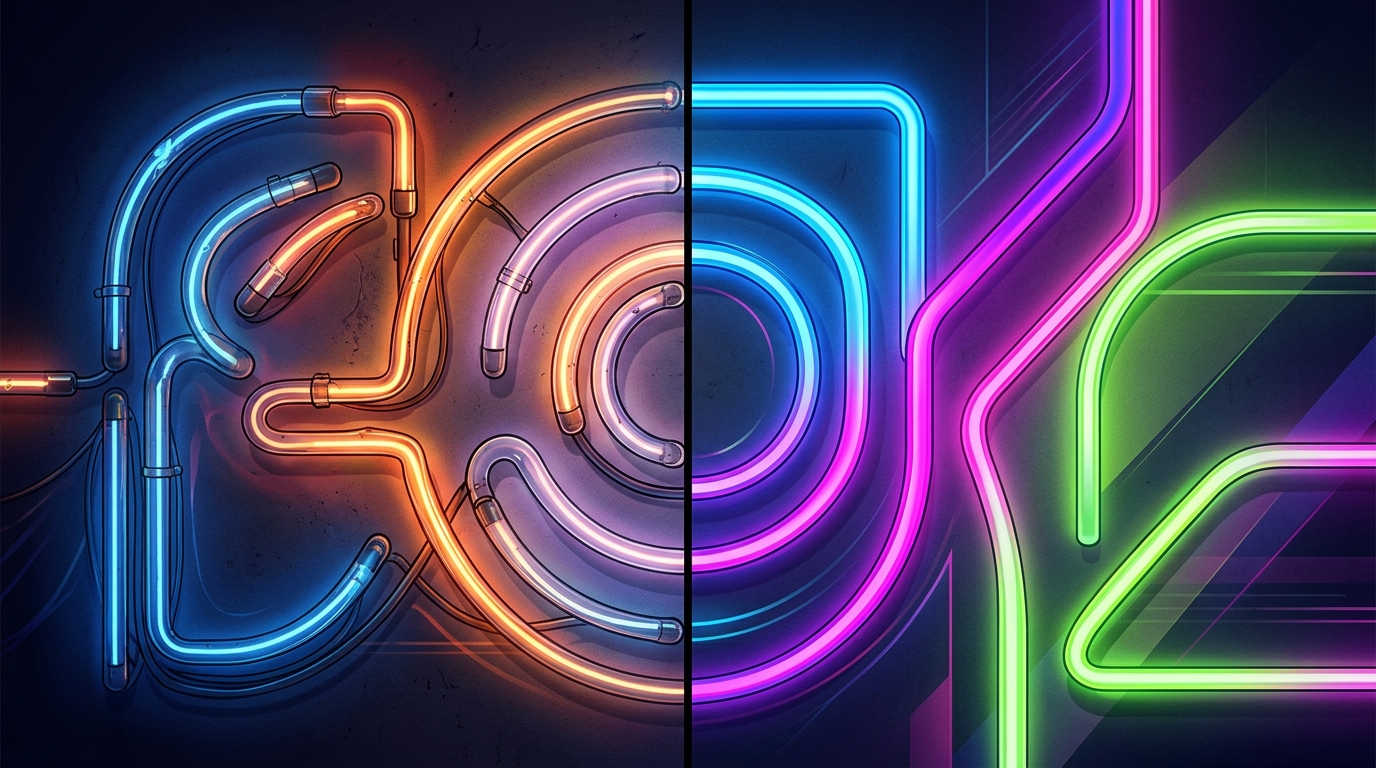
Choosing between LED vs. traditional neon can feel like picking your favorite 80s arcade power-up. LED neon flex is energy-efficient, low-voltage, impact-resistant, and easier to install, making it a practical choice for signs, bedrooms, shops, and synthwave-worthy spaces. Traditional glass neon delivers that unmistakable continuous glow and handcrafted charm, but it needs more care, higher-voltage equipment, and a little more respect than your average mood light.
Your best choice depends on what matters most: easy setup and programmable colors, or authentic craftsmanship and old-school cool. Just remember, not all LED neon is created equal. Cheap decorative strips and professional sign systems can perform very differently. Choose wisely, and your space can glow like a retro-futuristic arcade instead of looking like a sad loading screen.
LED neon flex puts light-emitting diodes inside flexible silicone, giving you a bright, bendable sign that can handle curves, corners, and plenty of interior design plot twists. It usually runs on low voltage, uses less electricity, and is easier to install than traditional glass neon. You can also find options with programmable colors and effects, so your wall can shift from a relaxed synthwave sunset to a full arcade boss battle. For most homes, shops, studios, and architectural accents, it is the practical choice.
Traditional neon uses hand-shaped glass tubes filled with gas and powered by a high-voltage transformer. This setup creates the authentic, continuous glow that makes vintage diners, 1980s arcades, and retro movie sets look like they have excellent taste in snacks. Glass tubes can be restored and remain valuable as signage or artwork, but they need specialized fabrication, careful handling, and more maintenance. If craftsmanship and true old-school character matter most, glass neon still has serious main-character energy.
The label “LED neon” covers everything from cheap decorative strips to professional sign systems built for long-term display. That means product quality matters more than the name on the box, especially when you are investing in a custom sign for your business or home. Look for even lighting, sturdy silicone, reliable power components, clean finishing, and a design made for your space. In short, choose LED neon for flexibility and everyday practicality, or choose glass when the glow itself is the masterpiece.
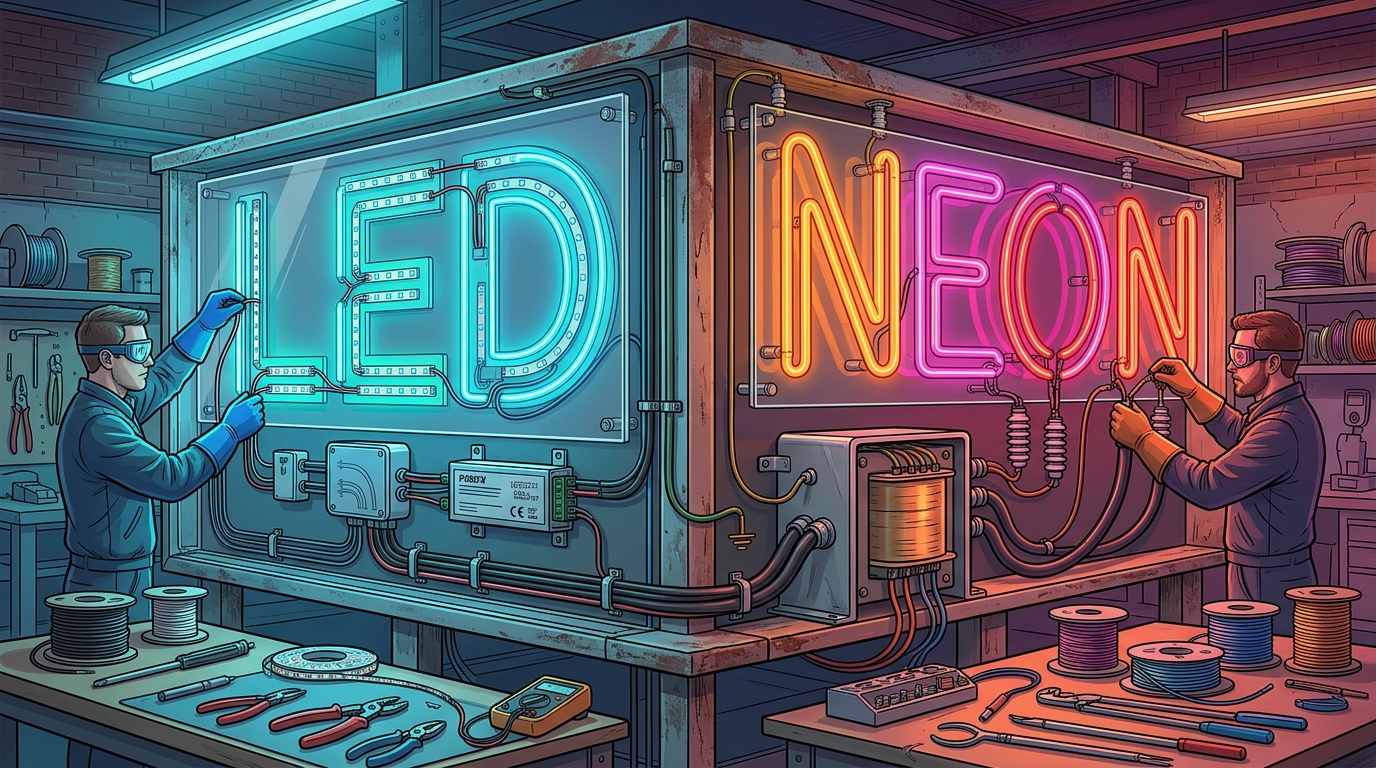
LED neon flex is usually the budget-friendly power-up for custom signs, home décor, retail displays, and architectural accents. It runs on low voltage and generally uses less electricity than traditional glass neon, while its lighter build makes mounting much easier. You can often install it on a wall, shelf, or ceiling with simpler brackets and less “call in the engineering team” drama. LEDs also run cooler and handle bumps better, which is useful in busy shops, game rooms, and other places where elbows occasionally go full boss battle.
Traditional glass neon brings the authentic retro glow, but it also brings more weight, higher voltage, and hand-shaped tubing that needs specialist fabrication. Glass is more fragile if knocked, and its transformers, wiring, and warm-running tubes require careful handling, secure mounting, and enough clearance from heat-sensitive materials. Both options need suitable weather protection outdoors, including sealed components, protected connections, and equipment rated for local conditions. A professionally made LED system is not automatically safe just because it says “LED,” so check that the power supply and wiring have the right electrical certification for your location.
For a large commercial sign, professional installation is especially important because size, wind load, access, and mains connections can turn a cool synthwave feature into a very uncool safety issue. A qualified installer can choose the right supports, protect the sign from moisture, test the electrical connections, and make sure everything meets local rules. LED usually wins when you want lower running costs, easier installation, and better impact resistance, while glass neon remains the star pick for craftsmanship and that unmistakable continuous glow. In short, LED is the practical arcade champion, and glass is the lovingly restored arcade cabinet that needs a little more care.
Traditional glass neon delivers that continuous, iconic glow you know from vintage diners, arcade marquees, and cyberpunk movie streets. Because each tube is hand-shaped and filled with glowing gas, the light feels smooth, rich, and wonderfully old-school, like your sign just unlocked an 80s bonus level. It is a beautiful choice for custom lettering, logos, and sculptural shapes when authentic retro magic matters most. Just remember, glass neon needs more careful handling and specialized equipment, so it is better suited to buyers who want craftsmanship over plug-and-play convenience.
LED neon flex gives you crisp lines, low-voltage operation, and a much bigger color playground. You can choose bright single colors, tune the shade to match your brand, dim the sign for cozy evenings, or add animation that makes your logo pulse like a synthwave boss battle. It is also a practical pick for homes, shops, restaurants, and events because it is easier to install and generally more resistant to bumps than glass tubing. For most new interiors, LED offers the flexible, programmable power-up screen your walls have been waiting for.
Your design can feature custom lettering, a recognizable logo, a favorite shape, or a color-matched statement piece. Choose glass when you want a warm, continuous glow with genuine diner-and-arcade nostalgia, or choose LED when you want easy control, bold RGB options, and effects that keep the room moving. Either way, a well-made custom sign can turn a blank wall into the main character. The real question is whether your space needs vintage movie magic or a neon setup with a settings menu.
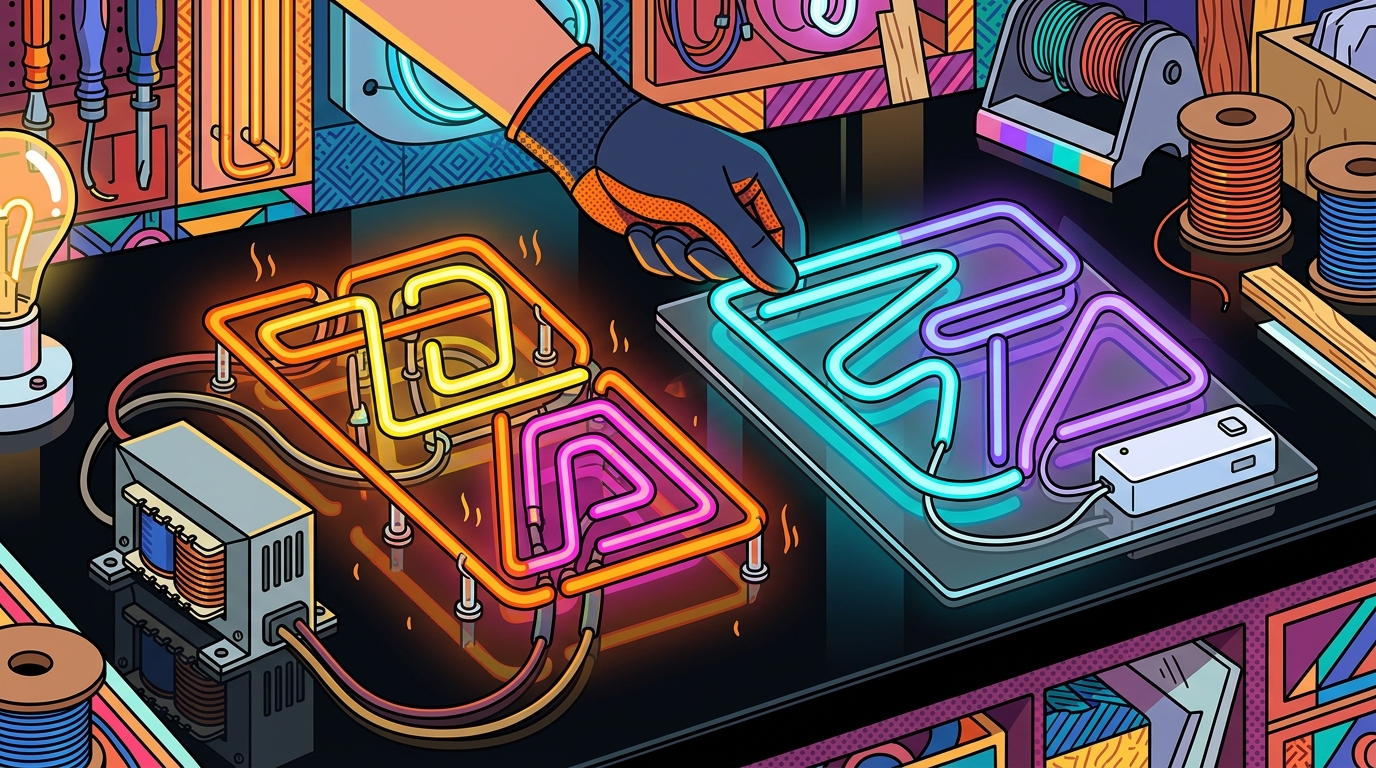
For most new home, retail, hospitality, and architectural projects, LED neon flex is the practical power-up. It uses less electricity, runs at low voltage, handles bumps better, and is easier to install than traditional glass neon. You can also choose programmable colors and effects, so your sign can go from synthwave pink to arcade blue without calling in the final boss. For a custom sign that needs everyday convenience, flexible placement, and a friendly budget, LED neon is usually the winner.
Traditional glass neon is the better choice when the glow itself is part of the artwork. Each tube is shaped by hand, giving you genuine craftsmanship, distinctive continuous light, and serious vintage arcade energy. It suits collectors, restoration projects, premium interiors, and spaces where authenticity matters more than plug-and-play simplicity. Glass neon costs more, uses higher-voltage equipment, and needs careful installation and maintenance, but a well-made piece can be repaired and restored for years.
Your location, budget, and desired lifespan should guide the final choice, not just the coolest photo on your mood board. LED neon works well for signs that need low upkeep, flexible designs, and reliable daily use, while traditional glass earns its place when you want a signature piece with history and handmade character. Remember that “LED neon” covers everything from basic decorative strips to durable, professionally certified sign systems, so quality can vary more than a loading screen in an old-school game. Choose a well-built custom LED sign for most modern projects, or choose glass when the craftsmanship is the whole point.
For most new signs, room accents, and retail displays, LED neon usually takes the high score. It uses less electricity, runs at a safer low voltage, handles bumps better, and is easier to install than traditional glass tubing. You also get more creative control, from custom shapes and colors to programmable effects that make your wall glow like it just unlocked a secret level. Just remember that LED neon quality can vary, so professionally made neon flex is a smarter choice than the bargain-bin strip that looks like it is buffering.
Traditional glass neon still owns the authenticity crown, thanks to hand-shaped craftsmanship and that unmistakable continuous gas-discharge glow. It can bring serious retro arcade boss energy to a bar, studio, storefront, or home, but it needs specialized fabrication, higher-voltage equipment, and more careful handling. Choose LED when you want practical future tech, and choose glass when the artistry and vintage vibe matter most. Ready to build a workspace with serious synthwave flavor? Explore Upgrade Your Workspace With Retro Futuristic Office Supplies to discover how we can help complete your glowing setup.