Cyberpunk event production has no standard price. Published U.S. examples range from $1,500 for a small event package to $42,000 for a major production package. Those packages cover different scopes, so they’re starting points, not matching quotes or a cyberpunk-specific price list. A large custom scenic build may cost $15,000–$60,000 or more, and complex scenic fabrication can take four to six weeks.
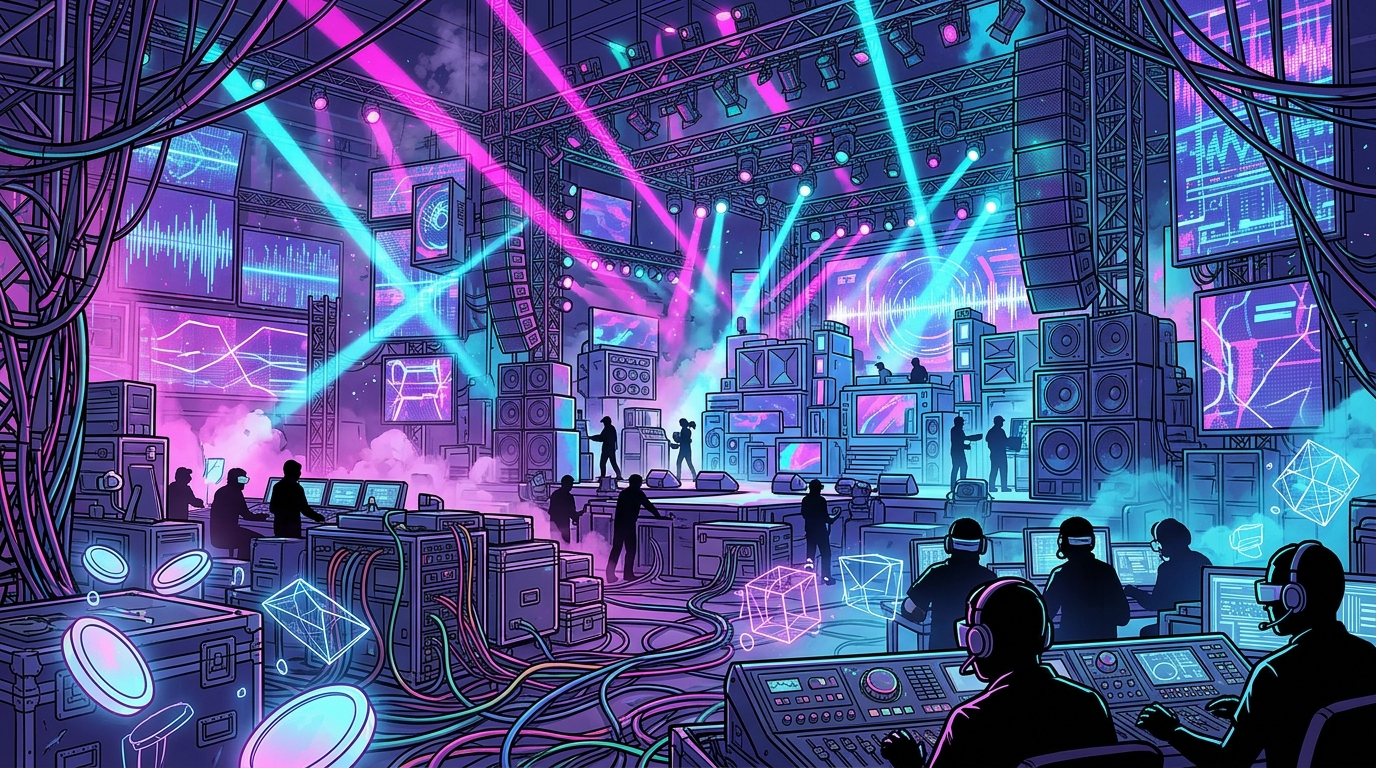
Your cyberpunk event production cost depends on how much of the world you want to build: a few neon accents and a strong playlist, or an immersive stage that looks like a boss fight is about to begin. Guest count, venue, sound, lighting, LED visuals, scenic pieces, crew, and event length all shape the estimate. Use the ranges to start a budget conversation, then define your must-haves before requesting quotes. A sharp mood board helps. “Make it look like the future” is a vibe, not a scope.
There is no single standard price for a cyberpunk event. Published U.S. examples range from a small package starting at $1,500 to a major production package starting at $42,000, while a full custom scenic build can run $15,000–$60,000 or more. Those figures cover different scopes, so they are examples of production costs, not a cyberpunk-specific price list. Think of them as rough map coordinates, not the final destination.
Published examples include a micro-event package for up to 75 guests starting at $1,500. It includes a PA, uplighting, a technician, and delivery, giving you a sound-and-light baseline without a giant stage build. At the other end, a major-production package for 2,000 or more guests starts at $42,000 and includes a d&b J system, LED, a mobile stage, and a full crew. That is a much bigger production scope, not the same package with the neon slider turned up.
A full custom stage build can cost $15,000–$60,000 or more. A custom scenic build and an event production package cover different parts of an event, and some services may overlap. For example, one package may already include equipment or crew that appears in another estimate. Don’t add package prices together until you’ve checked what each quote includes. Otherwise, your spreadsheet may summon a very expensive final boss.
Use the ranges to start an initial budget conversation, not as a finished quote. A small package can help you discuss a basic technical setup, while a major package gives you a reference point for a large-scale production. A custom build gives you a separate benchmark for made-to-order scenery. Your actual estimate needs to match your guest count and chosen scope, with each supplier’s inclusions clearly listed so you can compare like with like.
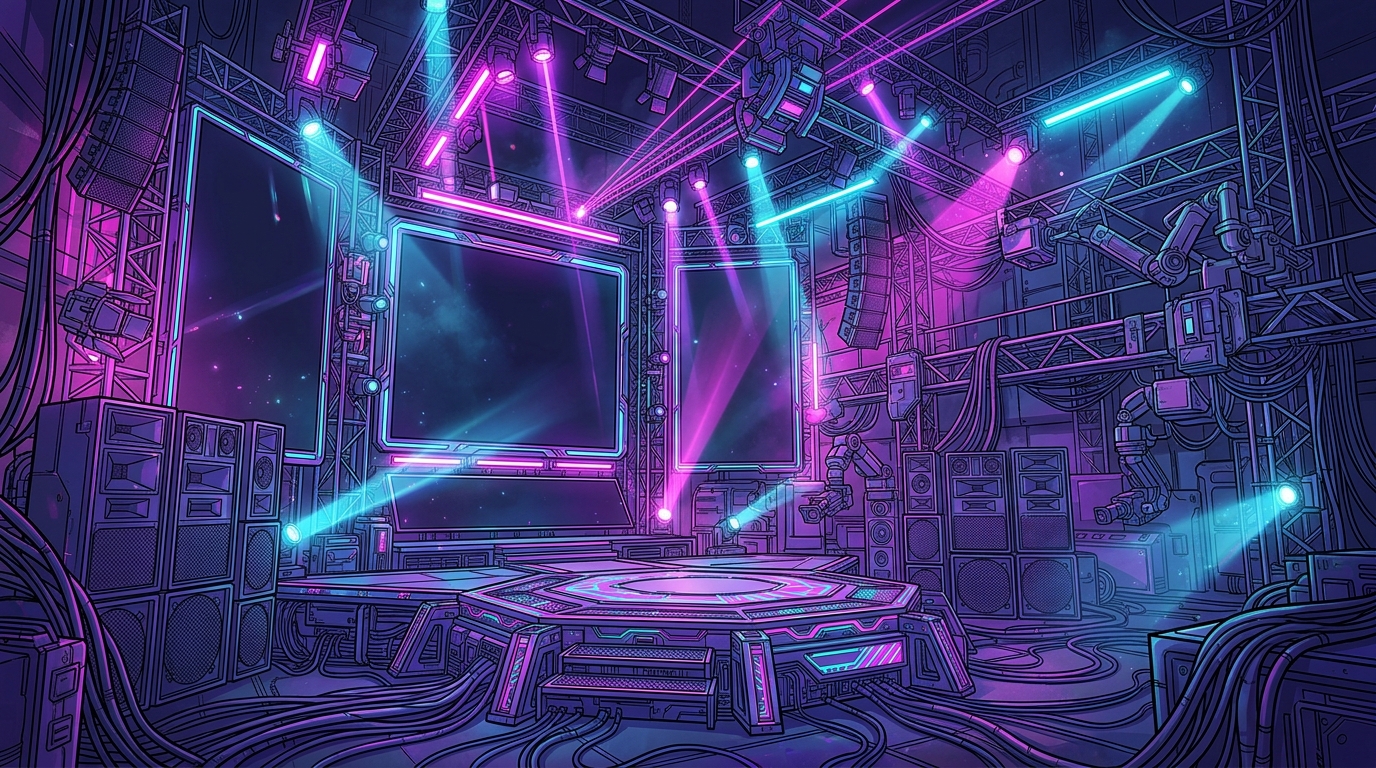
A cyberpunk event budget is driven by guest count, venue layout, sound and lighting, LED visuals, custom scenery, staffing, and event duration. Each choice changes the amount of equipment, labor, and delivery needed to turn a neon-soaked idea into a working event.
A medium-event package for 200–500 guests starts at $7,500 and includes a PA, 12 moving lights, truss, a production manager, and crew. For comparison, published examples include a micro-event package for up to 75 guests starting at $1,500 and a major-production package for 2,000 or more guests starting at $42,000. The packages show how scope can shift with audience size, but your room layout matters too. A wide space, multiple activity areas, or a stage far from the audience can change speaker and lighting needs.
A few neon accents might mean uplighting and a simple stage façade. A full immersive environment could add custom scenery and LED visuals, with more gear and people needed to build and run the show. A 16-by-10-foot LED wall for a three-day event can cost $7,500–$18,000 turnkey. Indicative prices for mid-size custom builds range from $2,000–$10,000. Those figures describe different items, not a ready-made cyberpunk package.
The visual idea is only one part of the cost. A glowing skyline concept still needs screens or scenic pieces, transport, setup, operators, and a plan for making the images visible in your venue. Event duration also affects the scope: a short program and an event running much longer may need different rental periods and crew coverage. Ask for the quote to spell out equipment, labor, delivery, and the hours covered, so your budget doesn’t mistake “neon city” for a box of lights delivered by an arcade wizard.
Scenic fabrication, LED walls, and uplighting create the strongest cyberpunk look, while sound and crew help the event run smoothly. Here’s how published component examples compare:
| Cost category | Published example | What it covers |
|---|---|---|
| Scenic fabrication | Large scenic builds: $10,000–$50,000 or more. A standard branded step-and-repeat, custom lectern, or simple stage façade: $2,000–$5,000. | A large custom environment or smaller branded pieces. Those are very different scopes. |
| LED wall | A 16-by-10-foot wall for a three-day event: $7,500–$18,000 turnkey. The 2.97 mm pitch option: $8,400–$11,000. | A screen setup, with price tied to the specified size and option. |
| Uplighting | Wired uplights: $18–$19 per light when renting at least 10. Wireless uplights or larger events: an estimated $500–$800. | Colored light that can transform walls, columns, and other venue surfaces. |
| Sound and crew | Scope can include a PA, technicians, a production manager, and crew. | Audio coverage and the people needed to set up and run production. |
A screen can deliver animated signage, glitchy graphics, or a digital skyline, but LED display size and quote inclusions matter. The listed price for a specific 16-by-10-foot wall covers a three-day event, and the 2.97 mm option has its own range. Compare the quoted screen size and what “turnkey” includes rather than treating either figure as a universal LED rate.
Lighting and scenic pieces can bring the theme to life without turning every surface into a screen. Uplighting can add neon color across existing architecture, while a custom façade or step-and-repeat gives the room a strong visual anchor. A few deliberate focal points can make the room feel like a cyberpunk world. Covering the venue in displays is not the only route to the vibe.
Sound and crew are less visible in the final look, but they affect how well the event runs. A PA supports speeches and music, while technicians and crew handle production tasks. Their scope depends on the event setup, so compare those inclusions separately from the visual elements.
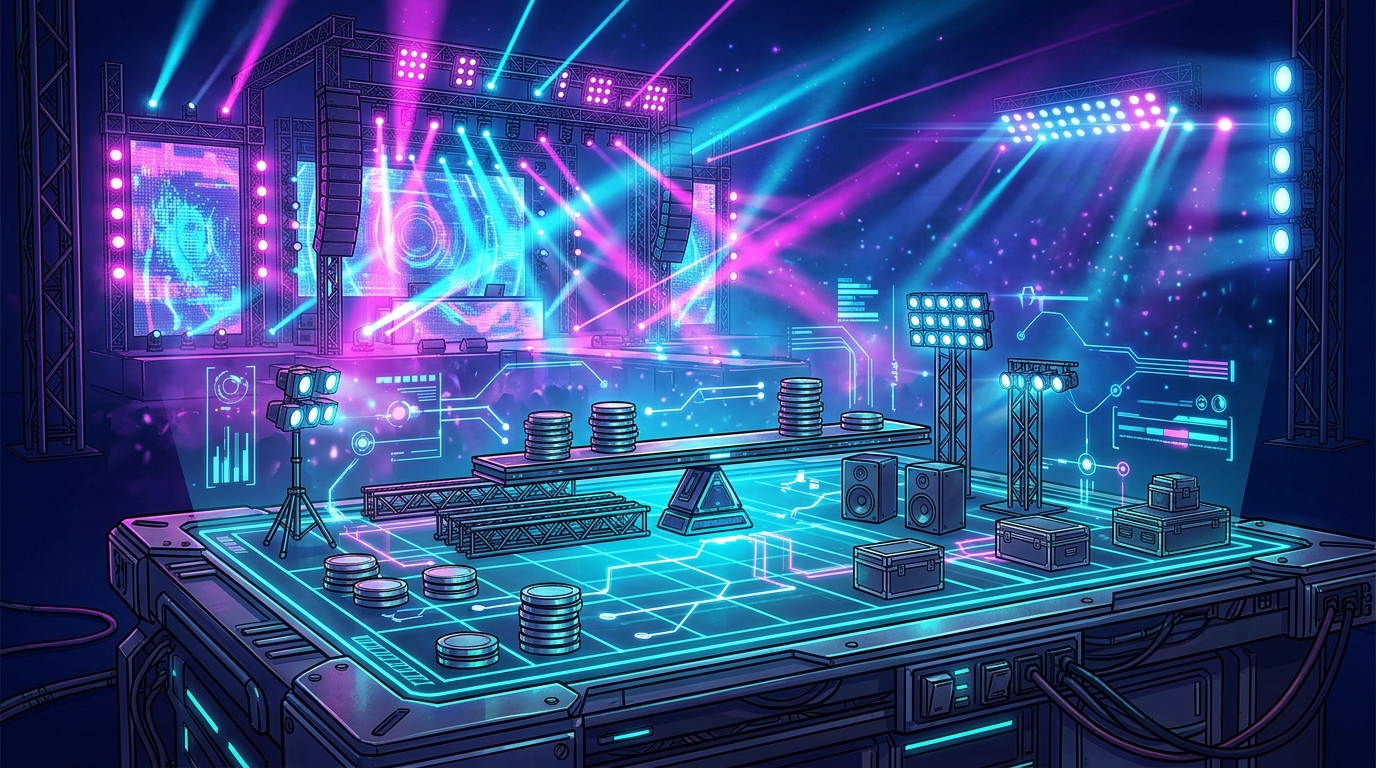
A realistic cyberpunk event budget starts with your audience size, venue constraints, event run time, and desired look, then turns those details into a clear list of production needs. A mood board can show the neon-soaked destination; the scope tells a production company how to get there without charging twice for the same spaceship.
Plan for permits and fabrication early because your location, event activity, and scenic design can all affect the schedule and budget. New York City’s 2025 event permitting guide lists FDNY generator permit fees of $50 for gasoline generators and $125 for diesel generators, with applications due two weeks before the event. It says a Temporary Public Assembly Permit is required for locations whose Certificate of Occupancy allows 75 or more people indoors, or 200 or more outdoors, to gather for specified purposes; request the permit at least one week in advance. FDNY special-effects permits for explosives, open fire, or pyrotechnics are due two days before the event, with fees depending on the time of day and effect type. A dramatic burst of flame may look very arcade-boss-level, but it comes with a separate approval step.
Scenery needs lead time even when permits aren’t involved. Simple fabrication can take one to two weeks, while complex scenic builds typically need four to six weeks from concept approval to delivery. That clock starts after the concept is approved, so late design changes can put pressure on the production schedule. Permit rules vary by jurisdiction, venue, and activity. Confirm current requirements and deadlines directly with the relevant local authorities before you lock in your event plan.
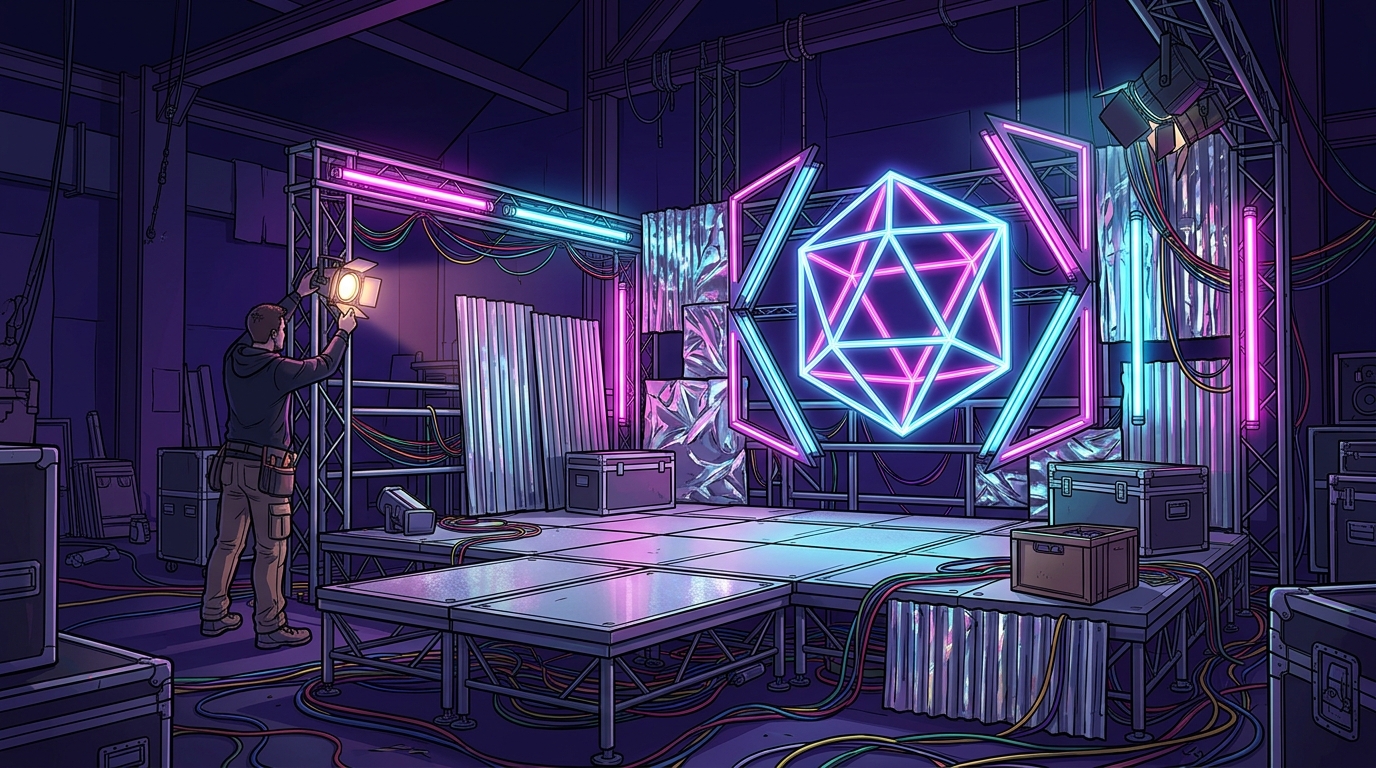
Keep the cyberpunk look without overspending by choosing one dominant visual anchor, using lighting to carry the neon palette, and concentrating complex scenery where guests will notice it. You do not need a custom skyline, multiple oversized builds, and an LED wall all fighting for the spotlight like rival arcade bosses. Pick the main feature first: perhaps a custom stage façade or an LED wall with animated city visuals. Then use uplighting to add color to existing venue walls and draw attention to the stage, entrance, or another key area. A focused pool of magenta and electric blue can make existing venue walls feel part of the scene without dressing every corner. Give scenic pieces more than one job. A façade might frame a speaker during the program and become a photo backdrop later. A modular-looking display could define an entrance before guests move into the main room. Ask whether each piece can support another moment in the schedule, rather than treating scenery as a one-scene prop that vanishes after its big reveal. Put priorities in writing before requesting quotes. Separate the visual must-have from optional effects, and tell production teams which areas guests will see most. A clear scope gives them something specific to price and leaves room for alternatives, such as using lighting on existing architecture instead of adding another large build. That is a planning choice, not a guaranteed discount; the right option depends on the venue and production details. Protect the schedule if your centerpiece needs custom scenic work. Complex builds typically need four to six weeks from concept approval to delivery, so late changes can put pressure on the timeline. Lock the design direction early, and keep the rest of the room’s look flexible enough to work around the hero feature.
Turn your mood board into a quote brief before contacting production companies. State your guest count, venue and room layout, event schedule, and the look you want guests to see. Name the essentials: clear PA coverage, colored uplighting, an LED wall, a custom stage façade, or a particular scenic feature. Note what the venue already supplies, such as sound equipment or rigging, so the quote doesn’t include gear you may not need.
Ask each company to price the same scope and separate equipment, crew, delivery, setup, operation, and removal. Request a base version built around your must-haves, plus optional prices for upgrades such as additional scenic pieces or LED visuals. Ask which equipment and crew are already included in any package, and whether the quoted hours cover your full event schedule. That makes it easier to spot overlap before your budget gets a surprise arcade-style difficulty spike.
If your event includes street activity, generators, or special effects, check the relevant local permit requirements before approving the production plan. For a custom scenic feature, send the design direction early and ask the fabricator to confirm whether the schedule works from concept approval to delivery. You’ll get more useful estimates by sending a specific plan than by asking for a price for “cyberpunk vibes.”