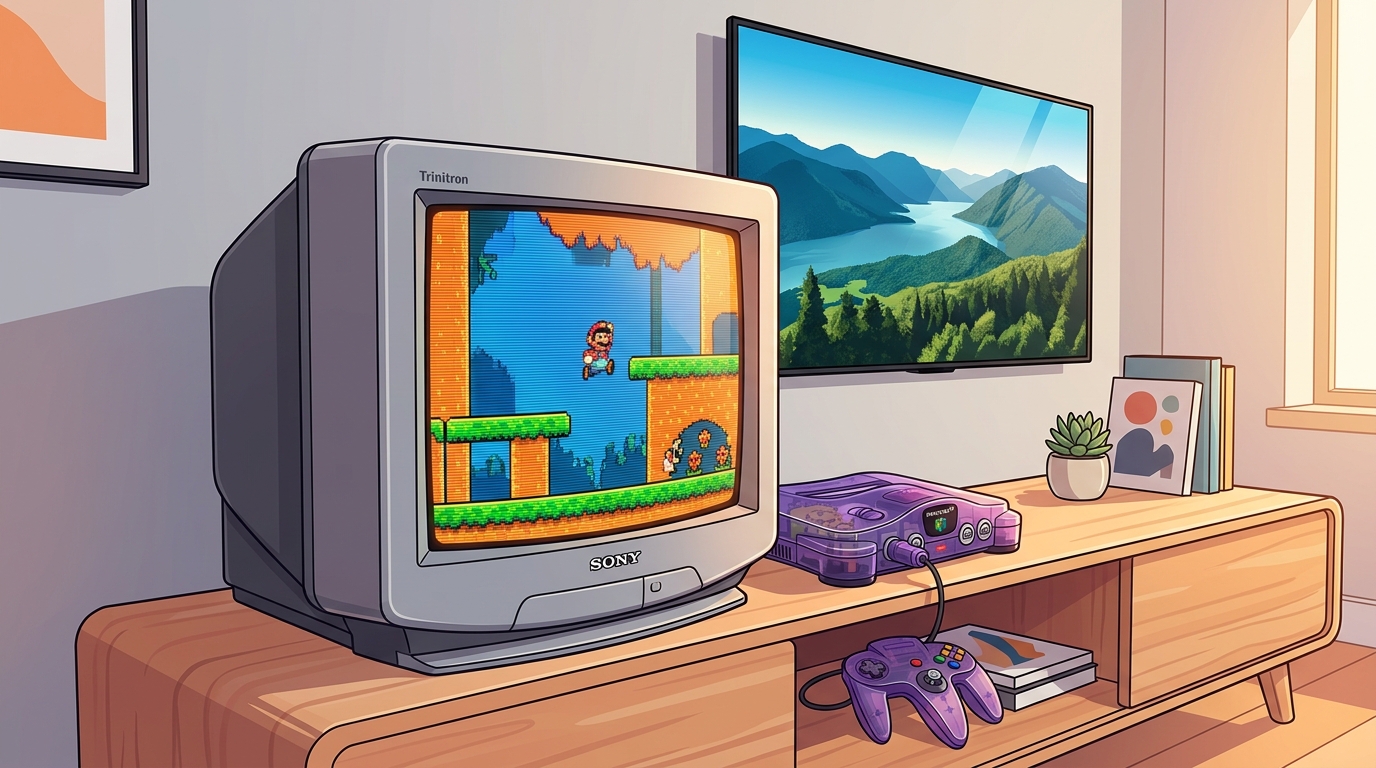
If you’ve ever looked at a modern screen and felt like your favorite 8-bit hero was swimming through a bowl of neon soup, you’ve probably wondered: is crt gaming worth it? In a world of sleek, paper-thin displays, these heavy back-breaking cubes are making a massive comeback for anyone who wants their pixels to actually pop. You get that sweet, zero-lag magic that makes every jump feel instant, and let’s be honest, nothing beats that warm glow of a cathode ray tube while you’re blasting synthwave in your bedroom.
While your friends are busy tweaking settings to hide motion blur, you’ll be living in a world of perfect clarity with zero ghosting in sight. These chunky legends are becoming serious collector items because they offer a vibe and a speed that modern tech just can’t replicate without a bunch of expensive gadgets. It’s about more than just nostalgia, it’s about having the ultimate competitive edge while looking like a total boss from a 1980s sci-fi flick. Whether you’re chasing a high score or just want your games to look the way the developers intended, that analog hum is calling your name.
You might think your fancy flat screen is fast, but it is actually a turtle compared to the lightning speed of an old school tube. When you press a button on your controller, a CRT sends that signal to the screen at the speed of light without stopping to think about it. Modern displays have to process the digital data first, which creates a tiny delay that can ruin your perfect jump in a platformer. On a vintage monitor, the input lag is virtually zero because the analog signal hits the glass instantly. This means you get a snappy, one to one connection with your game that feels like magic.
Motion on these heavy beasts is so smooth it will make your head spin in the best way possible. While new screens often struggle with blurry trails or ghosting when things move fast, CRTs use a special pulsing light that keeps every pixel crisp. You can spin your character around or race at top speeds without losing any detail in the background. It is like having a superpower for your eyes that makes every frame look perfectly sharp. This natural clarity is why many pro gamers still hunt for these glowing boxes even in the age of high definition.
Investing in a CRT is like buying a time machine that actually works for your favorite retro adventures. You do not need expensive adapters or complicated settings to make your games look and feel exactly the way they were designed. Even though these monitors are bulky and weigh a ton, the instant response and buttery motion are worth the workout. You are getting a premium experience that digital screens just cannot replicate without a lot of extra help. Once you feel that zero lag life, going back to a regular screen feels like playing underwater.
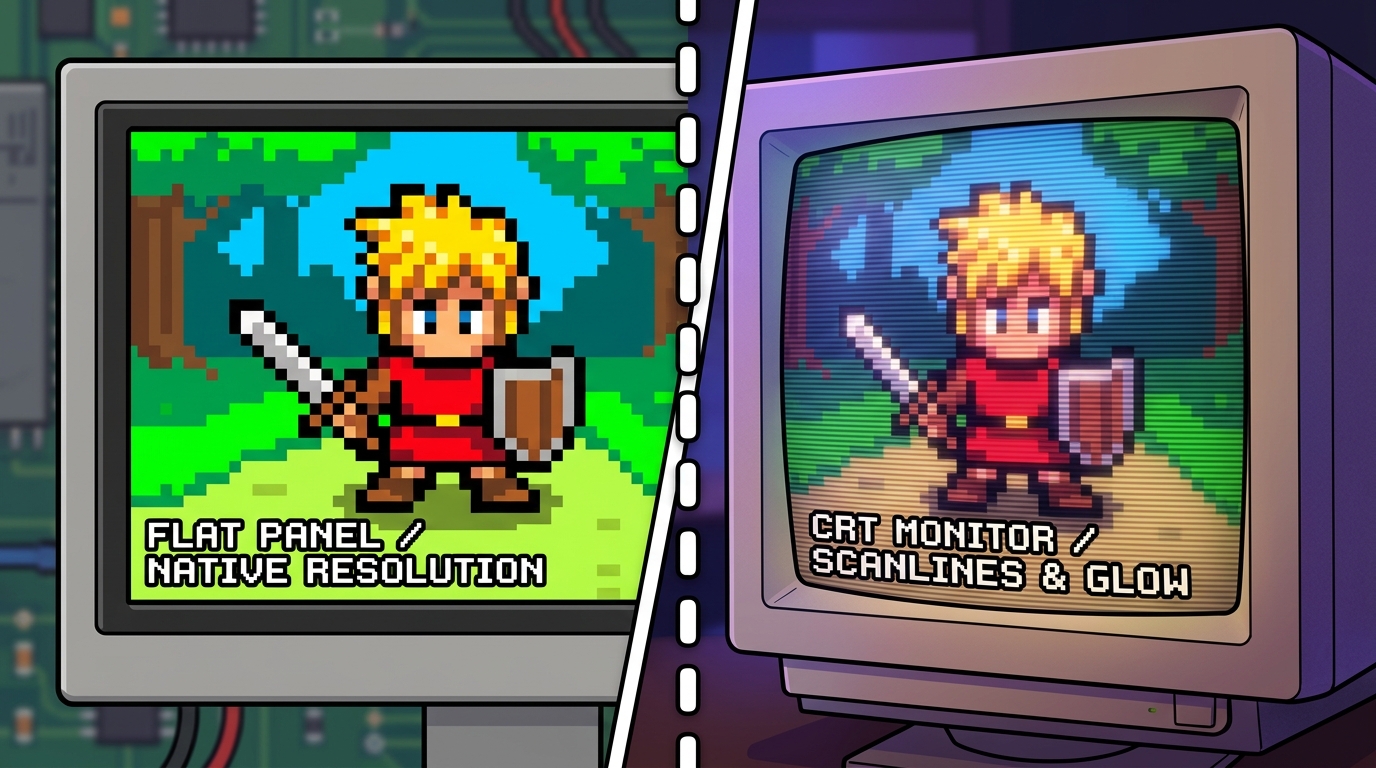
Modern 4K displays are incredible for watching blockbuster movies, but they turn your beloved childhood classics into a pixelated nightmare of jagged edges and harsh colors. When you plug an old console into a flat screen, you are seeing raw pixels that were never meant to be exposed to the light of day. Retro artists actually relied on the natural fuzziness and glowing scanlines of old tubes to blend colors and create smooth shapes. Those iconic scanlines act like a secret filter that adds depth and texture to the image, making a flat sprite look like a living character. Without them, you are just looking at a bunch of sharp, ugly squares that lose all their 80s magic.
Investing in a heavy, glowing box might seem like a lot of work when you could just use a modern monitor, but the visual payoff is totally worth the effort. CRTs use an analog signal that creates a natural glow which masks the limitations of older hardware while making colors pop with neon intensity. Think of it like listening to a warm vinyl record instead of a cold, compressed digital file. You get an authentic look that digital screens simply cannot replicate without expensive and complicated extra gear. It is the difference between playing a game that looks like a sterile spreadsheet and one that feels like a vibrant piece of interactive art.
Beyond just looking cool, these vintage displays offer a level of performance that even the fanciest modern screens struggle to match. You get zero input lag and perfect motion clarity because the hardware is not wasting time processing digital data. Every jump and shot happens the exact microsecond you press the button, which is essential for those punishingly difficult retro levels. While your friends are struggling with weird motion blur on their high tech TVs, you will be gliding through stages with the precision of a synthwave superhero. It is a high maintenance lifestyle for sure, but the buttery smooth gameplay and nostalgic vibes make it the ultimate way to play.
Deciding to bring a CRT into your home is basically like adopting a very grumpy, very heavy pet that demands its own zip code. While the neon glow of your favorite retro title looks incredible, you have to face the fact that these monitors are absolute units. We are talking about glass and copper beasts that can easily weigh over eighty pounds, making them a literal workout for your back and your furniture. You will need a desk made of solid oak or industrial steel, because your average flat pack particle board table will fold like a lawn chair under the pressure. It is a high stakes game of interior design where one wrong move results in a shattered floor and a very sad gamer.
The financial side of the hobby has also moved from garage sale bargains to high end luxury territory as we head toward 2026. Finding a display that has not been beaten up by years of office use or stored in a damp basement is becoming a real quest for enthusiasts. Prices are climbing as the supply of working tubes shrinks, meaning you might end up paying a premium for that perfect scanline aesthetic. You also have to consider the logistics of getting one of these heavy beige boxes to your house without it being dropped by a delivery driver. It is a commitment that requires a thick wallet and even thicker arm muscles to pull off successfully.
Maintenance is the final boss you must defeat if you want to keep your synthwave dreams alive and well. These vintage machines are decades old and often need internal adjustments or part replacements to keep the colors from looking like a muddy mess. Since you cannot just take a CRT to a local smartphone repair shop, you will likely spend your weekends learning about discharge procedures and safety protocols. It is a niche lifestyle that rewards you with zero input lag and perfect motion clarity, but you have to be ready for the hustle. If you are willing to sacrifice your floor space and your free time, the glow of that authentic glass screen is a vibe that modern tech just cannot replicate.
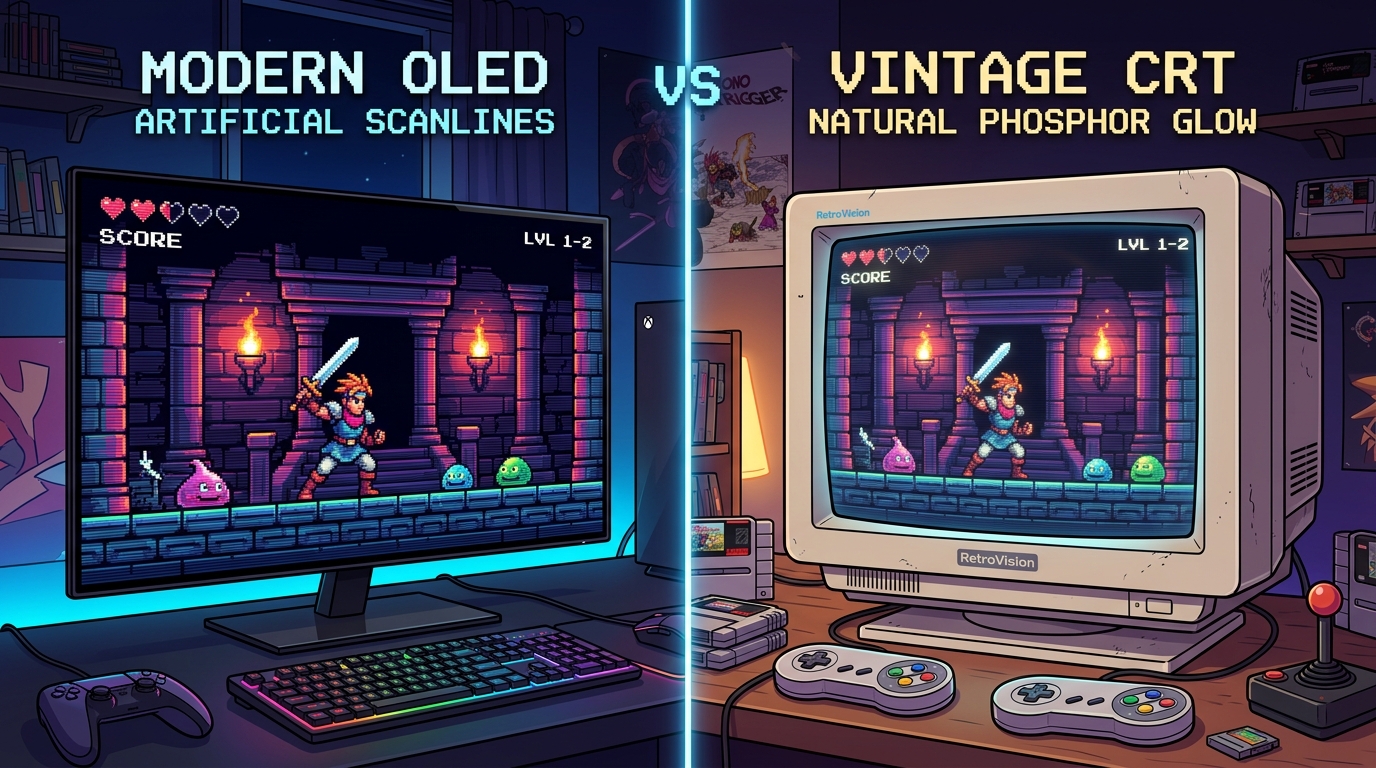
Choosing between a high-end OLED and a vintage CRT is like deciding between a sleek electric car and a fire-breathing muscle car from the eighties. Modern OLED screens are incredible pieces of tech that can mimic the look of an old tube using high-end OLED shaders and scanline filters. You get that crisp, neon-soaked aesthetic without having to clear out your entire guest room for a hundred-pound piece of glass. It is a convenient way to get your retro fix while sitting on your couch, and for many gamers, those digital filters are more than enough to capture the vibe. However, even the best software struggles to perfectly replicate the unique, warm glow that only real phosphor can provide.
If you are chasing that legendary zero input lag and perfect motion clarity, nothing beats the authentic feel of a real CRT monitor. These heavy beasts do not use digital processing, meaning your button presses happen instantly with no delay to ruin your high score. When you play on a real tube, the image has a natural softness that makes low-resolution pixels look like hand-painted art rather than jagged blocks. You also get to enjoy that iconic high-pitched whine and the static electricity that tickles your arm when you turn the power on. It is a high-maintenance lifestyle that requires some serious desk space, but for the true enthusiast, that physical connection to the past is worth every bit of heavy lifting.
Deciding which path to take depends on whether you value your floor space or your frame data more. An OLED setup is the ultimate “set it and forget it” solution for people who want to play in 4K during the day and pretend it is 1992 at night. On the other hand, the CRT route is for the dedicated pixel hunters who want their games to look exactly how the developers intended back in the day. You might have to explain to your friends why you have a massive beige box in your living room, but they will understand once they see that buttery smooth motion. Ultimately, one offers a digital love letter to the past, while the other is a literal time machine sitting on your desk.
So, is hunting down a heavy vintage monitor actually worth the back pain and the strange looks from your neighbors? If you want that perfect 80s glow and zero lag for your speedruns, the answer is a total yes. While modern monitors are getting better, nothing beats the buttery smooth motion of an old school tube that makes pixels look like digital candy. You get to see your favorite games exactly how they were meant to be seen, complete with those fuzzy scanlines that make everything look cooler. It is less about being practical and more about capturing that pure, neon soaked magic that flat screens just cannot replicate.
Of course, living the retro life means dealing with some bulky hardware and the occasional high pitched hum that only dogs and true gamers can hear. You have to decide if you have the desk space for a thirty pound cube or if you would rather just keep things simple with a modern setup. If you are ready to fully commit to that vaporwave aesthetic and want the ultimate bragging rights, then go ahead and grab that vintage beast. Once you see that zero motion blur in action, you will probably never want to look at a standard LCD ever again.
Whether you decide to haul a massive monitor home or stay on your current screen, you can still level up the vibes of your gaming cave. You do not need a time machine to make your desk look like a scene out of a sci-fi movie. If you want to finish the look of your setup, you should definitely Upgrade Your Workspace With Retro Futuristic Office Supplies to keep that nostalgia flowing. Discover how we can help you bridge the gap between the golden age of gaming and the modern world by checking out the best CRT TV for your latest gear today.
Modern screens have to stop and think about digital data before showing it, but a CRT sends signals to the glass at the speed of light. You get a direct, one to one connection that makes your button presses feel instant. It is basically the closest thing to gaming telepathy you can find.
Absolutely, because those old school pixels were designed to bloom and blend on a glowing phosphor screen. Instead of the jagged, neon soup you see on a flat screen, you get smooth edges and colors that pop exactly like the developers intended. It is like giving your favorite retro games a high definition makeover from the eighties.
Your fancy flat screen often leaves blurry trails or ghosting when things get fast, but these analog legends stay crystal clear. The way the light hits the glass means you get zero motion blur even during the most intense action scenes. You will finally see every frame of that boss fight without your eyes feeling like they are underwater.
Most classic consoles plug right into the back with simple cables, so you can skip the expensive adapters and laggy converters. These monitors speak the same analog language as your favorite retro systems, making the setup a total breeze. You get a pure signal without any digital junk getting in the way of your high score.
People are hunting these things down because you just cannot replicate that authentic analog hum and glow with modern tech. They are becoming serious trophies for any gamer who wants the ultimate competitive edge and a killer aesthetic. Plus, they make your gaming setup look like a high tech lab from a classic sci-fi flick.
Lugging one of these beasts into your room is basically a workout that pays off in pure gaming glory. Once you see that zero-lag magic and perfect clarity in person, you will realize the heavy lifting was a small price to pay. You should also consider if your retro rig is worth saving before committing to the long-term maintenance of these vintage displays.
While you are busy restoring your hardware, don’t forget to fuel up with some neon bites to keep your energy high during those long gaming sessions.