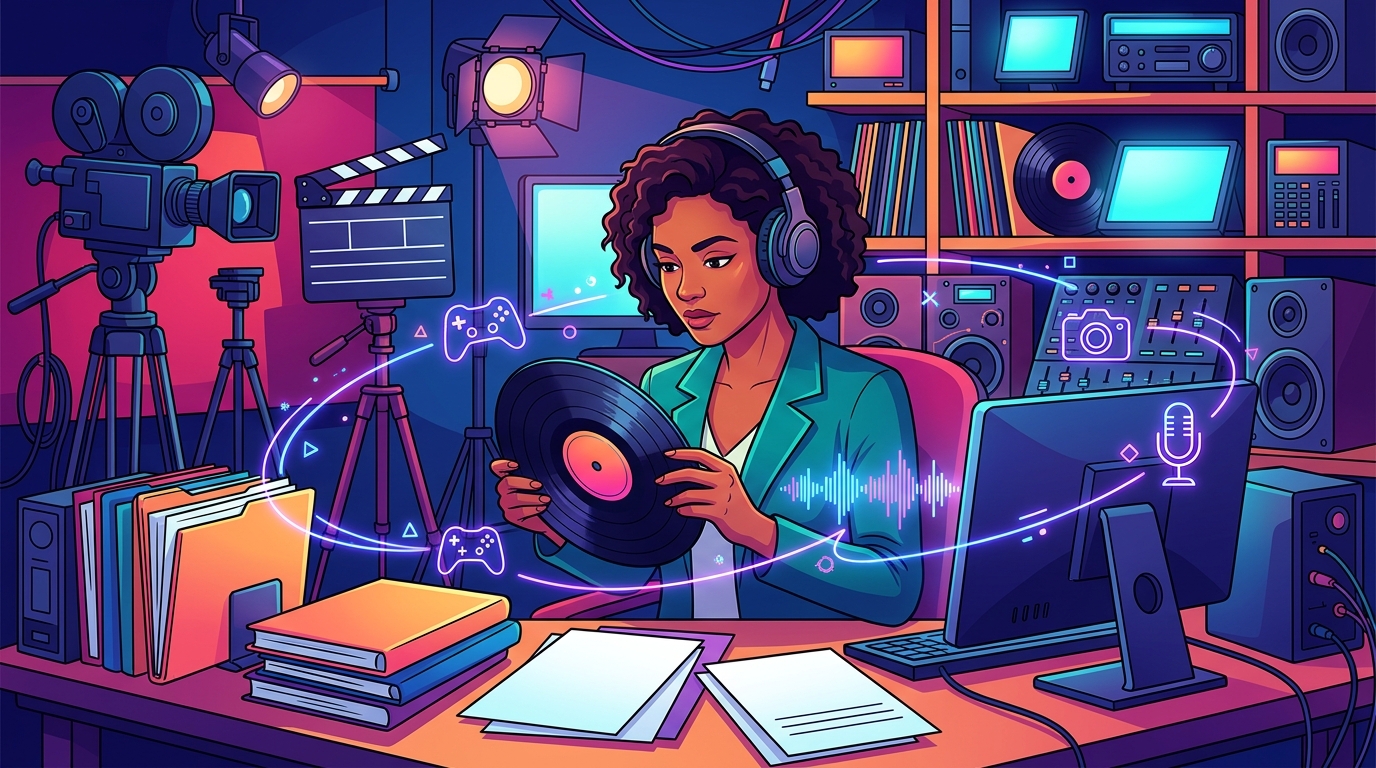
Your killer track can make a scene glow like an arcade cabinet under neon lights, but using it without permission can trigger a copyright boss battle. A music clearance service helps you secure the rights to use a song in your film, ad, game, trailer, social post, or other project. It handles the behind-the-scenes hunt for rights holders, approvals, fees, and paperwork, so your soundtrack can reach the high score without a legal jump scare.
The tricky part? Most songs have two separate rights: the composition and the specific recording, also called the master. You may need permission for both, along with approval for your chosen platform, territory, time period, and promotional use. Sort it out early, and you can keep the vibes, avoid takedowns, and release with confidence.
A music clearance service helps you turn that perfect neon montage into a legally usable release instead of a copyright boss battle. Whether you are making a film, ad, game, trailer, branded video, or social campaign, the service tracks down the people who control the music and requests permission to use it. A song usually involves two separate rights: the composition, which covers the melody and lyrics, and the master recording, which covers the specific performance you want. Miss one, and your project could hit a legal game-over screen just before launch.
The clearance process can include identifying rights holders, confirming the intended use, negotiating fees, and preparing licenses that keep everything documented. Your permissions may need to cover details such as territory, length of use, platforms, paid advertising, edits, trailers, and promotional clips. A qualified team helps you spot those details early, so you are not chasing approvals at the last minute while your deadline flashes like an arcade timer. The result is a clearer path from creative concept to release, with fewer surprise invoices, takedown notices, or tense meetings under flickering office lights.
Getting started is easier when you share the song, project type, audience, release plans, and budget with a music clearance service as early as possible. That information helps the team assess which rights you need and build a practical clearance plan around your timeline. You can then make informed choices, such as licensing the original recording, requesting a different version, or considering a new composition when the first option costs more than your entire synthwave budget. With the right permissions secured and organized, your project can launch confidently instead of disappearing into the copyright void.

A music clearance service helps you secure the permissions needed to use a song in a film, ad, game, show, trailer, or social campaign. One song usually contains two separate copyrights: the musical composition and the specific sound recording. The composition covers the melody, lyrics, and songwriting, while the master recording covers the version you hear, including that iconic drum hit or neon-soaked guitar riff. Using a famous recording in your commercial is not a one-button power-up.
A synchronization license gives you permission to pair the composition with moving images, such as a video, game scene, or commercial. A master-use license gives you permission to use the actual recording, often called the master. Different people or organizations may control these rights. A songwriter or music publisher may handle the composition, while a record label or recording owner may control the master. You may need both licenses, even if your project uses only a short clip, because copyright rules do not run on 80s arcade logic.
A clearance service can identify the rights holders, confirm the required licenses, negotiate fees, and document approvals for your project. It can also check details such as territory, license term, platforms, paid advertising, edits, and promotional use. That matters when your campaign starts as a local launch but suddenly goes full global boss level. Getting the rights sorted before release helps you avoid takedowns, surprise invoices, and a soundtrack-sized legal headache.
A music clearance service starts by researching the song you want and tracking down everyone who controls its rights. That usually means checking both the musical composition, such as the melody and lyrics, and the master recording, which is the specific version you plan to use. Your project may need permission from different owners for each one, so a quick internet search is rarely enough. The clearance team maps out the rights, territories, platforms, campaign uses, and timeline before the legal boss battle begins.
Next, the service contacts rights holders, confirms availability, and negotiates fees and terms that fit your project. A song used in a national ad, streaming series, game, or social campaign can have very different pricing and conditions, especially when paid promotion or worldwide use enters the chat. Once everyone agrees, the team gathers written approvals and prepares the required licenses for the composition and recording. Think of it as getting every backstage pass before the neon concert starts, because verbal permission alone will not protect your release.
Before launch, your music clearance service reviews the paperwork, confirms that the approved use matches the final edit, and organizes the records for your production files. Those documents should clearly show the song, recording, approved media, territory, term, fee, credit requirements, and any limits on edits or promotion. Keeping everything together helps prevent surprise takedowns, delayed releases, and future audit headaches worthy of a cursed arcade level. With the permissions locked, your soundtrack can roll into the credits with confidence and zero legal jump scares.

Music clearance costs depend on more than the song you want and the size of your neon budget. Territory, license duration, media type, audience size, paid advertising, promotional use, and exclusivity can all change the final price. A local social ad running for 30 days usually has a smaller scope than a worldwide campaign running across television, streaming platforms, and connected devices. The bigger the audience and the longer the campaign, the faster the licensing meter may spin like an arcade game in 1987. A music clearance service helps you map out these details before you sign anything.
You also need permission for both the song itself and the specific recording you plan to use. A track cleared for a short online ad may not cover a streaming series, television broadcast, product trailer, or global game launch, because each use can involve different rights, territories, and time limits. Promotional clips, behind-the-scenes videos, social posts, and paid boosts may need to be listed separately, even if they all feature the same catchy chorus. If you want exclusive use, meaning others cannot use the music for a defined period or in a specific market, expect the cost and negotiation to level up. Think of it as choosing the right power-up before the boss fight, not discovering halfway through that your license only works in one digital kingdom.
Working with a music clearance service can make the process less mysterious by identifying the rights holders, confirming the needed permissions, and negotiating terms that match your project. You can share your media plan, launch regions, campaign length, audience goals, and promotional strategy so the quote reflects real-world use instead of guesswork. The service can also help secure approvals and organize license records, giving you a cleaner paper trail if your project grows or faces a future rights review. That preparation is especially valuable when one song needs to travel from a small online spot to television, streaming, or a worldwide game release. Clear the music early, keep the paperwork tidy, and avoid a surprise legal jump scare after the credits roll.
Choosing a music clearance service starts with finding a team that can research every layer of a song’s rights. A track usually has two separate permissions to secure: the composition, covering the music and lyrics, and the master recording, covering the specific performance you want to use. Your provider should know how to track down the right publishers, labels, artists, and other rights holders without turning your project into a boss battle from an old-school arcade game. Ask whether they handle territory, term, media, paid advertising, social clips, and promotional use, since a license that works for a film may not cover your neon-soaked trailer campaign.
Strong publisher and label relationships can make the process smoother, but negotiation experience matters just as much. A skilled music clearance service should help you compare options, explain likely costs, and negotiate terms that fit your budget, audience, and release plan. The team should also give you project-specific guidance instead of handing you a one-size-fits-all permission quest. For example, a national commercial, an indie film, and a video game may need very different rights, timelines, and approval paths.
Before you hire anyone, ask how they organize requests, approvals, contracts, invoices, and final licenses. Clear records help you prove what was approved, where the music can appear, and when the permission expires. That is far better than hunting through inboxes like a confused hero in a 1980s sci-fi montage. Look for a service that keeps rights information easy to review and flags missing permissions before your final video is ready to launch. Choosing that support early can keep your production out of final-video panic mode and get your soundtrack safely across the finish line.

A music clearance service can keep your project from hitting a rights-related game-over screen just before release. Starting early gives professionals time to identify both the songwriters’ composition rights and the master recording rights, then secure permission for the ways you plan to use each track. They can also help sort out fees, territories, platforms, time limits, paid ads, and promotional uses before a small music choice becomes a giant invoice. That planning protects your budget and schedule while reducing the risk of last-minute edits, pulled campaigns, or a premiere stuck in VHS rewind. You get fewer surprises and more room to focus on the story, visuals, and neon-level creative magic.
Whether you are launching a film, series, game, trailer, brand campaign, or social video, clear rights support can keep your release plan moving. A professional review also creates a clean paper trail, so your team knows what was approved, where it can appear, and how long the permission lasts. The earlier you ask for help, the more options you usually have if a favorite song costs too much or cannot be cleared for every use. Request a consultation and share your project’s song list, platforms, territories, timeline, and intended uses so your clearance plan can start in the right key.
A music clearance service helps you secure permission to use music in films, ads, games, trailers, social videos, and other projects without triggering a copyright boss battle. Your team needs approval for both the song’s composition, including lyrics and melody, and the specific sound recording, known as the master. A clearance specialist can identify the rights holders, negotiate fees, confirm usage terms, and organize the paperwork for release day. The specialist can also help define details such as territory, time period, platforms, paid promotion, and future edits, so your neon-powered project does not glitch at the finish line.
Clearing music early can save you from rushed negotiations, surprise costs, takedowns, and the dreaded last-minute soundtrack swap. With the right support, you can move from “permission pending” to “press play” with a clear record of every approval and license. Ready to level up your music rights strategy? Explore our guide to choosing a music licensing service for creators and filmmakers to learn how you can clear music with confidence and keep your project playing like an 80s arcade classic.