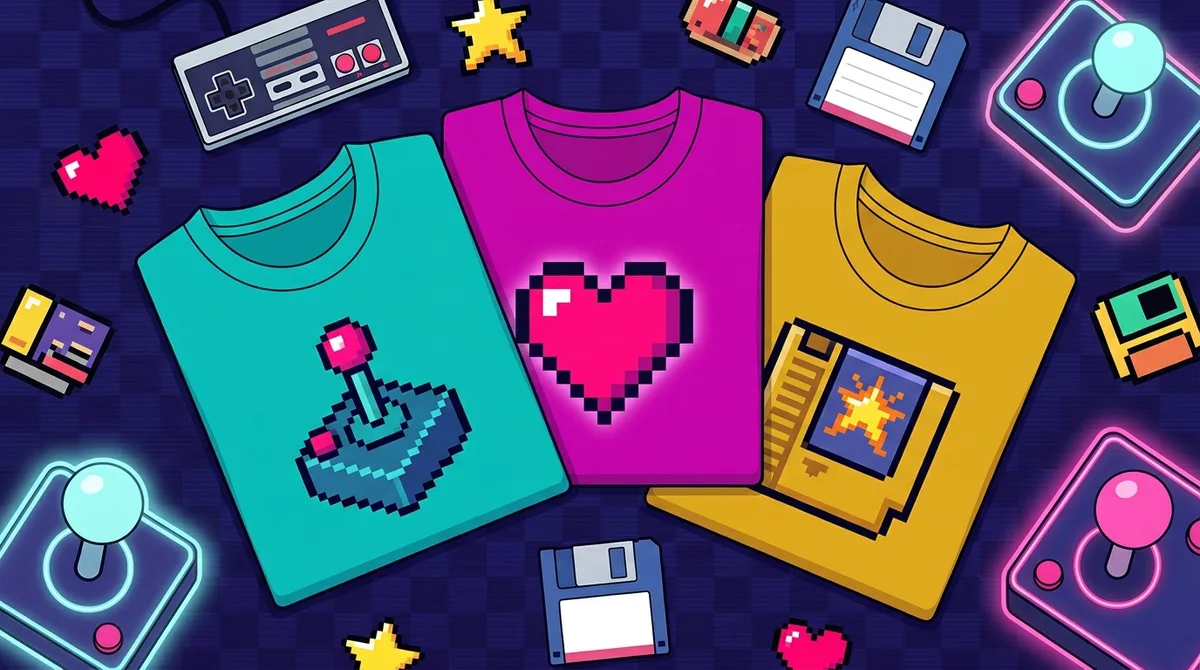
Retro gaming t-shirts are wearable throwbacks covered in pixel-art heroes, joysticks, game cartridges, and the blocky PONG paddle. They’ve become everyday wear for a crowd much bigger than you might guess. The Entertainment Software Association counts 190.6 million Americans aged 5 to 90 who play video games, so there’s plenty of nostalgia to go around.
Prices vary a lot. Atari’s official tee collection lists many shirts at $30, and its PONG Gaming Jersey is $35. Other shops price their tees differently, so before you add one to your cart, check the size chart, the fabric weight, and where you live. Shipping costs and times depend on your destination.
Retro gaming t-shirts are popular because the people who grew up with pixel games never really put down the controller, and now they get to wear that history. Today, 29% of U.S. video game players are age 50 or older, up from 17% in 2004. That means a big slice of the crowd buying these tees actually played the originals on a bulky tube TV, blowing on cartridges and hoping for the best.
Pixel art, arcade cabinets and joysticks work as wearable nostalgia. A tee is an easy way to show which console you grew up with, whether it was a boxy home system with a rainbow logo or a handheld with a glowing green screen. One look at a chunky sprite and everyone in the room knows exactly where your heart is.
Younger players love the look too. Blocky characters, neon colors and chunky fonts feel like a mood board for synthwave fans, and they blend right into the 80s-inspired style that’s everywhere right now. Gamers who never owned a PONG machine still get the joke when a paddle and a bouncing dot are printed across the chest.
So which game moved you most? The sections below walk through the designs, fabrics and practical details that help you turn that memory into a shirt you’ll actually reach for.
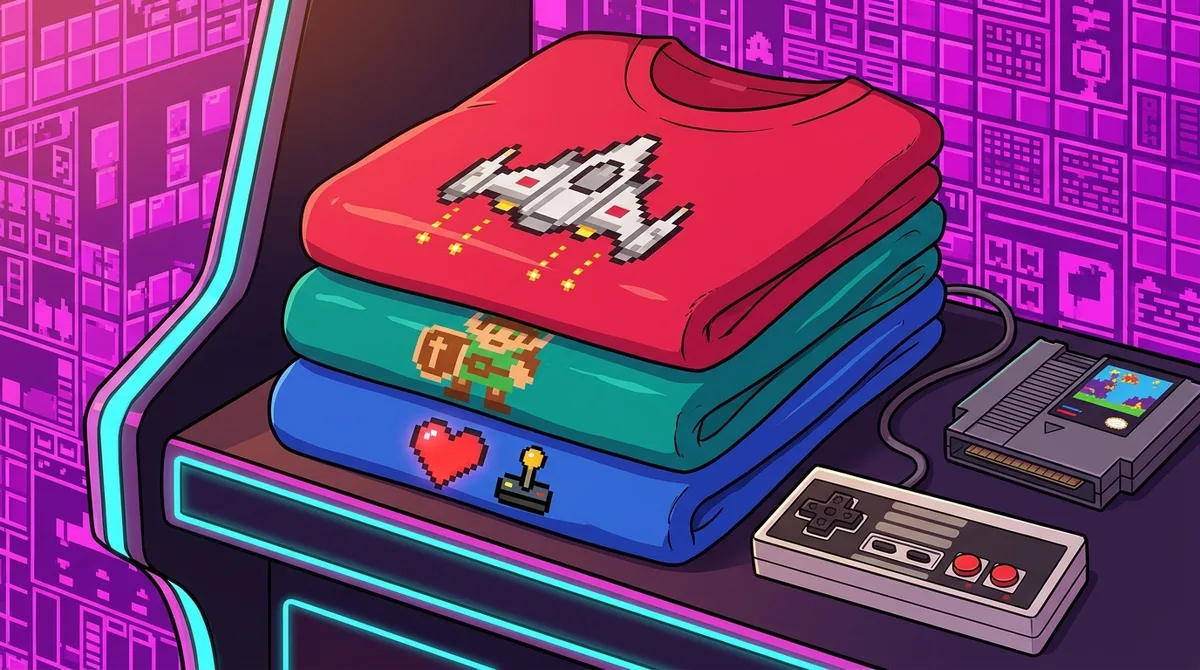
Retro gaming tees generally fall into two camps: official licensed throwbacks and independent pixel-art designs. Licensed shirts carry the real names, logos and artwork of classic games, including Atari-branded designs, joysticks and cartridges. If you want the official look and a design you’ll recognize from across the room, this is the safer lane.
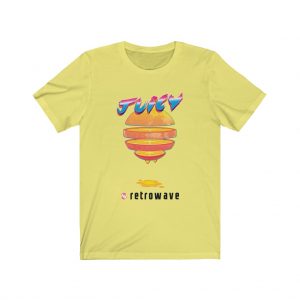
Independent designs come from artists who draw their own sprites, arcade cabinets and playful nods to old games. You’ll often find bolder neon palettes here, with a synthwave edge that suits a late-night gaming session. The trade-off is that these shirts are homemade tributes rather than official merchandise, so the artwork and the game references can look quite different from one shop to the next.
Price is where the two camps really separate. Physical retro gaming tees on popular marketplaces typically range from about $5 to just over $30, so there’s room for a budget pick or a splurge. Not every listing is a shirt, though. Some are digital downloads, which are files rather than something you can wear, so check the listing carefully before you pay.
Licensed tees tend to be the easiest to pick out at a glance, because the designs point straight back to a specific game or console. Indie tees take a bit more browsing, but that’s part of the fun, since you may find a sprite nobody else in your group is wearing. Think about whether you want the official badge or a one-of-a-kind homage, and let that decide where you start.
It depends on the design. Artwork is protected by copyright, and the U.S. Copyright Office says that making or selling copies of someone else’s artwork generally requires permission from the copyright owner. Plenty of the characters and logos on retro shirts belong to companies, not to the person who printed them.
That’s why a tee that copies a famous game sprite almost exactly may not be a legitimate product, even if it looks like a fun tribute. Think of it as the difference between a shirt that says “I love 8-bit heroes” and one that’s basically a photocopy of a specific hero.
Good designs tend to show their roots in a more general way. Look for shirts that clearly reference retro style, such as neon grids, chunky fonts, generic arcade cabinets or original pixel characters, rather than a carbon copy of one famous figure.
Product details matter too. A listing that tells you the fabric, sizing and who made the shirt usually looks more trustworthy than one with a blurry photo and no information. Treat any listing that seems to copy a well-known game sprite with caution, especially if the seller says nothing about where the artwork came from.
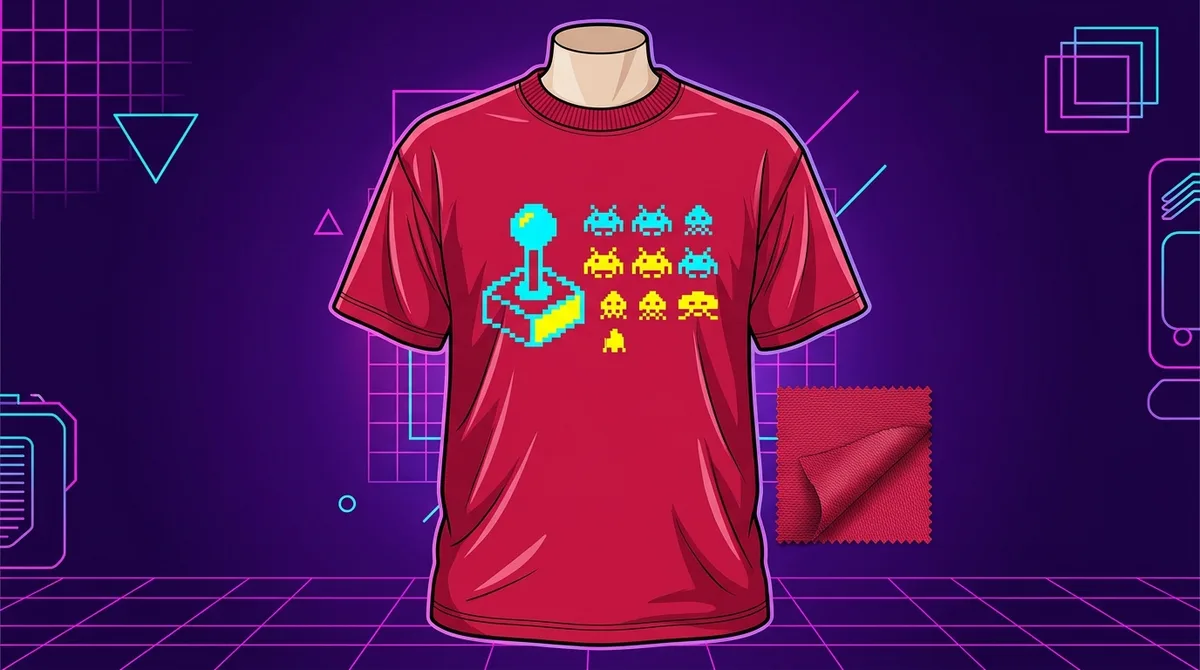
A tee’s weight is the first thing you notice once it’s on. A light shirt feels airy and easy to layer, while a heavier one has more body and a fuller drape. Neither is better across the board, so think about where you’ll wear it.
Fabric details vary from shop to shop, and even from color to color, so read the listing for the fiber content and weight before you buy. A lighter tee works well for warm days, while a heavier one tends to feel more substantial. Check the fit notes too, since a relaxed cut and a closer cut can feel very different on the same body.
For a heavier feel, look at our Blue Rays AOP t-shirt, which is available in 4.0 oz and 6.0 oz fabrics. It’s 100% polyester with a regular fit, is tagless, and runs true to size. Our standard unisex tees, by contrast, are a light 4.2 oz/yd² (142 g/m²) cotton.
Here’s a quick way to choose:
Fit matters just as much as fabric. Each product page includes a size chart, so measure a shirt you already own, like the chest width and body length, and compare those numbers before you add anything to your cart. Your favorite pixel hero will look much better on you when the size is right.
Look for the fiber content, the country of origin, and the name of the maker or the business responsible for the shirt. The Federal Trade Commission says most textile and wool products must carry that information, so a tag that leaves these details out deserves a second look.
Think of the tag as a quick checklist:
The Care Labeling Rule adds another requirement. Manufacturers and importers must give you cleaning instructions for textile wearing apparel, so the care line should be there for every tee you consider.
Read that care line before you buy. A bold, multi-color print can crack or fade if it gets tossed in a hot dryer with your jeans, and the care instructions tell you how well your favorite boss-fight graphic will survive laundry day. If a listing doesn’t show any care details, ask yourself how you’ll keep the neon looking sharp.
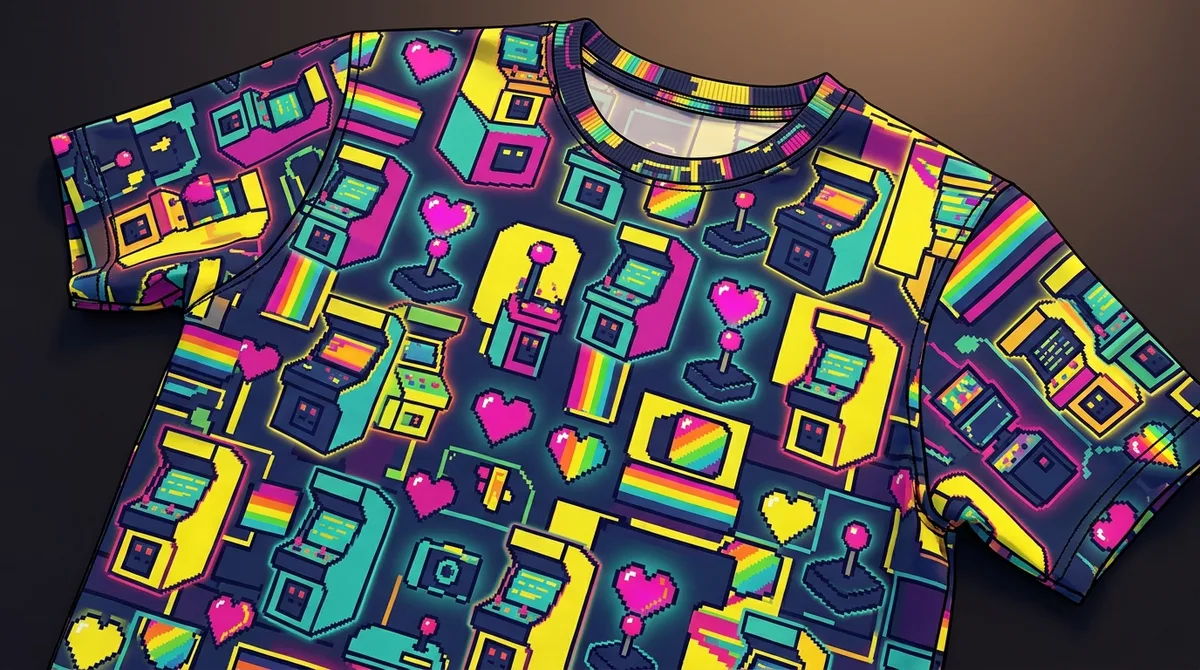
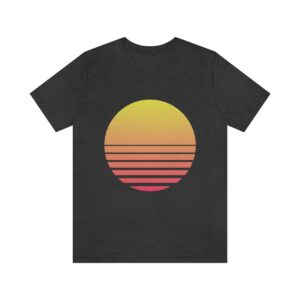
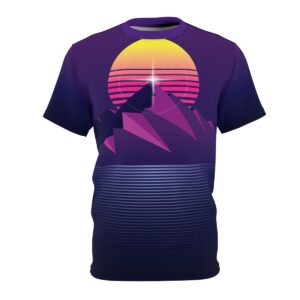
An all-over-print tee has its artwork printed across the entire shirt, from the collar to the hem and onto the sleeves, instead of sitting in one spot on the chest. That makes it a natural fit for bold neon grids, sunset gradients and chunky pixel patterns. It’s like wrapping an arcade cabinet around your torso.
All-over-print shirts are often made from different fabrics than classic cotton tees, so the feel can change quite a bit. Check the listing for the fabric type, weight and fit, since those details will shape how the shirt handles a warm day or a long night of gaming. Look for the size chart too, so you know whether the cut runs true to your usual size.
Before you buy, think about how you actually wear your tees. If you sweat through marathon sessions or pull on a shirt for every errand, the way the fabric handles heat and movement matters as much as the design. If you prefer soft cotton that you can wear all day, a standard tee may suit you better, with an AOP shirt as the bold extra in your wardrobe. Either way, pick the feel that keeps you comfortable while your favorite pixel art does the talking.
Many shops ship internationally, but shipping costs and delivery times vary by destination. Before you add a tee to your cart, check your location so you know what to expect. A shirt that looks like a steal can lose some of its shine once the shipping line shows up.
Atari, the company behind the PONG jersey, says in its international shipping support page that selected apparel is available for international shipping. Its international order processing averages 2 to 5 business days, so the clock starts ticking before your shirt even begins its trip.
The bigger surprise often comes later. Atari notes that import fees, duties, and taxes may be charged to the recipient, which means the person receiving the parcel may owe extra on arrival. That can turn a $30 tee into a noticeably pricier shirt at the front door.
A little planning keeps things smooth. Add the shipping cost for your country to the item price, then set aside a small buffer for possible import charges. If you’re buying a gift for a friend abroad, give them a heads-up so a surprise fee doesn’t ruin the fun of unwrapping a pixel-art hero.
Start with the one game you can’t stop thinking about, whether that’s a pixel paddle, a glowing arcade cabinet, or a joystick you still miss. Then decide which camp fits you: an official licensed classic for the recognizable badge, or an indie pixel piece for a shirt nobody else in your squad owns.
Next, choose your fabric lane. If you’ll wear your tee on warm afternoons or under a hoodie during long sessions, a light cotton tee is a comfortable pick. If you want the neon to wrap your whole torso, an all-over-print shirt makes a bold statement, and you should expect a different feel from classic cotton.
Before you check out, do your homework. Open the size chart, measure a shirt you already love, and compare the numbers. Read the care line so your bright graphics stay bright, and check the shipping cost for your country so the total doesn’t surprise you.
Finally, browse your favorite online shops for synthwave, vaporwave and 80s-inspired graphics, and save a shortlist of three favorites. Your first tee doesn’t need to be perfect. It just needs to make you grin every time you catch your reflection in a dark screen.